

- IWC Insight
- 2026-05-27


Every year, the International Wine Challenge uncovers extraordinary wines. But among the Gold medals, Trophy winners and headline scores, a smaller group of bottles begins to emerge for different reasons entirely.
These are the wines judges continue discussing long after the tasting ends. Wines that feel culturally important as much as technically brilliant. Wines that capture a region, a philosophy, a producer's ambition or even a moment in the evolution of global fine wine. The bottles that their creators are proud of.
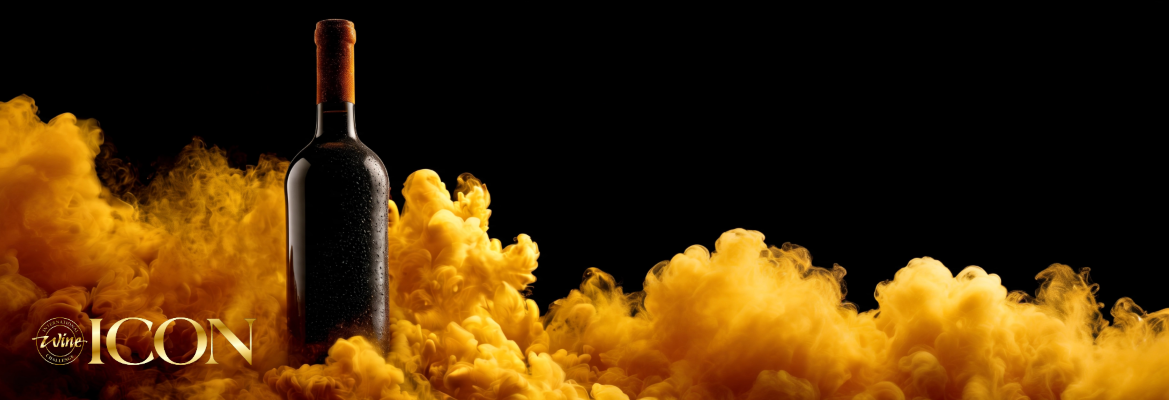
New for 2026, the International Wine Challenge introduced the IWC ICON selection, recognising wines that producers themselves believe best define the character, ambition and identity of their estate.
Icon wines are the most honest bottles in fine wine. A winemaker's defining statement — their conviction, creativity, and vision of what wine can be. Passion projects and legacy plays. Risk-takers and rule-rewriters. Experimental, uncompromising, category-defining. Their clearest answer to the question: what should wine be? Their favorite child. Their legacy in a bottle — and some of them, crowned Icons at IWC.
As one producer described it during the judging process, these are:
"not their best wine, their most defining wine."
The inaugural ICON selection attracted entries from more than 10 countries and over 20 wine regions, with the final wines judged by a dedicated ICON panel led by Christy Canterbury alongside leading international sommeliers including Elton Muço, Head Sommelier of 67 Pall Mall.
Together, the resulting ICON Wines reveal a wine world that is increasingly international, stylistically diverse and culturally connected.
From Japanese Koshu and Argentinian mountain Cabernet to Australian Shiraz, Galician Godello, Burgundy Chardonnay and prestige Champagne, the ICON Wines of IWC 2026 are not simply exceptional wines. They are wines that say something larger about where fine wine is heading.
Japan's fine wine confidence reaches a new level
One of the most striking themes of IWC 2026 was the growing global presence of Japanese fine wine.
Long respected for sake production, Japan's premium wine industry has often remained under-recognised internationally despite decades of quiet innovation in regions such as Nagano and Yamanashi. This year's ICON selections suggest that perception may finally be changing.
Among the standout wines was Château Mercian's Mariko Omnis 2019 from Nagano, a wine that impressed judges not through power or scale, but through precision, restraint and remarkable balance. Produced in one of Japan's most challenging viticultural environments, where humidity, rainfall and typhoon pressure demand constant vineyard adaptation, the wine reflects the uniquely meticulous approach increasingly defining Japanese fine wine.
Founded in 1877, Château Mercian is widely regarded as one of Japan's pioneering fine wine estates and has played a major role in shaping the country's modern wine identity. Its long-term focus on site expression, research and precision viticulture has helped establish Japanese wine as a serious category within the international fine wine conversation.
That precision is central to Japan's fine wine story. In regions such as Nagano and Yamanashi, producers have had to develop vineyard practices suited to a humid, high-pressure climate, from careful canopy management to protective techniques that demand intense attention to detail. The result is a wine culture built not around scale, but patience, observation and refinement.
Equally compelling was Suntory's Tomi Koshu 2024 from Yamanashi, which scored 95 ICON points at IWC 2026. Delicate yet intensely detailed, the wine showcased the elegance and mineral clarity that have become signatures of Japan's best Koshu expressions. Judges praised its "white peach, yuzu, yellow pear" aromatics alongside a "smooth, glossy mouthfeel" and "ethereal" mineral finish.
Better known globally for whisky, Suntory's growing wine ambitions also reflect the increasing convergence between Japan's luxury drinks culture and its emerging fine wine sector.
At a time when global fine wine increasingly values freshness, texture and precision over sheer extraction, Japanese wines appear remarkably aligned with broader shifts in taste.
The success of these wines also reflects a larger story unfolding across Asia: the emergence of highly technical, site-driven fine wine cultures that combine scientific precision with deep respect for tradition.
Argentina moves beyond Malbec stereotypes
If Japanese wines represented subtlety and refinement, Argentina's ICON wines delivered confidence, scale and modern ambition.
Catena Zapata once again emerged as one of the defining names of the competition, reinforcing its role not simply as Argentina's most internationally recognised winery, but as one of South America's most influential fine wine producers.
Founded by the Catena family in Mendoza and internationally recognised through the work of Nicolás Catena Zapata, the estate has been instrumental in transforming global perceptions of Argentinian fine wine over the last three decades.
The standout among its ICON selections was Birth of Cabernet 2022, a wine that demonstrated just how far high-altitude Argentinian Cabernet Sauvignon has evolved. Structured yet remarkably polished, it combined cassis fruit, graphite tension and mountain freshness with the kind of finesse increasingly associated with the world's top Cabernet regions.
Catena Zapata's wider story is also central to this shift. The estate has helped reposition Mendoza from a source of generous, good-value Malbec into one of the world's most closely watched high-altitude fine wine regions. Through detailed vineyard research, altitude-driven site selection and a long-term commitment to expressing place, Catena has become a symbol of Argentina's fine wine ambition.
Judges described the wine as:
"Beetle shell black with purple inflections. Mediterranean herbs, pencil shavings and cassis on the bouquet. Svelte from start to finish with fine, grainy tannins and crystalline acidity enrobe the ripe and persistent fruit flavours. World-class Argentinian Cabernet!"
Alongside it, Catena Zapata Malbec Argentino 2023 reaffirmed the estate's ability to produce wines that remain unmistakably Mendoza while operating confidently within the global fine wine conversation.
Together, the wines reflected a broader trend seen throughout IWC 2026: Argentina is no longer defined internationally by value Malbec alone. Increasingly, its leading producers are positioning themselves firmly within the luxury and collectible fine wine space.
Australia's modern icons balance power with precision
Australian wine has long excelled at producing internationally recognised flagship wines, but the most exciting Australian bottles at IWC 2026 revealed a notable stylistic evolution.
Among the standout performers was Golden Amrita Estate's Reserve Shiraz 2019, one of the highest-scoring Australian wines of the entire competition and the highest scoring IWC ICON. While unmistakably rich and concentrated, the wine impressed judges through its control, composure and layered detail rather than sheer scale alone.
The wine's performance also highlighted the continued evolution of Barossa Valley fine wine, where a new generation of luxury producers are increasingly balancing concentration with freshness, detail and site expression.
That balance reflects a wider shift taking place across Australia's fine wine landscape. Producers are increasingly preserving freshness, site expression and structural precision while maintaining the depth and confidence that originally established Australia's global reputation.
For Australian Shiraz, this is an important distinction. The country's most compelling modern examples are not abandoning richness, generosity or intensity, but refining them. Golden Amrita Estate's performance captures that evolution: a wine of depth and concentration, but also one shaped by polish, restraint and fine detail.
The diversity of Australian fine wine was also reflected in Tasmania, where Lowestoft Estate's La Maison Pinot Noir 2024 was selected as an ICON wine. Established by former Treasury Wine Estates CEO Michael East, Lowestoft has quickly become one of Tasmania's most ambitious boutique producers, focusing on cool-climate Pinot Noir and Chardonnay that express the island's unique maritime environment. The wine's layered red cherry fruit, smoky earthiness and fresh acidity highlighted the elegance and precision that have helped establish Tasmania as one of the Southern Hemisphere's most exciting Pinot Noir regions.
Far from moving away from its identity, Australia's best producers appear to be refining it.
Burgundy's next generation balances heritage and place
While Burgundy remains one of the world's most influential fine wine regions, the inaugural ICON selection highlighted not only the region's famous Grand Crus but also the estates quietly shaping its future.
Among them was Domaine du Clos des Poulettes and its Nuits-Saint-Georges Premier Cru 2023. Situated in one of Burgundy's most historic villages, the domaine represents the enduring importance of site, stewardship and generational knowledge within French fine wine.
The wine captured many of the qualities that continue to make Burgundy a global reference point: precision, transparency and a deep connection to place. Rather than relying on power or scale, it expressed the subtle complexity that has made the region the benchmark for terroir-driven winemaking.
In a fine wine world increasingly searching for authenticity, Burgundy's greatest strength remains its ability to communicate origin. Wines such as Nuits-Saint-Georges Premier Cru 2023 remind us that even in an era of global expansion and innovation, place still matters.
Spain's fine wine evolution finds new icons in Galicia
Spain's strongest wines have long balanced tradition with individuality, but one of the most compelling performances at IWC 2026 came from Galicia, where Rafael Palacios continues to redefine the global perception of Spanish white wine.
His Sorte O Soro 2023 from Valdeorras scored 96 points and emerged as one of the competition's standout white wines, combining intensity and precision with remarkable texture and length. Produced from old-vine Godello grown on steep granitic slopes, the wine captured the tension, salinity and layered complexity increasingly placing Galicia among Europe's most exciting fine wine regions.
This is a different Spain from the one still most commonly associated internationally with Rioja, Ribera del Duero and powerful reds. In Valdeorras, Palacios has helped elevate Godello into a fine wine grape capable of expressing texture, minerality and age-worthy complexity. His wines speak of Atlantic influence, granite soils and a modern Spanish identity shaped as much by freshness and salinity as by structure and tradition.
Judges described the wine as:
"Vaguely gold in the glass. Acacia, honeysuckle and apricot peels contribute to a dynamic nose. Racy acidity, contrasts of honey and saline characters, and hints of welcomed tannin from skin contact on the palate. Strains of vanilla mesh with savory umami. Layered and long on the intense finish."
The success of Sorte O Soro also reflects a wider shift in international fine wine, where freshness, texture and terroir transparency are increasingly prized over weight and power alone. In that conversation, producers such as Rafael Palacios have become central figures in elevating Spain's modern fine wine identity beyond its historic red wine strongholds.
Germany's Riesling precision finds a place in the ICON conversation
Germany's presence within the inaugural ICON selection reflected the growing international prestige of dry Riesling and the renewed attention being paid to precision-led white wines.
Weingut Künstler, one of the Rheingau's benchmark estates, showcased the purity, tension and ageing potential increasingly placing Germany's finest Rieslings among the world's most sought-after white wines.
Family-owned and internationally respected for its dry Riesling portfolio, Künstler has become emblematic of Germany's modern fine wine identity: wines defined not by sweetness stereotypes, but by crystalline fruit, structural precision and terroir transparency.
In an era where freshness, detail and energy are becoming central to luxury wine culture, Germany's top producers feel more relevant than ever.
The rise of a more global fine wine world
Taken together, the ICON Wines of IWC 2026 reveal a fine wine landscape that looks very different from the one that dominated international conversations even a decade ago.
The traditional centres of prestige remain enormously influential. Burgundy, Champagne and Bordeaux continue to produce benchmark wines capable of captivating the world's best palates.
But increasingly, the global fine wine conversation is becoming broader, more culturally diverse and less geographically predictable.
Japan is emerging as a serious fine wine nation. Argentina is redefining its luxury potential. Spain's Atlantic regions are producing some of Europe's most compelling whites. Australia continues refining its flagship styles. Germany's Rieslings are enjoying renewed prestige. Champagne and Burgundy remain benchmarks, but they now sit within a far wider and more dynamic global conversation.
The result is not a replacement of traditional fine wine hierarchies, but an expansion of them.
And that may ultimately be what defines the ICON Wines of IWC 2026 most clearly: not simply exceptional quality, but wines that capture the changing shape of fine wine itself.




.png)