Welcome to the International Wine Challenge: your opportunity to showcase your wines on a truly global stage. Whether you're a long-standing entrant or joining for the first time, our entry process is now simple, clear and designed to help you enter with ease.
The International Wine Challenge is trusted worldwide as a benchmark for quality.
In a competitive global market, an IWC medal offers clarity, credibility and commercial value — helping your wine stand out where it matters most.

"Our sparkling sake 'Koju Kamotsuru' won the Trophy in the Sparkling category of the IWC 2025 SAKE division.
This product was launched in 2024 after significant effort to refine its brewing method. Receiving international recognition for this newly developed sake has greatly strengthened the credibility of our explanations when presenting it to customers at tasting events.
The award has also been a tremendous source of encouragement for our team. We will continue striving to improve quality and create sake that brings joy to people around the world."Yuichiro Ishii, Kamotsuru Sake Brewing Co., Ltd., IWC Trophy Winner
Behind every IWC result is a panel of internationally respected wine professionals.
Our judges include Masters of Wine, Master Sommeliers, buyers, winemakers and leading trade experts from across the global wine industry. Together, they bring diverse perspectives, deep expertise and an unwavering commitment to blind tasting and fair evaluation.
Co-Chairs Sake
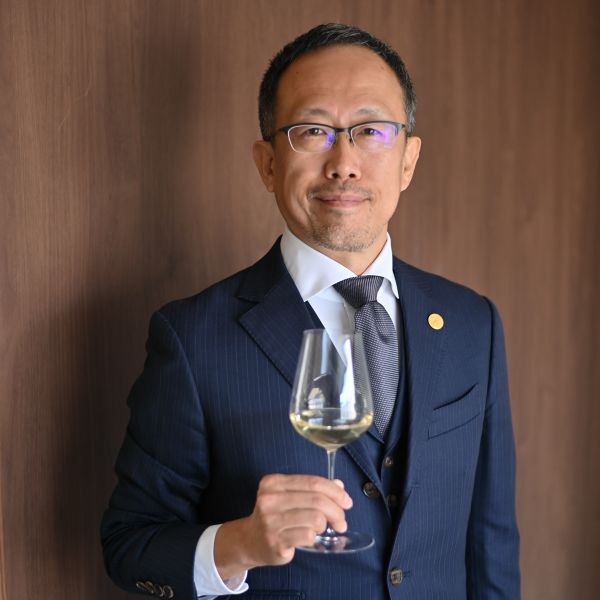
Sake Co-Chair
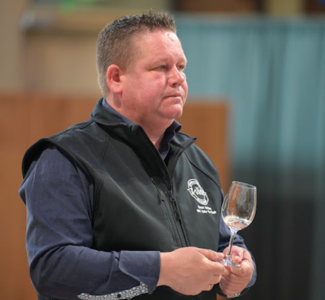
Sake Co-Chair
Sake Co-Chair

Sake Co-Chair
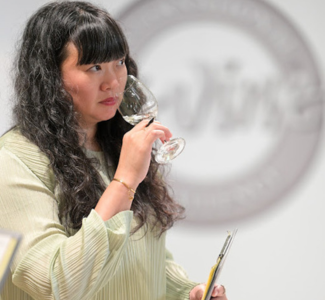
Sake Co-Chair
Judged by the people who shape global sake trade.
The International Wine Challenge brings together internationally respected wine professionals, including Masters of Wine, Master Sommeliers, senior buyers, winemakers and leading sommeliers from across the world.
Every sake is assessed completely blind by expert judging panels within its market and regional context. Gold-winning sakes are then re-tasted and judged again by senior international panels for Trophy consideration.
This two-stage process combines regional expertise with global benchmarking, ensuring results of consistency, credibility and international relevance.
Sleeker judging. Lower shipping costs
Judging in Japan allows producers to ship samples domestically, avoiding international shipping costs, customs procedures and delays.
Each sake entry requires 4 full bottles, reflecting the two-round judging process used by the IWC Sake Competition.
Producers based in Japan can ship samples domestically only.
Flavoured Sake / Fruit-Infused Sake (FIS).
We judge wines across a comprehensive range of categories and sub-categories. Each wine is evaluated alongside others of similar style and price point.
Entry fees have been designed to make participation as accessible as possible, with transparent pricing and regional judging that reduces shipping costs while maintaining the International Wine Challenge's globally recognised standards of excellence.
TBC
per wine (plus VAT where applicable)
Submit and pay by credit card to receive a 5% discount on your entry fee. Discount applied automatically.
Bottle requirement: 4 bottles per entry
VAT applies to UK companies
Only 4 bottles per entry.
For more information on packaging guidelines please visit IWC shipping page.
If you're new to the IWC, start by creating an account or signing in. For queries regarding your company's existing account, please contact Chris Ashton.
Once logged in, you'll find the wine entry form in your dashboard. A checklist of required information is provided to help you complete it accurately.
When your entries are ready, proceed to checkout. You can pay by credit card or request an invoice in GBP, EUR or USD.
Each wine requires three bottles. Please pack your samples securely for transit.
After submitting your entry, you'll receive:
You may ship via:
Turn your win into sales.
An IWC medal is more than recognition – it's a route to market.
Through the IWC Discovery Tasting, medal-winning wines are made visible to UK buyers from leading retailers, importers and on-trade groups via a secure online platform.
Buyers actively search, filter and select wines based on their own criteria - including style, region, price, medal level and category - and request samples only when there is genuine interest.
In 2025, over 2,000 samples reached buyers from
Majestic, M&S, Co-op, Tesco, The Wine Society, Hallgarten and more.
Your wine will be:
· Listed on IWC's dedicated buyer platform with medal, tasting note and producer contact details
· Re-bottled into professional 50ml tasting samples
· Dispatched only to verified buyers who request it, not mass-sent
· Presented directly to retail and on-trade decision-makers
Important!
- Discovery Tasting must be selected at the time of entry.
- Entries cannot be added after results are announced.
"It's like taking your wines to every UK buyer — without the hassle."
The International Wine Challenge is organised by:
IWC Events Ltd
12 St. George's Industrial Estate, White Lion Road, Amersham, HP7 9JQ
Tel: +44 (0)7884 063405
Email: info@iwcevents.com
By entering, you consent to the use of your data for administering the competition and for any purposes to which you have explicitly agreed.
If your wine is already available in the UK, your UK representative should submit the entry on your behalf.
If your wine has no UK importer and you wish to join the Discovery Tasting, select Yes in Question 2 of the entry form and pay the supplementary fee.
Entry fees vary by category and tranche. Please refer to the pricing section for detailed fee information.
Online payment via most major credit cards.
Invoices available in GBP, EUR and USD.
TBC
Wines can be tasted up to three times, with one additional bottle kept for condition checks. Therefore each entry requires three bottles (five bottles if you enter the IWC Discovery Tasting.)
Tranche 1 sample deadlines:
Tranche 2 sample deadlines:
All courier shipments must arrive Duty Paid.
The entrant is responsible for any penalties or unpaid charges.
All samples become the property of the IWC once received.
To enter:
The wine must not have UK representation at submission.
Find out more on this page about the IWC Discovery Tasting.
To cancel an entry you must email the IWC with the name of the wine to be withdrawn and the name of the company deleting the entry.
Entry fees can only be refunded in full if the cancellation is made before the first date of IWC judging 2026.
CANCELLATIONS AFTER THIS DATE WILL NOT BE REFUNDED. If the entrant has used the IWC consolidated shipping service prior to cancelling the entry, the shipping fee will not be refunded.
If multiple companies submit the same wine, all names will appear in the results.
Entry fees will not be refunded.
Medal artwork may be used until 31 December 2026. Standard-resolution artwork and social media templates are free to download via your account.
Physical medal stickers for your bottles can be purchased here.
These rules are governed by English law.
All disputes fall under the exclusive jurisdiction of the English courts.

Still have questions?
Our support team is ready to help you with any questions about the entry process, judging, or competition details.
Contact your local shipping agent before sending samples. They will confirm the paperwork required and any local delivery charges.
