Take a peek inside IWC 2026: the wines, regions, and producers shaping this year's results
Entries to the International Wine Challenge 2026 increased by 7% this year, reinforcing the competition's position as one of the world's most influential benchmarks for wine quality.
Several clear themes emerged from the 2026 results:
France entered the largest number of wines and secured the highest total number of Gold medals, reaffirming its enduring dominance in fine wine.
England recorded the strongest Gold conversion rate among major wine-producing nations, with 16.48% of entries winning Gold medals.
More than 50 wineries appearing in the 2026 results have also won medals in multiple previous competitions, underlining remarkable long-term consistency across vintages and regions.
Producers from emerging and smaller wine nations continued to gain ground, reflecting the increasingly global distribution of fine wine quality.
The results provide one of the clearest snapshots of the modern wine landscape: historic regions remain central to global fine wine culture, yet excellence is now emerging from a far broader geographical base than ever before.
All wines are blind tasted by panels of international experts, with medal-winning wines re-tasted multiple times before final results are confirmed.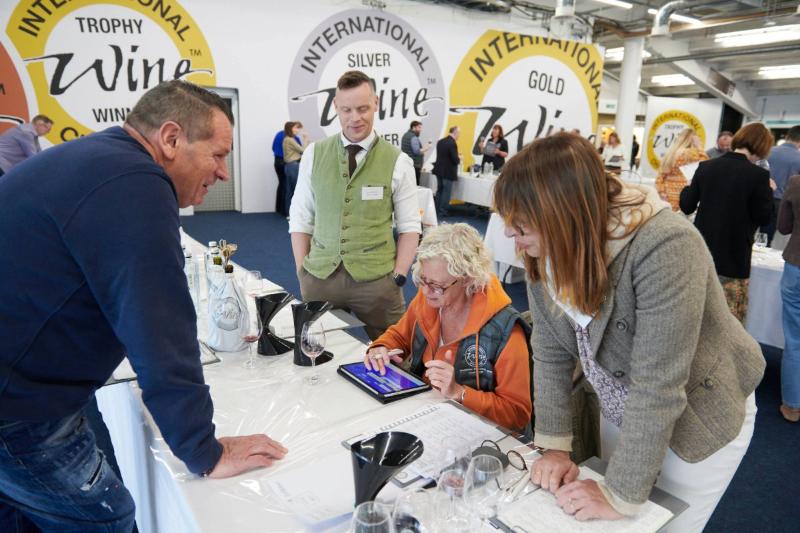
Which countries performed best?
Among major wine-producing nations, most Gold medal success rates fell within a relatively narrow 5–9% range, illustrating the difficulty of achieving the competition's highest honours.
Best-performing major wine countries by Gold conversion rate
England — 16.48%
Australia — 9.35%
Portugal — 9.04%
Italy — 6.74%
France — 5.90%
Spain — 5.50%
New Zealand — 5.50%
England's performance was particularly striking, achieving the highest Gold success rate among countries submitting significant volumes of wine.
Italy also outperformed France on conversion rate despite entering substantially fewer wines overall.
Among smaller entry bases:
Canada achieved the highest overall Gold conversion rate with four Gold medals.
Greece (9.68%) and Austria (7.94%) delivered particularly strong quality performances.
Georgia continued its impressive rise with a 7.14% Gold rate.
Japan secured five Gold medals, highlighting the growing international credibility of Japanese wine production.
Turkey, Lebanon and North Macedonia also secured Gold medals despite comparatively small entry numbers.
Country highlights
The 2026 results showcased outstanding wines from both historic regions and emerging producers, spanning Burgundy, Champagne, Mendoza, Oxfordshire, Jerez and beyond.
France
France again demonstrated its benchmark status, particularly through Burgundy and Champagne.
Standout wines included:
SAS Jean-Marc Brocard — Chablis Premier Cru Vau de Vey 2023 — Gold (95 points)
Champagne Constance Lallement — Champagne Constance L NV — Gold (95 points)
Champagne Leclerc Briant — Blanc de Blancs 2019 — Silver (94 points)
Spain
Spain continued its strong showing across both table and fortified wines.
In Jerez, fortified styles again excelled:
Castillo de Monteviejo — Tabajete VORS Oloroso NV — Gold (95 points)
Castillo de Monteviejo — Tabajete VORS Palo Cortado NV — Gold (95 points)
Rioja and other classic Spanish regions also featured prominently among medal winners.
Portugal
Portugal produced some of the competition's highest-scoring fortified wines.
Sogevinus Fine Wines — Vintage Port 2022 — Gold (95 points)
The Douro Valley continued to demonstrate excellence across both Port and premium still wines.
England
England delivered one of the most impressive performances relative to entry numbers.
Hundred Hills — Blanc de Blancs "Library Release" 2018 — Gold (95 points)
Hundred Hills — Hillside No.3 2019 — Gold (95 points)
The results reinforce England's growing reputation for premium sparkling wine production.
Italy
Italy achieved standout results across both established and emerging regions.
Borgodangelo — Taurasi 2019 — Gold (95 points)
Producers from Tuscany, Veneto, Piedmont and Campania all featured strongly among medal winners.
Argentina
Mendoza once again anchored Argentina's international reputation.
Andeluna Cellars — Altitud Malbec 2022 — Gold (95 points)
Luigi Bosca — La Linda Chardonnay 2024 — Silver (94 points)
Bodega Argento — Estate Reserve Organic Fairtrade Malbec 2023 — Silver (93 points)
Chile
Chile continued to perform strongly with Bordeaux varieties.
Viña Errázuriz — Aconcagua Alto Carmenère 2022 — Gold (95 points)
De Martino — Legado Cabernet Sauvignon 2023 — Silver (94 points)
Australia
Australia delivered exceptional regional depth.
Langmeil Winery — Barossa Rough Diamond Grenache 2022 — Gold (95 points)
Curtis Winery — Gladiator Shiraz MV — Silver (94 points)
South Africa
Stellenbosch again emerged as a standout region.
Warwick Wine Estate — Trilogy 2021 — Gold (95 points)
De Grendel Wines — Rubaiyat 2021 — Silver (93 points).jpg)
Emerging and smaller regions
The increasingly global nature of the medal table was one of the defining stories of IWC 2026.
Notable examples included:
Dyrehøj Vingaard — Solaris Reserve 2023 (Denmark) — Gold (95 points)
Multiple medal-winning producers from Japan
Continued success for Croatia and other emerging European regions
Together, these results underline the widening geographical diversity of world-class wines.
Regions delivering the strongest results
The 2026 competition again highlighted the enduring influence of the world's most celebrated wine regions.
Leading Gold medal regions
Champagne — 30 Gold medals
Burgundy — 26 Gold medals
Douro — 23 Gold medals
South Australia — 21 Gold medals
Tasmania — 13 Gold medals
Jerez-Sherry — 14 Gold medals
Rioja — 11 Gold medals
Kent — 12 Gold medals
Champagne once again led the global regional rankings, while Portugal's Douro emerged as the strongest-performing non-French region.
Australia demonstrated particularly impressive depth, with South Australia and Tasmania performing strongly across sparkling wine, Shiraz, Grenache blends, Riesling, Chardonnay and Pinot Noir..jpg)
Regional highlights
Champagne
Champagne delivered several of the competition's highest-scoring wines.
Standout wines
Rare Magnum 2012 — Rare Champagne
Other leading wines
Laurent-Perrier Héritage NV — 96 points
Piper-Heidsieck Vintage Magnum 2018 — 96 points
M&S Champagne Delacourt Vintage Blanc de Blancs 2017 — 95 points
The results reinforce the consistency of leading Champagne houses, including Rare Champagne, Laurent-Perrier and Piper-Heidsieck.
Burgundy
Burgundy again confirmed its position among the world's elite fine wine regions.
Standout wines
Corton-Charlemagne Grand Cru Domaine du Pavillon 2024 — Albert Bichot
Other leading wines
Chablis Premier Cru Vau de Vey 2023 — Jean-Marc Brocard
Meursault 1er Cru La Pièce Sous le Bois 2022 — Prosper Maufoux
Nuits-Saint-Georges 1er Cru "Clos des Poulettes" 2023
South Australia
South Australia delivered one of the strongest New World performances of the competition.
Standout wines
Classic Shiraz 2023 — Beresford Wines
Other leading wines
Penfolds Bin 407 Cabernet Sauvignon 2023
Penfolds Bin 311 Chardonnay 2024
Penfolds Yattarna Chardonnay 2023
Tasmania
Tasmania continued to strengthen its reputation for world-class sparkling wine.
Leading wines
House of Arras Grand Vintage 2017
House of Arras Grand Vintage 2015
House of Arras Grand Vintage 2009
House of Arras Vintage Rosé 2015
Marlborough
Marlborough again reinforced its global leadership in Sauvignon Blanc.
Standout wines
Rapaura Springs Reserve Sauvignon Blanc 2025
Rohe Dillons Point Sauvignon Blanc 2025 — Rapaura Springs
Eva Pemper Reserve Sauvignon Blanc 2024
Rioja
Rioja maintained exceptional consistency across traditional and modern styles.
Standout wines
Imaz Gran Reserva 2019 — El Coto de Rioja
Other leading wines
Rioja Vega Reserva 2019
La Catedral Reserva 2020 — Bodegas Olarra
Mendoza
Mendoza once again confirmed its international standing for premium Malbec.
Standout wines
Trivento Private Reserve Malbec 2024
Trivento Golden Reserve Cabernet Sauvignon 2024
Trivento Golden Reserve Cabernet Franc 2024
Huentala Calizo Albar Block 06 Malbec 2023
Douro
The Douro Valley delivered exceptional results across both Port and still wines.
Standout wines
Menin Porto Tawny 80 Anos
Other leading wines
Andreza Reserva 2022 — Lua Cheia
Quinta Vale d'Aldeia Grande Reserva Red 2020
Producers dominating this year's results
One of the clearest themes of IWC 2026 was the consistency of producers achieving multiple medal wins.
Trivento Bodegas y Viñedos
The Argentine producer delivered one of the competition's strongest overall performances with three Gold medals:
Trivento Private Reserve Malbec 2024
Trivento Golden Reserve Cabernet Sauvignon 2024
Trivento Golden Reserve Cabernet Franc 2024
Penfolds
The Australian icon once again secured multiple top medals, including:
Bin 311 Chardonnay 2024
Bin 407 Cabernet Sauvignon 2023
Yattarna Chardonnay 2023
House of Arras
Tasmania's leading sparkling producer delivered another standout performance:
Grand Vintage 2017
Grand Vintage 2015
Grand Vintage 2009
Emilio Lustau
The renowned Sherry house continued its remarkable fortified wine success:
Amontillado Botaina Edición Limitada En Rama
Lustau Añada 1995
Supermarket wines: award-winning bottles for everyday drinkers
One of the strongest consumer stories from IWC 2026 was the continued rise in supermarket-listed wines achieving major awards.
Notable examples included:
M&S Champagne Delacourt Vintage Blanc de Blancs 2017 — 95 points
M&S Collection Barossa Valley Shiraz 2024 — 95 points
Botrytis Riesling 2017 — Aldi New Zealand — 95 points
Exceptional Asti NV — Aldi Italy — 95 points
Fletcher's LBV Port 2021 — Aldi Portugal — 95 points
Tesco Finest Picpoul de Pinet 2024 — Les Costières de Pomerols — 95 points
Tesco Finest Barolo 2021 — Fratelli Martini Secondo Luigi — 95 points
The results highlight how award-winning quality is increasingly accessible at the mainstream retail level.
Consistency remains a defining feature
More than 50 wineries appearing in the 2026 results have also won medals in multiple previous competitions, demonstrating sustained quality across vintages and regions.
Notable repeat performers included:
CVNE — Rioja, Spain
Bodega Argento — Mendoza, Argentina
Luigi Bosca — Argentina
Blue Pyrenees Estate — Victoria, Australia
Booster Wine Group — New Zealand
A small group of wineries have now won medals every year since at least 2022, underlining the growing importance of consistency as a marker of international prestige.
The results also showed producers improving year-on-year, moving from Bronze to Silver or Gold as vineyard management, winemaking precision and vintage conditions continue to evolve.
Newcomers making an impact
Alongside established names, IWC 2026 welcomed several first-time Gold medal winners.
Château Mercian — Nagano, Japan
Mariko Omnis 2019 — Gold (95 points)
Kikyogahara Merlot Signature 2020 — Gold (95 points)
Suntory From Farm — Yamanashi, Japan
Tomi Koshu 2024 — Gold (95 points)
Tomi Red 2023 — Gold (95 points)
These results reinforce the growing international reputation of Japanese fine wine.
Golden Amrita Estate — Eden Valley, Australia
Golden Amrita Estate Reserve Shiraz — Gold (95 points)
Red Queen of the Eden Valley — Australia
Red Queen of the Eden Valley Shiraz — Gold (95 points)
La Maison — Burgundy, France
La Maison Pinot Noir — Gold (95 points)
Ten standout wines from IWC 2026
Among thousands of entries, several wines emerged as defining bottles of the competition with more to be revealed on 19 March.
Five key trends emerging from IWC 2026
1. Fortified wines continue to achieve exceptional scores
Fortified wines once again ranked among the competition's top performers, with standout results from producers in Jerez and the Douro Valley. Their concentration, balance and ageing potential continue to excel in blind tasting.
2. England's rise continues
English producers delivered one of the strongest performances relative to entry numbers, reinforcing the country's growing reputation for premium sparkling wine and increasingly high-quality still wines.
"I was thrilled with the performance of English wines," said IWC co-chair Oz Clarke.
"The quality bandwagon, which has been gathering speed for several years now, looks unstoppable. As a Kent boy, I was delighted to hail Kent's stylish sparklers and still wines, as well as taking my hat off to superb Sussex wine from Wiston and Oxfordshire wine from Hundred Hills. The sparkling category had a worthy winner in the heavenly Rare 2012 - elegant, stylish Champagne at its best. But it is now clear that champagne has a genuine rival in England and the battle for top sparkler will be keenly fought over the next few years.".jpg)
Meanwhile, Sam Caporn MW noted that "it is important to remember that it wasn't just fizz that were winning the top gongs, but superlative still wines too, which also impressed the judges and Co-Chairs. A category and country that is on the up and deservedly so."
3. Historic European regions remain the benchmark
Classic regions including Burgundy, Champagne, Rioja and Bordeaux continue to dominate the medal tables, demonstrating the enduring prestige of Europe's historic wine regions.
"This year's competition was the most excitingly diverse to date, with incredible wines from some of the finest regions in the world alongside places you just didn't expect," adds co-chair Helen McGinn.
4. Argentina is evolving beyond Malbec
While Malbec remains central to Argentina's international identity, Chardonnay and Cabernet Franc are increasingly appearing among the country's highest-scoring wines.
5. Consistency matters more than ever
Long-term medal success is becoming one of the clearest indicators of producer quality, with repeat winners increasingly defining the upper tier of international wine competitions.
6. Award-winning wine is becoming more accessible
Supermarket and retailer-exclusive wines continue to perform strongly, showing that internationally recognised quality is no longer limited to specialist merchants or luxury price points.

Get expert insights, weekly highlights, and exclusive stories from the world's most trusted wine competition.