


- James Lawrence
- 2026-04-21


The only way to make a small fortune in the wine business is to invest a large one, they say. Not true: shysters like Rudy Kurniawan managed to make considerable sums from the financial spoils of wine counterfeiting. It is estimated that Kurniawan fraudulently produced and sold more than US$20 million's worth of counterfeit top vintages, successfully duping major auctioneers and buyers for years. And, despite a global slump in demand, wine fraud remains one of the industry's more lucrative – and resilient - growth areas.
Obtaining accurate estimates, however, of the amount of fake wine in circulation is difficult – if not impossible. The best guess of organisations such as Interpol and the World Trade Organisation is around 20%; Maureen Downey, who runs Chai Consulting - a US business that specialises in wine authentication and valuation – has always suggested in our interviews over the past decade that the figure may be higher. Nor does she consider so-called 'innocent' third parties entirely blameless.
"Behind every counterfeiter, there is a person or group that is helping them - whether it be through funding them, buying wines, or connections in the industry. Many merchants, auction houses, etc, didn't care to authenticate or learn about authenticating wines, thereby putting millions of dollars of fake wine into the marketplace for decades," Downey told me in 2019.
Today, there remains a strong word association: China equals fake. Anti-counterfeit lawyer Nick Bartman once stated that approximately 70% of the imported wine he encountered in China was ersatz, a figure supported by oenologist Frankie Zhao, who noted that around 70% of all bottles of Lafite Rothschild sold in China were probably counterfeit.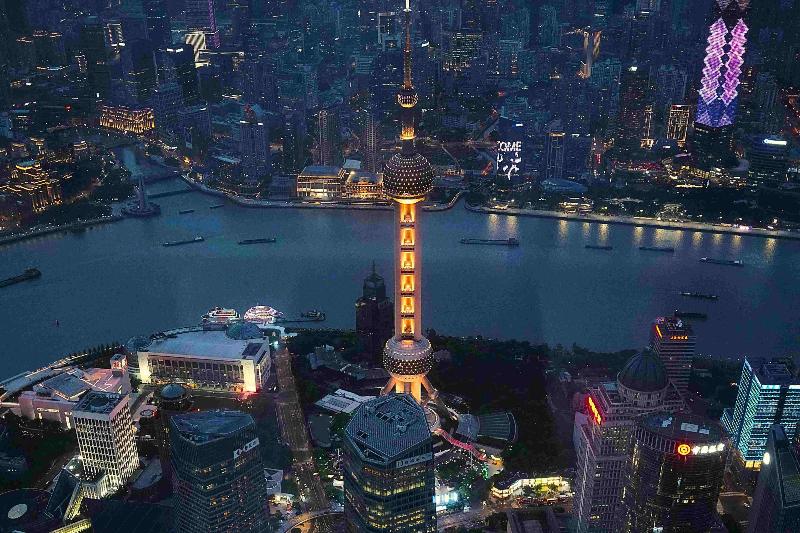
Yet the phenomenon is not limited to Asia: in 2024, French, Italian, and Swiss police forces teamed up to bust a gang of fraudsters who were selling counterfeit fine wine, reportedly netting more than €2 million. More recently – and closer to home – the UK's National Food Crime Unit (NFCU) seized tens of thousands of fake bottles in March, including some carbonated wine passed off as Prosecco. The problem is persistent, global, and evolving.
The fight back
From the perspective of leading producers – both fine and otherwise – the challenge of global fraud is existential. Fraud is corrosive for several reasons: it erodes revenue and, perhaps more crucially, undermines trust built over decades.
"In today's global market, where fine wines are increasingly subject to counterfeiting, adopting technological defences is a vital part of safeguarding reputation and maintaining trust," observes Giampiero Bertolini, CEO at Biondi-Santi. The estate currently uses a physical safeguard - a secure Proof Tag applied to the capsule - to protect against fraud.
"It provides a visible and tamper-evident guarantee of the bottle's integrity. This is a crucial step of protection, as it makes any interference immediately noticeable. Moreover, the tool operates around the wine, so it doesn't change how the wine is produced or aged, but instead protects its integrity once it leaves the cellar," he explains.
However, Bertolini acknowledges that there is no perfect panacea that will prevent fraud on the secondary market; with wines like Biondi-Santi that have been circulating on the market for decades, it is virtually impossible to track every bottle once it has left the estate, especially older vintages that have changed hands multiple times over the years.
"We are very aware of the risks associated with the secondary market and have put measures in place where we can," he says.
"In particular, with our second releases, we clearly indicate on the bottle the exact date it leaves our cellar. This certifies that the wine has been stored under perfect conditions at the estate until that moment." It also provides collectors with a reliable point of reference and an additional layer of reassurance regarding the wine's "provenance and integrity."
According to Adriana Burkard, owner of Arillo in Terrabianca: "We have started implementing QR codes on our bottles to allow both distributors and end consumers to independently verify their authenticity. QR codes offer a straightforward way for users to access information and validate the provenance of each bottle, and we are monitoring their effectiveness as part of our broader anti-fraud strategy."
Meanwhile, leading merchants remain caught in an ambiguous space - both potential preventers of fraud and points of vulnerability. Marc Almert, General Manager of Baur au Lac Vins, believes that sellers "have a big responsibility". As a result, the business "regularly discusses the topic with our loyal customers to increase their awareness."
He adds: "Furthermore, we focus on younger vintages, which often have an RFID chip or similar in the bottle neck or OWC (Original Wooden Case) closure, to enable transparent checks on provenance." Yet Almert is cautious about fully embracing blockchain or AI-driven authentication, albeit he is "paying close attention to how these technologies are developing."
The arms race
Historically, the battle against wine fraud was reactive – focused on exposing fakes after sale. Today, the emphasis is shifting toward prevention; at the upper end of the scale, advanced analytical techniques – such as chromatography and nuclear magnetic resonance – allow laboratories to identify the chemical "footprint" of a wine, with the most sophisticated methods even allowing non-invasive testing through sealed bottles. Of course, these approaches remain limited by cost and scalability.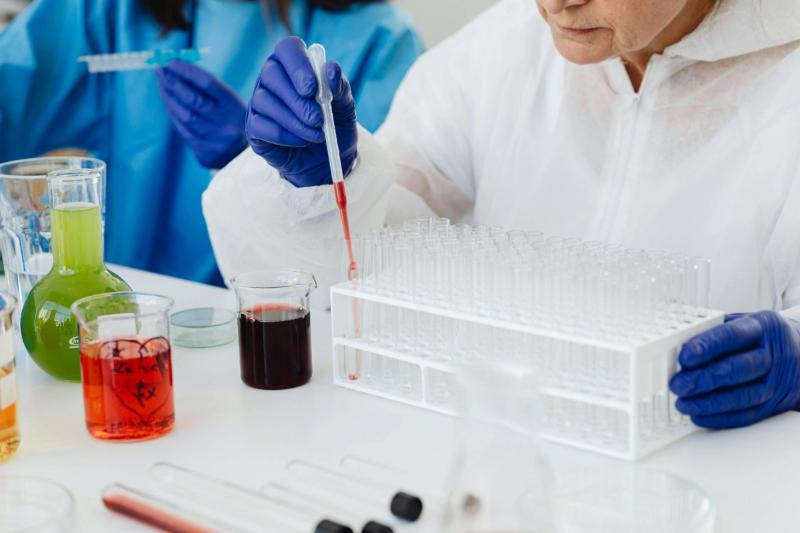
Meanwhile, more scalable solutions lie in the integration of physical safeguards – favoured by Biondi-Santi - and digital protections such as electronic ID tags, used by Château Angelus and Château Palmer, to cite just two examples. "We are confident the chip will make the fraudster's task a lot harder, although the issue of bottle recycling remains a challenge," notes co-owner Stephanie de Bouard.
Indeed, blockchain technology has been hailed by some as a potential solution to fraud; projects like the EU-funded TRACEWINDU combine blockchain with chemical analysis to create an end-to-end traceability system, from vineyard to consumer.
"At Mosnel, we have adopted Wineability, a traceability platform developed by SAIT, a technology company based here in Franciacorta," explains Giulio Barzanò, co-owner of Mosnel.
"Every bottle is assigned a unique digital identity through serialised QR codes combined with RFID tags, creating a verified chain of custody that covers every step from the winery to the final consumer. Each transaction along the supply chain, from bottling to shipping to distribution, is recorded and secured through blockchain technology, making it tamper-proof and independently verifiable."
Yet blockchain is not a silver bullet: its effectiveness depends entirely on the accuracy of the data entered at each stage, meaning errors or manipulation can become permanently embedded in the record.
Perhaps the strongest response, therefore, is to adopt a multi-layered approach, combining physical and digital safeguards to make fraud "too expensive to attempt" for most crooks, to quote Downey. But intractable problems remain: many estates lack the resources to invest, while fraudsters continue to adapt, leveraging the same technological tools used by legitimate businesses.
"Balancing the cost and complexity of anti-fraud technology with the demands of scaling across different markets and vintages is an ongoing challenge. We are carefully evaluating solutions to ensure they remain practical and economically viable, especially considering our limited production," notes Burkard.
In 2026, our industry is locked in an arms race with the global criminal fraternity. And, much like the so-called War on Drugs, neither side is likely to emerge completely victorious.



.png)