


- James Lawrence
- 2026-04-21


Last week, something unusual caught my eye in a Frankfurt wine shop – and no, it wasn't the lederhosen. A delicious Pouilly Fumé, produced by Domaine Bouchié Chatellier, had no vintage on the front label. The manager explained that due to a miserably small harvest in 2024, the owners had no choice but to blend the 2023 and 2024 vintages, releasing a rare non-vintage edition. Bravo, I thought - what a pragmatic response to an increasingly volatile climate. However, there are many who would disagree – and passionately so.
Indeed, in my 15 years as a wine writer, I have encountered nothing more robust than the cultural resistance - at least from some quarters - to the idea of embracing a multi-vintage model in the still wine sphere. During a visit to Burgundy in 2015, I was nearly thrown into the vat, headfirst, for suggesting the merits of such an approach; I had violated one of the industry's most sacred beliefs: that a wine should express the particular nuances of a single growing season.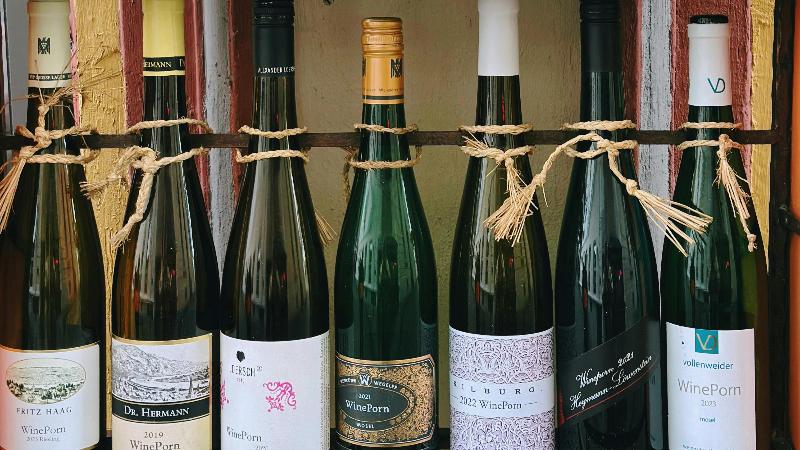
Portuguese winemaker António Maçanita understands the phenomenon: he once told me that when he released a premium rosé with no vintage date on the bottle, his friends and neighbours described him as "utterly mad."
"Everyone advised me against it," he says. "They said rosé needed to have a young date on the bottle to be sellable." But his Fitapreta Rosé flies off the shelves, proving that multi-vintage wines can do well. More blended labels, including a red, have since been added to the portfolio following the success of the pink.
Today, Maçanita is part of a small firmament of producers that market MV still wines, including Napa Valley's Opus One Overture and Cain Cuvée, Penfolds G5, Chilean label Caballo Loco, and De Toren Z MV from South Africa. Meanwhile, a handful of producers in Ribera del Duero (often working outside of the DO framework) have experimented with MV wines – as have growers in the South of France.
"It is funny to me that people will happily drink NV Champagne or sherry, yet with other styles of still wine it is seen as quirky or strange," says Samantha Suddons, founder of the Vinevenom brand.
"I wanted to make wines that are reliable, approachable and based more on a certain winemaking style than vintage variation. If people like the taste of the wine, then that is all that matters - I would hope that winemakers would also see the benefits of my approach."
A few do, but many more will roll their eyes and quickly remind you that wine is valued precisely because it captures a specific moment in time – otherwise it's just another industrial product. From their perspective, blending across vintages risks erasing one of its most cherished attributes. End of story.
Climate pragmatism
Unfortunately, this argument assumes a level of relative climatic stability that no longer exists. Frosts arrive unannounced, heat spikes compress ripening windows, and harvests can swing wildly between abundance and scarcity – as Domaine Bouchié-Chatellier discovered in 2024. In this context, a marginal category – MV still wine - looks less like a wacky idea and more like a practical solution.
"The obvious argument in favour of adopting the multi-vintage model is that it allows for a 'flattening-off' of the quality variances between harvests," observes wine buyer Peter Mitchell MW.
"This would facilitate more consistent pricing and margins from year to year. It also could, in theory, bypass the difficulty in selling a vintage that is of lesser quality."
But most importantly, the model delivers vital flexibility, giving producers some insurance against the vagaries of climate change. This philosophy underpins projects such as Cain Cuvée, where blending delivers a consistent house style regardless of annual fluctuations. In regions increasingly prone to extreme weather – drought, fire or unseasonable rain – this paradigm offers a degree of control that is surely invaluable.
Complexity or authenticity?
Sometimes the advantages of MV blending emerge by accident. Chilean producer Caballo Loco began as an improvised solution to a logistical cock-up, when barrels from different vintages accumulated at the winery.
"We never planned to adopt the MV model - it was a random occurrence, "says Luciano Fiori, North America sales director at Groupo Valdivieso, owner of the brand.
"I remember that our bottling line used to be 200km away from the winery; during transportation of our premium wines, some barrels didn't fit in the truck and were left behind, piling up different varieties and vintages all together." A subsequent visit from some influential customers encouraged the team to properly taste this higgledy-piggledy treasure trove.
As it turned out, the customers' advice on certain barrel samples was to "ease down on the new oak." And because time travel was out of the question, the winemaker decided to blend across different years, favouring wines with less oak impact. Caballo Loco has maintained this approach ever since.
Of course, one of the persistent criticisms of MV wines is that they risk being bland or overly homogenised. Yet Caballo Loco proves the opposite can be true: blending is inherently favourable to complexity, and the process, when handled with care, can produce something more intricate – and, dare we say, more interesting – than a straightforward vintage wine.
Nevertheless, resistance to a more wholesale adoption of vintage blending remains strong – particularly at the upper end of the market. Bordeaux has long been built on the mythology of the vintage, where variation is leveraged to drive demand. Adopting an MV approach is an obvious threat to that commercially lucrative model, notwithstanding the increasingly lacklustre interest in buying en primeur. At the same time, high-profile releases have helped to legitimise the category, with Penfold's multi-vintage Grange blends proving that such wines can command both critical acclaim and premium pricing.
Several hundred years ago, it was common practice for merchants in France to blend across regions, adding a good dollop of Rhône Valley red to Burgundy, lest the latter remain a pinched and anaemic glass of tart mouthwash. No one, least of all me, advocates a return to that paradigm. Moreover, there are cogent arguments against widespread adoption, including the costs inherent in holding larger stocks of wine to blend, and the potential loss of terroir expression and identity.
However, most of these arguments favour the producer, not the consumer, and may become increasingly hard to justify in light of the climate pressures facing growers. What will it take for the industry to embrace multi-vintage still wines en masse? On current evidence, it may require an event of biblical proportions – and no small amount of proselytising – before the recalcitrant give way. But I live in hope.




.png)