


- James Lawrence
- 2026-04-15


Region: Bordeaux, France
Founded: 1974
Owners: 400 member winegrowers
Estate holdings: 4,000 hectares
Annual production: 230,000 hectolitres
Employees: 175
Visitors to Bordeaux's more grandiose châteaux may find Tutiac something of a culture shock. In place of towering spires and entrenched hierarchies, it offers an alternative model – one that unifies collectivisation with innovation and environmental responsibility.
Founded in 1974, Tutiac has evolved from modest origins into one of the most influential cooperative forces in Bordeaux, uniting 400 growers farming some 4,000 hectares across the wider region. Following a defining period of consolidation between 2000 and 2007, the cooperative significantly expanded its viticultural footprint, positioning itself as a leading producer of Bordeaux Blanc and rosé, as well as a major force within the Côtes de Bordeaux. In both scale and ambition, it stands apart.
Indeed, its vineyard holdings extend across both banks of the Gironde estuary, planted to the classic Bordeaux palette – alongside a growing number of experimental varieties. From a diverse collection of terroirs, including Graves, Sauternes, the clay-limestone slopes of Blaye, and the gravel terraces of the Médoc, Tutiac produces a broad stylistic range, from Bordeaux Supérieur to premium bottlings from regional appellations. And while the cooperative's portfolio - spanning proprietary brands, chateau-designated wines and private labels – is not positioned at the very top of Bordeaux's hierarchy, it delivers consistent quality at accessible price points in a global market where value is increasingly scrutinised.
The cooperative also has few equals when it comes to sustainability. According to president Stéphane Héraud, the majority of its vineyard holdings are HVE-certified, while Tutiac is also "the largest producer of organic wine in Bordeaux," with several hundred hectares under organic certification.
"All of our growers have been engaged in certification schemes for more than 20 years, including HVE, Terra Vitis, Organic Agriculture, Fair For Life and others," Héraud explains. The organisation has also invested heavily in renewable energy, equipping its sites with solar panels and solar trackers that cover around 50% of its electricity needs. Its centralised bottling facilities, meanwhile, are designed to optimise water and energy use, reflecting the efficiencies made possible by scale.
Yet Tutiac's success lies not only in its scale but in its commitment to quality, innovation, and an astute assessment of evolving market demands. It represents a more progressive side to Bordeaux – one that may serve as a blueprint for the region's future.
Q&A: Stéphane Héraud, président des vignerons de Tutiac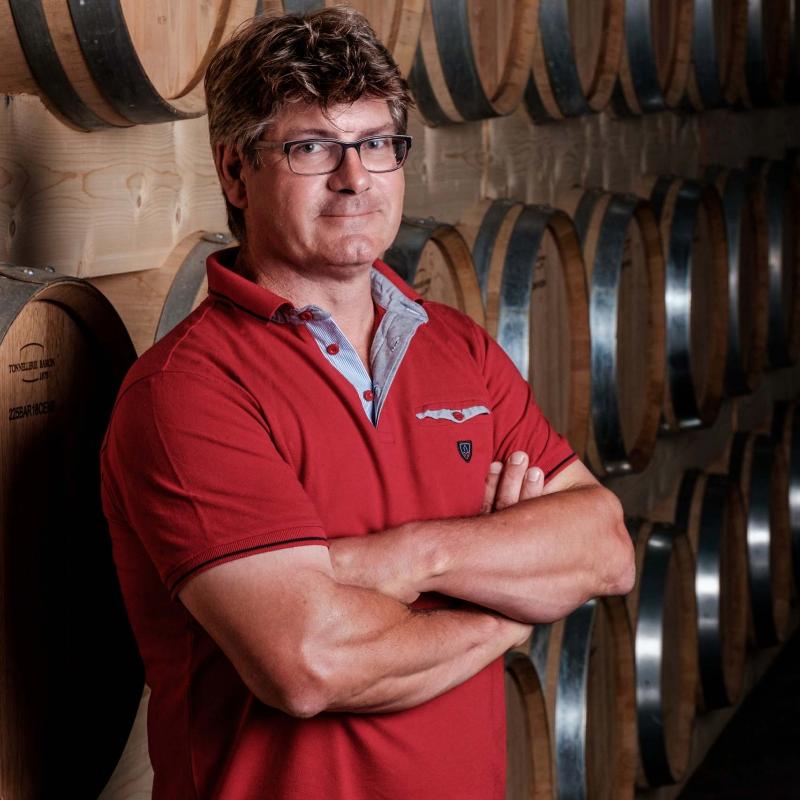
Tutiac has a strong cooperative heritage - how do you balance tradition with the need to innovate in a rapidly changing global wine market?
At Tutiac, our cooperative model is in itself a tremendous driver of innovation. When you bring together 400 winegrowing families across 4,000 hectares and 15 appellations, you create a scale of experimentation that very few structures can offer. We can trial resistant grape varieties across 35 hectares, launch climate adaptation and environmental transition protocols in the vineyard through programmes such as VitiRev, develop alcohol-free wines, and do all of this simultaneously without putting our growers' economic balance at risk.
Our strength lies precisely in this ability to share risk. For an individual estate, planting Souvignier Gris means committing a significant part of the business. We, on the other hand, can run trials over several vintages, validate the results, and then roll them out at scale across our growers' vineyards. Innovation is at the heart of both Tutiac's strategy and its DNA.
Sustainability is becoming central to wine production - what tangible changes has Tutiac made under your leadership?
There is Help Protect the Ocean, which is perhaps the most tangible illustration of our approach. Every component is traceable: the closures are made from plastic collected before it reaches the ocean, the bottle is the lightest on the market, the capsules are made from sugarcane waste, and the labels and cartons are produced from recycled materials. Through this programme, we collect around two tonnes of plastic waste each year.
Lastly, we have measured our overall carbon footprint and are now working towards a regenerative path in our vineyards: inter-row cover cropping, reduced tillage, and the planting of hedgerows and flowering meadows. Plots planted with resistant grape varieties, which require fewer passes and fewer inputs, are a very concrete lever in this strategy.
Where do you see the biggest opportunities for technology to transform viticulture and winemaking?
At Tutiac, the greatest opportunity lies in our ability to make more precise and faster decisions at the plot level. We have deployed a dense network of weather stations and insect traps, which allows us to respond in real time to climate events and pest pressure.
But the most transformative technology in the medium term is resistant grape varieties. Since 2014, we have been running a structured programme in our experimental vineyard in Marcillac. We currently have 35 hectares under trial, mainly with Souvignier Gris, Vidoc and Soreli. Our selection criteria are strict: we only retain varieties that deliver aromatic profiles worthy of Bordeaux, show consistency over several vintages, and measurably reduce chemical inputs and tractor passes. We market them under IGP in dedicated ranges for both on- and off-trade channels, highlighting the grape variety names in order to build awareness among the wider public.
This is where our cooperative scale makes all the difference. We have the surface area to conduct replicated trials, the time to validate results properly, and the capacity to roll out and promote proven solutions at the best possible price for consumers. Very few structures can offer that.


.png)