


- James Lawrence
- 2026-03-24


Region: Leithaberg, Burgenland, Austria
Founded: 1652 (Esterházy winemaking records date back to 1652; cellar records to 1758)
Owners: Esterházy Foundations
Estate holdings: 65 hectares across 21 vineyards in Leithaberg
Winery Director: Wolfgang Hewarth
Annual production: 250,000 bottles
Few wineries can claim a history as storied as Weingut Esterházy. Set in the foothills of the Leitha Mountains in Burgenland, Esterházy has a documented viticultural history dating back to the 17th century. At the Esterházy Palace in Eisenstadt, composer Joseph Haydn once served as Composer-in-Residence, receiving wine from the estate as part of his remuneration. Yet long before Leithaberg was formally recognised as a DAC, the estate had already established a reputation for pioneering thinking, including the early introduction of Pinot Noir to the region. It is this potent – and rarefied - combination of deep-rooted tradition and progressive innovation that continues to shape Esterházy's identity today.
"Historically, we have never been afraid to take new and sometimes unconventional paths, and that pioneering spirit remains central to how we work," explains winery director Wolfgang Hewarth. "True evolution doesn't happen without experimentation, which is why we actively create the freedom to try new things. Today, this philosophy drives our commitment to research, innovation, and responsibility."
The estate's holdings encompass 65 hectares across 21 distinct parcels in the diverse terroirs of Leithaberg. Here, a patchwork of cooler mesoclimates – shaped by varied exposures, soil types and breezes from the foothills – encourages the slow ripening of highly aromatic fruit, brimming with minerality and freshness. Esterházy has farmed organically since 2019, with full certification achieved for the 2023 vintage. According to Hewarth, a strict no-irrigation policy and biodiversity-focused practices are "central to maintaining vine health and long-term sustainability."
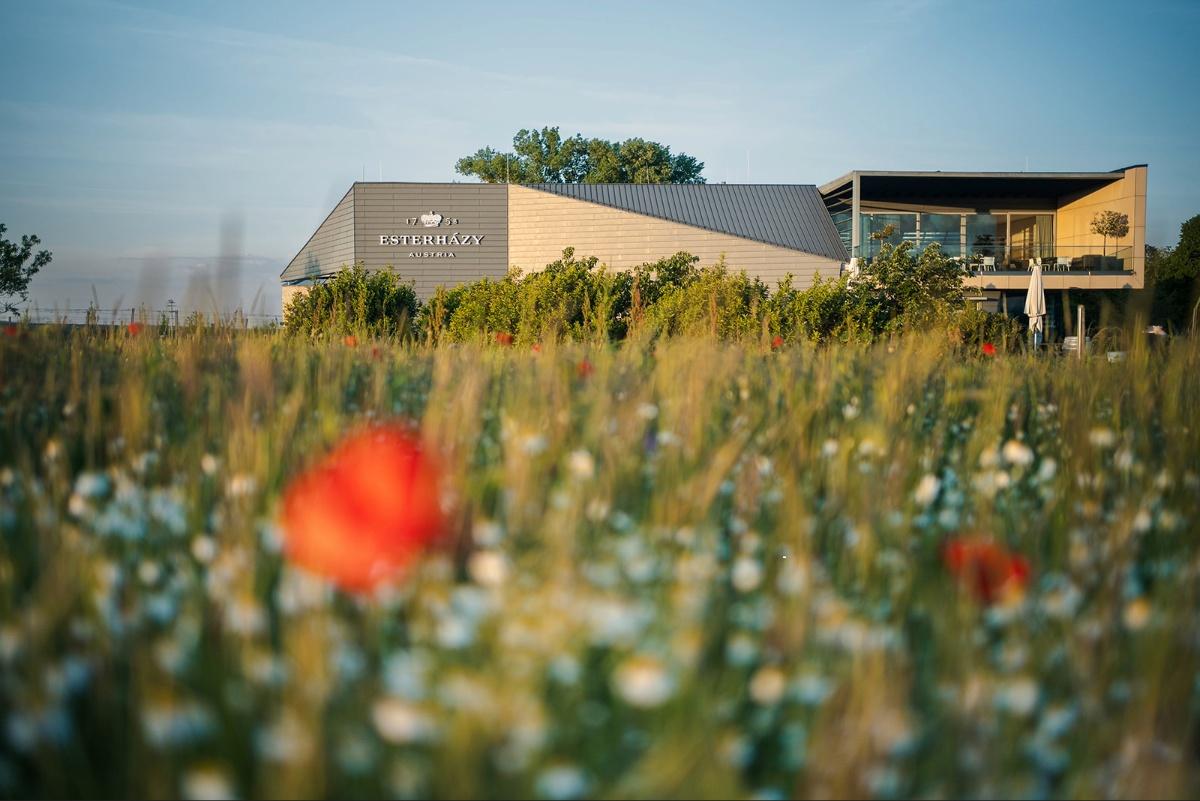
Prior to the early 21st century, Esterházy's wines were made at the palatial, if not entirely practical, estate at Eisenstadt. However, since 2006, all winemaking has taken place in a state-of-the-art facility at Trausdorf am Leithaberg. Pushing the envelope in both viticulture and vinification, Esterházy has collaborated with the Pauliberg basalt quarry to create 3,800-litre concrete eggs with 30% basalt content – among the largest of their kind in the world, and unique in Europe. "Since our first organically certified vintage in 2023, these 'Super Eggs' have been used for our regional wines. The natural convection created inside the egg keeps the lees gently in motion, resulting in balanced structure, vibrant acidity and pure fruit expression," says Hewarth.
Meanwhile, a broad portfolio of wines is classified via a hierarchical pyramid of origin – regional, village, and single-vineyard designations, in the Burgundy mould. Austrian classics – including an exceptional Blaufränkisch and Grüner Veltliner – sit alongside international varieties such as Chardonnay and Pinot Noir. Capitalising on the expanding market for premium sparkling wine, Esterházy has also introduced a range of 100% Blaufränkisch Sekts, which often sell out quickly upon release.
It would be easy for one of Burgenland's most historically significant estates to rest on its aristocratic laurels, lazily trumpeting its pedigree while producing indifferent wines. Instead, Esterházy's team has worked tirelessly to position it as a compelling ambassador for cool-climate Austrian viticulture, producing food-friendly wines that deliver impressive value. Authenticity, for once, is not just a marketing slogan.
Q&A: Wolfgang Hewarth, Winery Director, Weingut Esterházy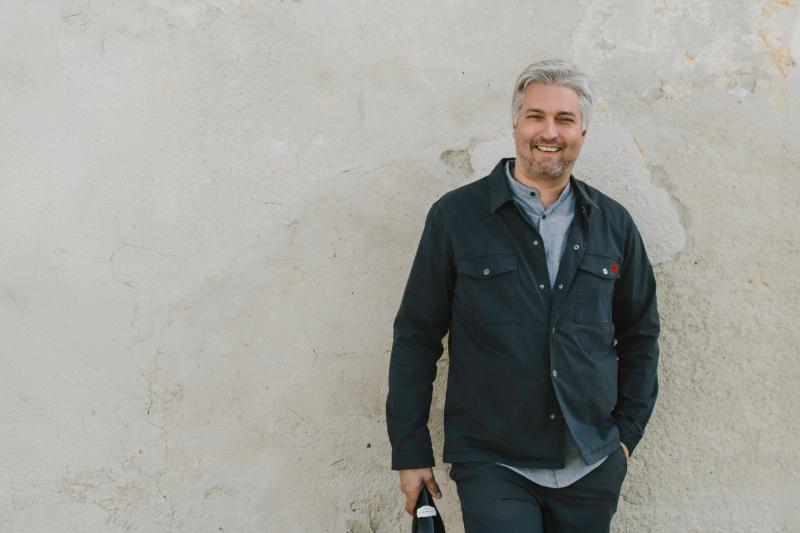
Burgenland has such diverse microclimates - how do you see climate change reshaping your vineyard practices and the expression of your key varieties over the next decade?
We are already seeing clear signs of earlier ripening, higher sugar levels, and more pressure from drought and extreme weather events. Over the next decade, these developments will continue to shape both our vineyard practices and the stylistic expression of our key varieties. As an organically certified estate, our approach is to build resilience in the most natural and long-term way possible. For us, that means strengthening the vineyard ecosystem rather than relying on quick fixes. We're investing heavily in soil health through diverse cover crops, organic compost from our own farm, and practices that enhance water retention and biodiversity. Deep-rooted vines are essential for future drought tolerance, so we encourage root systems that can access water and nutrients even under stress. In addition, we have consciously planted small trial parcels of varieties with naturally high acidity, such as Chenin Blanc and Furmint — a long-term strategy that may support our stylistic goals should climatic shifts intensify.
Esterházy has a long historical legacy - how do you decide when to preserve traditional methods versus introducing modern techniques in the cellar?
With a 300-year winemaking tradition, heritage is naturally one of our greatest assets — but it's also something we view as a living framework rather than a constraint. In the cellar, our focus is always on finding the most authentic expression of each wine. Oak barrels crafted from Esterházy's own forests in Leithaberg remain essential for our village and single vineyard wines — a traditional method that continues to deliver unmistakable structure, precision and a strong sense of place.
Alongside this, we systematically explore both modern and ancient vessels. For several years, we have worked with concrete, clay, ceramic and granite in forms ranging from amphorae to eggs and barrels. These trials have become an important innovation engine for the estate. Their results are showcased in our 'Project Wine' line, where we deliberately take creative departures from established paths, whether it's a Grüner Veltliner aged in a granite barrel or a Blaufränkisch vinified as a white wine or a Pet Nat. These Project Wines are especially important as they allow us to deepen our understanding of vinification techniques and generate valuable learnings in the cellar that continuously elevate our craftsmanship.
With international markets often influencing wine styles, how do you maintain a distinctly Austrian - specifically Burgenland - identity in your wines while still appealing globally?
We don't adapt our wines to international tastes — we trust that authenticity is what the world is looking for today. Staying true to ourselves and to our stylistic identity is fundamental to our philosophy; we do not adjust our wines to fit market expectations but instead rely on the strength and clarity of our own terroir-driven style. Whether mineral fresh or complex and age-worthy, Esterházy wines combine heritage with sustainable innovation to bring out the full diversity of the Leithaberg appellation. And this clarity — fresh, balanced, vibrant and unmistakably Austrian — is exactly what allows our wines to stand confidently in global markets.



.png)