

- Christy Canterbury MW
- 2026-03-24


Doom and gloom dominated sentiment as 2024 wrapped. Pascal Mugneret of Domaine Gérard Mugneret said, "You had to work yourself up psychologically to get back into the vineyards every few days. We humans and the vines were struggling so much."
The relentless challenges were rain and lack of sunshine, which led to a previously unseen explosion of downy mildew. The vintage is the third wettest (after 2013 and 2001) and by far the least sunny in the 21st century. Anne Morey of Domaine Pierre Morey said, "We didn't have more than three periods of at least three to five days in a row with sunshine from 15 Oct 2023 to 15 Oct 2024." Temperatures were middling, making 2024 the tenth warmest season since 2000.
Happily - and perhaps surprisingly - the 2024s are generally superior to the 2021s in both colours, with the 2024s showing better fruit density. The 2021 Côte de Beaune whites come the closest to rivalling the quality levels of any 2024s. The 2024s are fresh and approachable, with less extract, concentration and alcohol than the most recent vintages.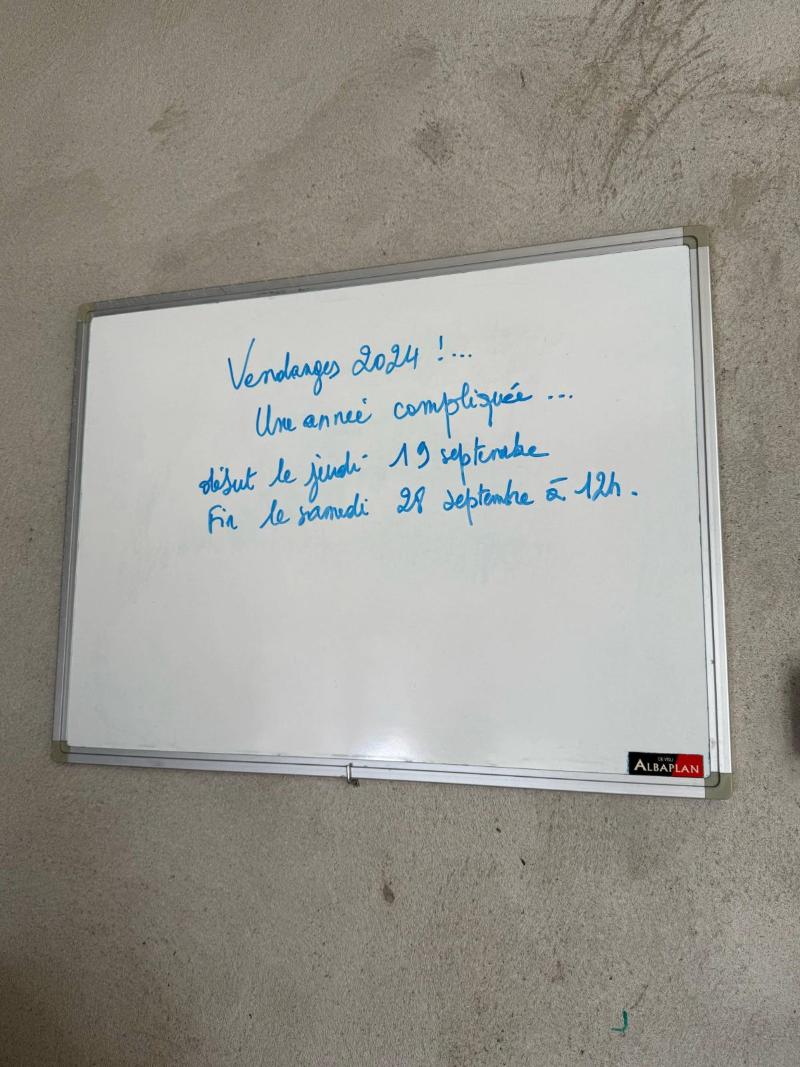
Staying the Course
The year began warm to unusually warm, before turning cool and rainy in April with several frost events — some severe. Malevolent hail in Chablis on 1 May dashed most producers' hopes of a reasonably-sized harvest...or any harvest for some. Throughout the season, hail also struck other areas, causing localised damage. With persistent precipitation, vineyards lower on the slopes, where moisture accumulates, suffered the most.
Poor weather during flowering reduced yields more than other factors. Much of the nascent crop failed to develop. At the time, few producers understood that a hidden nuisance was looming. Benjamin Leroux of his eponymous négociant house said: "In the Côte de Nuits, downy mildew was already in the buds before flowering."
The downy mildew became ferocious. The conditions were perfect to encourage it. It went straight onto the grapes - again, an unprecedented occurrence. Yet surprisingly, few organic producers quit their topical applications. Put simply, many considered it too late. They would have had to have stopped before flowering to save more crop.
However, undertaking 18, 20 or even 24 treatments, as some did, "carried an enormous carbon footprint," said Michael Shaps of Maison Shaps. Many questioned the kilos of copper and thousands of litres of water (for preparations and equipment cleaning) and petrol used. It was far from environmentally sustainable.
Sorting the Grapes - Or Not
In Chablis, just days before the harvest, I could see three stages of maturity on a vine — even within one cluster. Yet by choosing the right harvest date and with careful vineyard selection, many producers claimed they sorted very little because the downy mildew dried up the affected berries, which naturally fell off the vine.
Others faced a different scenario. Réno Pacalet of Maison Philippe Pacalet stated, "We sorted out more than we harvested" Bertrand de Villaine of Domaine de la Romanée-Conti added, "Sorting wasn't optional. Even my strawberry plants had downy mildew. The fruit trees suffered, too"
Making the Wines
For whites, lees management became a central concern. Many felt they might not be the cleanest and wanted their wines off them quickly. Others felt the wines needed lees nourishment or would turn out too lean. Some even went full-on bâttonage, despite not having used the technique in years.
For reds, gentle extraction dominated. Cold soaks, whole cluster use and punch downs were minimised or avoided. This hesitancy is frequently perceptible in the glass. Most wines simply don't have the structure to rise to greater heights thanks to the prevailing fear of extraction. Where whole cluster was used, it was frequently well blended, though some wines do have leafy, herbal scents that can be distracting — at least at this stage.
Buying the Wines
Despite the craziness of the year, many wines are well worth seeking out. The trick will be finding them.
Volumes are drastically low in Chablis and the Côte d'Or. The Côte Chalonnaise and the southern part of the Mâconnais fared better. Still, it's the smallest harvest on record for many producers. The classic quality pyramid is compressed in 2024, with Premier Crus sometimes resembling top village wines and Grand Crus behaving more like good Premier Crus. The highs aren't as high, but the lows aren't so low - certainly not as poor as initially feared.
Careful buying will deliver much enjoyment in the near to mid-term.
Chablis
Chablis and Petit Chablis are frequently charming. Many at this quality level benefited from the VCI (Volume Complémentaire Individuel), a program where producers are allowed to stock a specified amount over the maximum yields to use in the following vintage if the next vintage is short. With the copious 2023 harvest, there was ample VCI to bolster the potentially lean 2024s, and these two vintages are highly complementary.
Côte de Nuits
Given the timidity surrounding extraction, these are gentle, suave wines for earlier enjoyment with few exceptions. Consult critics and specialist wine stores for big spends.
Côte de Beaune
The whites win over the reds by a good margin. Given their high prices, it pays to remain cautious of lower-lying vineyards in the headliner villages (Meursault, Puligny, and Chassagne) and consider hillside vineyards in other villages. The reds are generally pretty wines that will be a treat through the mid-term.
Côte Chalonnaise
The Côte Chalonnaise earned the Goldilocks award with its fairly generous volumes, its broadly appealing style, and its generally reliable quality. Thanks to plentiful, healthy fruit, extraction wasn't an issue in reds. It's worth exploring here in both colours, possibly even favouring buying Chalonnaise reds, especially the Premier Crus, over reds further north — especially for the price points. The best wines should have some staying power in the cellar.
Mâconnais
The Mâconnais earned more Premier Crus (after Pouilly-Fuissé in 20,20) in 2024: Pouilly-Loché Les Mûres and Pouilly-Vinzelles Les Longeays, Les Pétaux and Les Quarts. Hopefully, their pricing remains reasonable. The Mâconnais is a welcome source of both pleasurable and well-priced wines with satisfying complexity. Stick with the top names in 2024 and there won't be disappointments.



.png)