



- James Lawrence
- 2026-03-24


All in all, it's a good time to be a producer of Spanish whites. According to the country's Ministry of Agriculture, Fisheries and Food, blancos now account for around 54% of total production – a figure that would have been unthinkable in the 20th century. I remember sipping my first glass of Spanish white in the 1990s; it was pallid, oxidative, and about as fruity as a damp teabag. But major structural changes in vineyard plantings, coupled with unprecedented investment and shifting consumer priorities, have transformed all that.
"They [whites] are easier to drink and more popular, especially among younger people and women," noted Rafel del Rey, general director of the Spanish Wine Market Observator (OEMV), in 2024. This shift can be seen across Spain's viticultural landscape – not least in Rioja.
"A recent and very fast increase in the demand for white Rioja is, for sure, leading growers to try to produce more," agrees Jose Urtasun, owner of Remirez de Ganuza. "If this consumer interest keeps rising, bodegas will probably plant more white varieties for the future."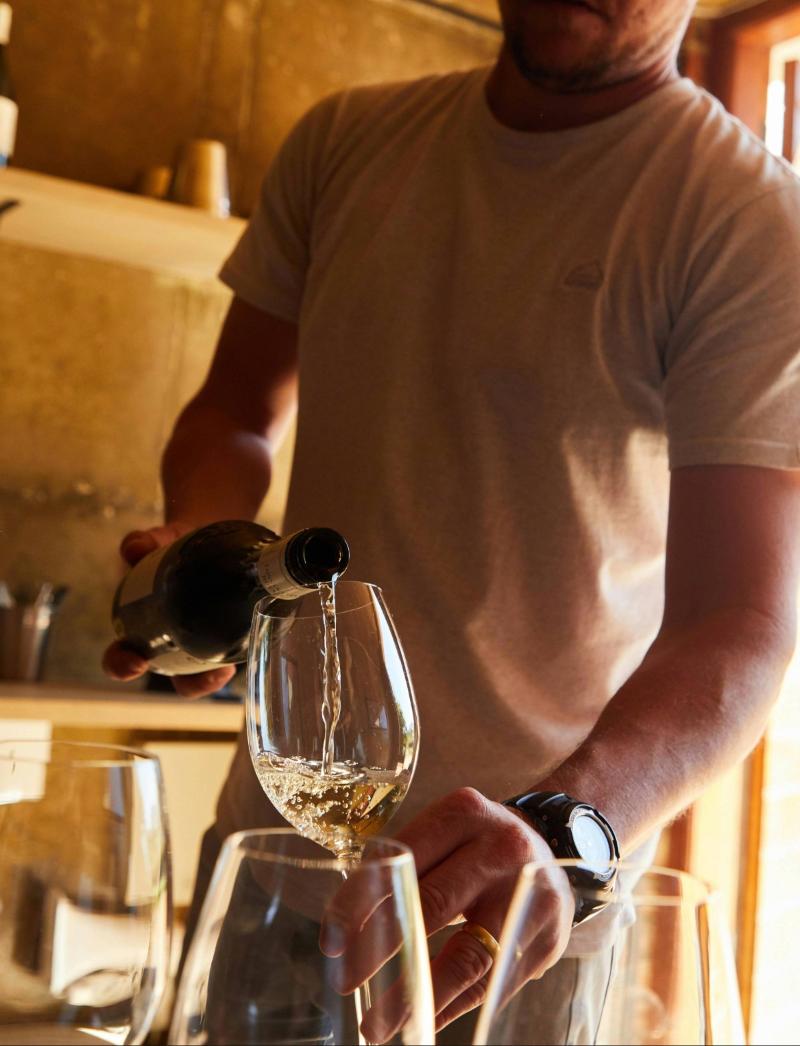
Yet the evolving story of Spanish whites is not just about volume. Over the past decade, the category has undergone a profound transformation in both quality and perception. What was once, with notable exceptions, a segment dominated by lower-priced wines is increasingly defined by limitless ambition, site expression, and regional identities. And consumers are beginning to notice.
Building bridges
"Ten years ago, Spanish whites were often a 'trust me' pour," says Anna Arfaras, wine director at Manuela restaurant. "Now they're a confident part of the conversation. Albariño in particular has been a gateway wine for a lot of guests, and once they're in, they're open to exploring beyond it."
UK sommeliers I spoke to this month echoed the point – that Spanish whites once required explanation or even proselyting before consumers would commit. Today, they increasingly sell themselves – and the way sommeliers pitch them has evolved.
"Guests don't always arrive thinking 'Spain instead of Burgundy', but they'll happily land there if the wine delivers the same benchmarks they love (precision, freshness, texture, and food-friendly)," explains Arfaras.
"The pitch that works isn't 'this is like Meursault', it's 'this is the kind of white you order when you want something serious and alive at the table'."
Of course, selling barrel-aged Rioja Blanco as a better-value alternative to white Burgundy has its advantages. Yet professionals are now positioning these wines as serious contenders in their own right – a sign that Spanish whites may have truly arrived.
Until relatively recently, the category was associated with affordability – often outperforming its price point but, like Cava, rarely escaping it. But this value narrative is increasingly being challenged from all directions, slowly giving way to one focused on quality and diversity.
"Guests are no longer looking at Spanish whites for 'value' but for their complexity, sense of place and stylistic depth," reveals Rachel Coe, wine director at Quince in San Francisco.
"While Burgundy prices have risen, diners have explored more 'Outside of the box' selections from Spain, Portugal and Italy. There is a renaissance of winemakers truly focusing on their white wine production, not just prized red wines."
Yet there are other forces driving this change. As Coe underlines, Spain's dining culture has shifted "over the past twenty years from classical to more avant-garde, adventurous cuisine," and international visitors are now exposed to a far broader range of grapes and styles.
According to Arfaras, key turning points in elevating their reputation internationally are a "shift toward native varieties and site expression, and a serious upgrade in technique that builds texture without smothering freshness."
She continues: "You can see it clearly in places like Rías Baixas, where producers started pushing beyond simple, early-drinking whites and leaned into longer élevage and lees aging to create more layered, age-worthy wines. Lees aging has been a major lever for adding complexity and a savoury, restaurant-friendly texture, without turning everything into an oak bomb."
Meanwhile, Valdeorras has emerged as a key player, while Rueda continues to supply a generous volume of very popular – and affordable – Verdejo, albeit with premiumisation gradually taking hold. There is also a growing number of relatively high-priced and high-scoring white Riojas on the market, including Marqués de Murrieta Capellania, Remirez de Ganuza Olagar, and the venerable Viña Tondonia Blanco.
A white future
Unsurprisingly, prices for white wines have increased significantly in recent years, in some cases overtaking reds. In September 2024, the average price of white wine was €48.24 per hectolitre, compared to €42.71 euros for red, according to Murcia Today. In addition, exports are increasingly being driven by white and sparkling categories, with volumes rising strongly in recent years. Overall, the country's wine sector remains heavily reliant on volume, with bulk exports still a significant component. Yet bottled dry whites are increasingly a key part of the high-value mix, and often easier to sell abroad than reds.
"The quality of Spanish white wine has been elevated by Spanish vignerons focusing more on the grapes in the vineyard, and the winemaking techniques to allow them to shine alongside the storied Spanish reds," says Rachel Coe.
"There has been a shift of producers focusing on indigenous varietals, old vines, as well as renewed appreciation for minimal intervention in the winery."
Today, there are clear signs that the category has entered a new, ambitious phase – Vega Sicilia's investment into Galicia was a milestone, for a region generally dominated by small producers and fragmented vineyard holdings. The first commercial vintage of Deiva (expected production around 350,000) will be released in 2027 and is likely to break price records.
"The finest terroirs of Rías Baixas may now be the most expensive vineyard land in Spain," said owner Pablo Alvarez last year.
"We believe Albariño's potential in Galicia is outstanding – something already proven. We are not looking to 'discover' the region or the variety; we simply want to make the best wine we are capable of producing. That can only be achieved through time, experience, mistakes, and eventually, successes."
Indeed, what was once a secondary concern is now a central pillar of Spain's vinous identity. For the trade and consumers alike, the message is clear: premium Spanish whites are no longer a leap of faith - they're a welcome fixture on la mesa. Olé!




.png)