


- James Lawrence
- 2026-03-10


Although the image of a timeless, bucolic vineyard remains a powerful marketing tool for the wine industry, the reality on the ground is increasingly quite different. Faced with rising temperatures and erratic weather patterns, a growing number of Italian producers are grappling with technology – from disease forecasting to soil sensors – in an attempt to adapt to a more volatile climate.
According to Emanuele Reolon, technical director at Isole e Olena, one of the most significant developments in recent years has been the growing use of predictive modelling systems connected to vineyard weather stations. At the picturesque estate in Chianti Classico, disease-prediction software analyses "real-time meteorological data" to forecast the development of common vine diseases during the growing season – an increasingly pressing issue in an ever more capricious climate.
"It also allows us to apply the right number of treatments and, most importantly, to spray at the right moment," says Reolon. "In the future, we plan to implement additional models for fertilisation management and yield prediction, for which we have already started collecting data and making observations." 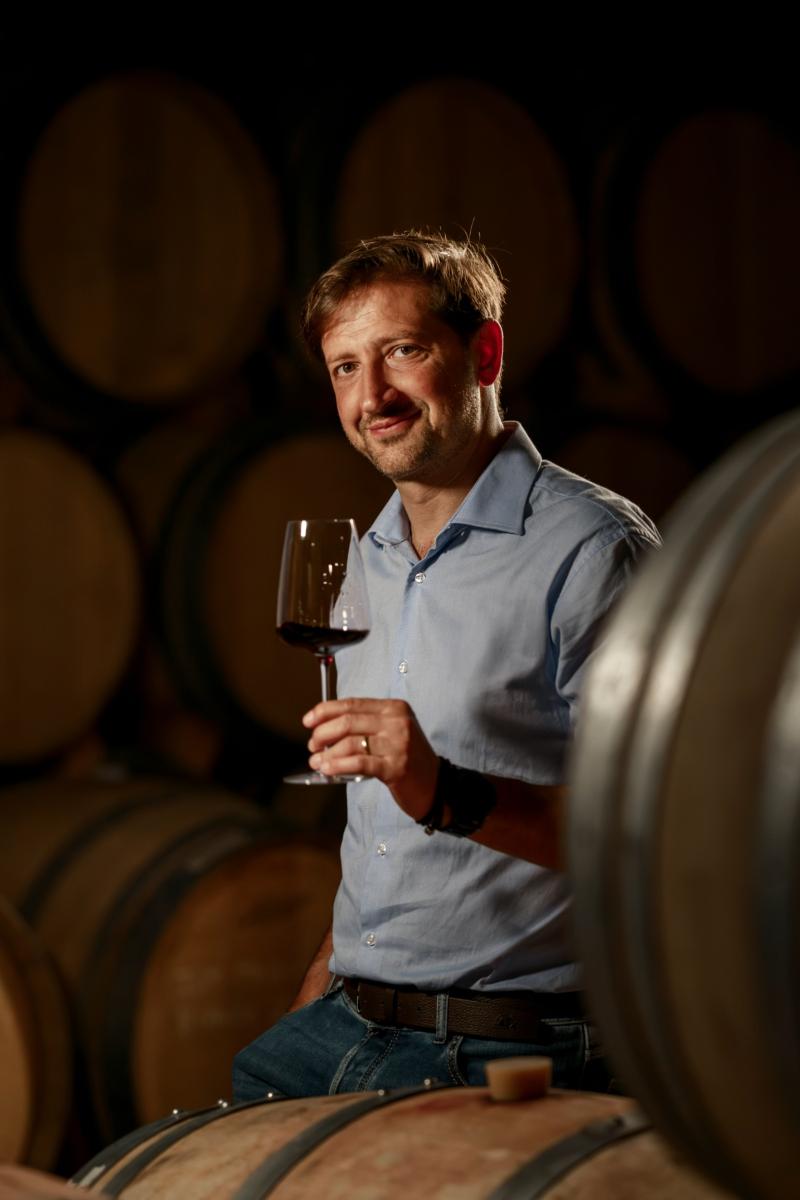
This has important sustainability implications: by limiting treatments according to the available data, growers can reduce the number of chemical applications required during a season, lowering both costs and environmental impact.
In south-eastern Tuscany, Tenuta di Trinoro has installed similar weather stations across the property's vineyards, with one station dedicated to each microclimate.
"These stations are connected to a predictive system that calculates the different development stages of vine diseases in relation to the specific microclimatic conditions," explains winemaker Lorenzo Fornaini.
He continues: "In addition, we input into the system the specific plant protection products and the dosages used for each individual vineyard block. Regarding frost events, the same system generates predictive scenarios and sends alerts according to the phenological stage of the vines, allowing us to react more promptly when critical conditions are expected." For wineries facing increasingly unpredictable weather, the advantages of this kind of early-warning system are clear.
The innovation game
In 2020, a collaboration between Cornell AgriTech in New York, the University of Florida, and Norwegian firm Saga Robotics introduced Thorvald, a robot fitted with ultraviolet (UV) lamps designed to eliminate fungal diseases. At present, however, the technology still carries a hefty price tag. If production expands, however, costs could fall, allowing this striking innovation to become a more familiar sight among the vines.
Elsewhere, wine producers are not looking for radical transformation – but rather incremental improvement. "Our primary technological investment has focused on soil moisture sensors to analyse how slope and exposure affect evaporation," reveals Simon Kompatscher, agronomist at Cantina Terlano in Alto Adige.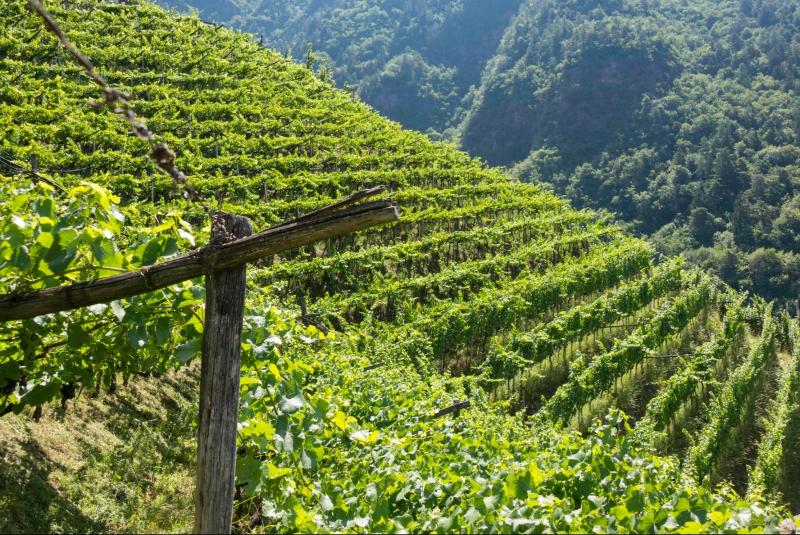
"These data points have led us to use site-specific rootstocks to improve vine resilience and wine quality." In addition, Terlano has collaborated with a local start-up to develop a camera-based system for identifying diseased or dead vines. "Our investment here is primarily intellectual - providing viticultural expertise and a real-world testing ground for the model," Kompatscher adds.
Yet the adoption of modern technology is far from universal – or even enthusiastically welcomed. For small and medium-sized estates in particular, the advantages of technological innovation must be weighed against the practical reality of significant upfront investment and complex terrain.
Indeed, winemakers such as Kompatscher, an advocate of some technological additions, remain cautious about overstating their current potential.
"While AI-based disease forecasting and yield prediction models are emerging, we consider them to be in the experimental phase and not yet robust enough for daily operational use," he says.
"I anticipate that the automation of routine tasks - such as plant protection - will become a reality in the coming years, most probably via drones. This shift will allow our team to redirect their focus towards high-value, detail-oriented viticultural work, ultimately driving further improvements in grape and wine quality."
Barriers to adoption
There is also a cultural resistance at play here. During my conversations with winemakers, an often-repeated theme was the importance placed on human judgement, and a deep-seated suspicion that even the most sophisticated algorithm could compete with the knowledge – and human intuition – required to manage a vineyard.
"We are still extremely reliant on experience, and I think this will not change as quickly as it has in other sectors," says Reolon. He concedes, however, that "machine-based recommendations could be useful on very large estates, where management needs to be as efficient as possible." But in the undulating landscape of Chianti Classico, steep slopes and variable soils make standardised technological solutions more problematic – and costly – to implement.
"Human intuition and passion remain the core of producing premium wines," agrees Kompatscher.
"While AI will likely assist in fine-tuning technical details, the execution of high-level viticultural decisions remains too complex for current automation. We view data-driven tools as a way to deepen our understanding, not as a replacement for the nuanced judgement required in the vineyard."
Nevertheless, most producers agree that technological innovation will play an increasingly important, if uneven, role in helping vineyards adapt to climate change. Isole e Olena's technical director identifies key areas where technology could significantly improve efficiency: drones for spraying and fertilisation, humanoid robots for the hardest and most repetitive vineyard tasks, self-driving tractors, and AI models that could "eventually help train robots to perform delicate operations such as pruning or even manual harvesting with quality selection." final.jpg)
Yet he adds candidly that, in general, "technology in viticulture is not evolving at the same pace as in other agricultural sectors." Reolon, like many senior winemakers I have met, occupies this curious halfway point between Luddite scepticism and technological enthusiasm when it comes to the implementation of 21st-century innovations in this storied and tradition-led world of winegrowing.
He envisages a paradigm in which, rather than replacing human savior-faire, technology is harnessed as a complementary force – enhancing understanding while preserving the knowledge and intuition that have shaped wine for centuries.
But the benefits of new technology, however selectively applied, are surely too important to ignore.




.png)