

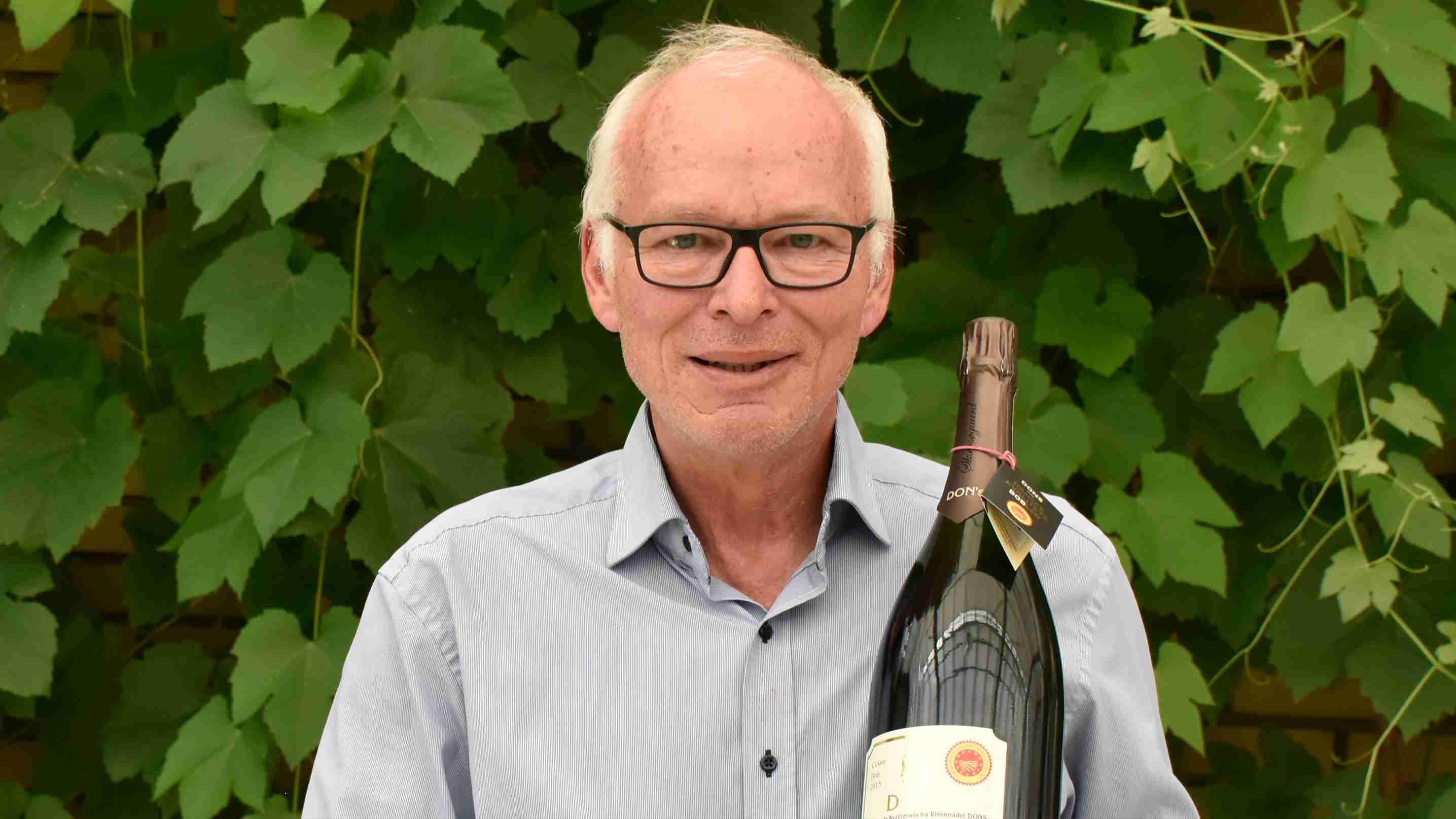

- James Lawrence
- 2026-06-16


When you planted your first vines in the 1990s, many people doubted that Denmark could produce world-class wines. How have you proven them wrong?
When I planted my first vines in 1998, there was widespread scepticism about whether Denmark could ever become a serious wine-producing country. Many believed our climate was simply too cold and too unpredictable. From the outset, however, I was convinced that success would depend on getting a few fundamental decisions right.
The most important thing was choosing grape varieties that were hardy enough for Danish conditions while still belonging to the Vitis vinifera family. Rather than trying to imitate established wine regions, we focused on varieties that could ripen consistently in our climate and express the distinctive character of our terroir.
Equally important was the belief that Danish wine had to be judged by international standards. It was never enough to make wine that was merely "good for Denmark". Our wines needed to stand alongside those from respected wine-producing nations. That is why we entered international competitions from an early stage. Winning medals and gaining recognition from independent judges became a vital way of demonstrating that Denmark could produce wines of genuine quality.
Over time, those achievements helped transform scepticism into credibility. International awards provided objective proof of what was possible and played an important role in gaining wider acceptance for Danish wine, both at home and abroad.
Skærsøgaard's DONS sparkling wines helped establish Denmark's first Protected Designation of Origin (PDO) wine region. Looking ahead 10–20 years, what do you believe will define the identity of Danish wine on the global stage?
I believe the continued development of Protected Designation of Origin (PDO) regions will be one of the defining factors for Danish wine in the decades ahead.
The creation of the DONS PDO demonstrated that Danish wine can possess a distinctive geographical identity rooted in a specific terroir. As more regions document their unique climatic and geological characteristics and achieve PDO status, Danish wine will become increasingly associated with authenticity, traceability, and a strong sense of place.
In the future, I expect consumers will not simply ask for a wine from Denmark; they will ask for wines from specific Danish regions, each with its own character and style. This mirrors the evolution of established European wine-producing countries, where regional identity often carries greater significance than national identity.
At the same time, Denmark's reputation as a cool-climate wine producer will continue to strengthen. Our long summer daylight hours, maritime influence and slow ripening conditions create wines with freshness, elegance and precision. Combined with a growing network of PDO regions, these qualities can give Danish wine a distinctive and respected position on the international stage.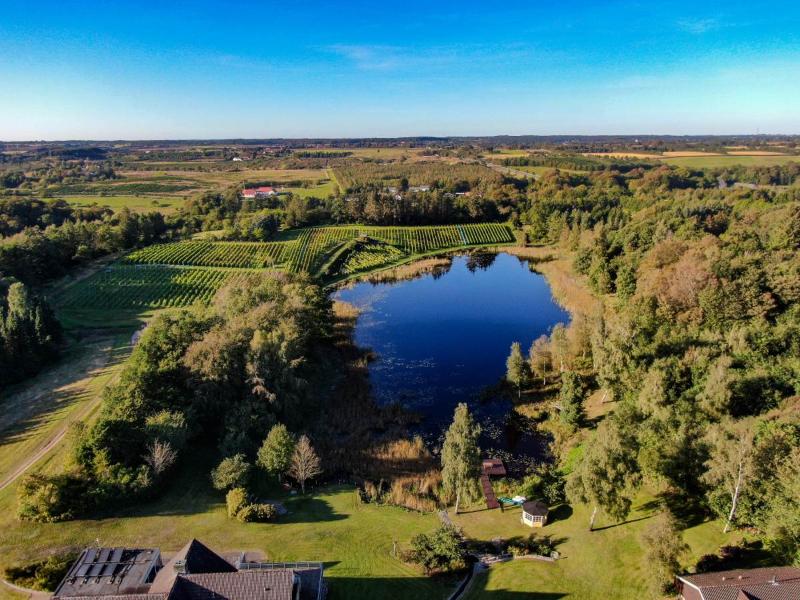
Compared with more established cool-climate regions at similar latitudes, what do you think gives Danish wine - and Skærsøgaard Vin specifically - its distinct identity?
I believe Danish wine has a distinctly Nordic identity.
There is a clarity and purity to the wines that reflect both our climate and landscape. The style is defined less by power and concentration, and more by freshness, acidity, elegance and mineral precision. That gives Danish wines a very contemporary character.
At Skærsøgaard, our identity is also rooted in pioneering work. We were among the first to demonstrate that Denmark could produce not merely acceptable wine, but wines of genuine quality across a range of styles, including sparkling, white, red, rosé and dessert wines.
The DONS appellation is another important part of that identity. It became the first protected quality appellation for sparkling wine in Northern Europe, a recognition earned through many years of documented quality and consistency.
Perhaps most importantly, Danish wine is shaped by a spirit of innovation. Because our wine culture is still young, experimentation comes naturally. That willingness to challenge convention, while remaining focused on quality, is what makes Danish wine unique and what will continue to drive its development in the years ahead.
What lessons from building a wine industry from scratch can you share with emerging wine regions elsewhere in the world?
One of the most important lessons is the value of openness, both within the industry and with consumers. When a wine region is still developing, collaboration is often more important than competition. Sharing knowledge, experience, successes and failures helps the entire sector progress more quickly.
Another lesson is the importance of pursuing quality standards step by step and seeing the process through. In Denmark, it was essential to build the full quality hierarchy, progressing from basic table wine production to Protected Geographical Indication (PGI) status and ultimately to Protected Designation of Origin (PDO). Each stage required greater documentation, higher standards, and a deeper understanding of terroir.
Emerging wine regions should not be afraid of rigorous standards. On the contrary, clear quality systems help build trust among consumers, regulators, and international markets. In the long term, quality classifications are not administrative burdens; they are valuable tools for demonstrating authenticity and excellence.
Finally, patience is essential. Building a wine region is a generational project. Vineyards take years to mature, reputations take decades to establish, and recognition is earned gradually through consistent quality. The most successful emerging regions will be those that combine ambition with persistence and remain committed to excellence over the long term.



.png)