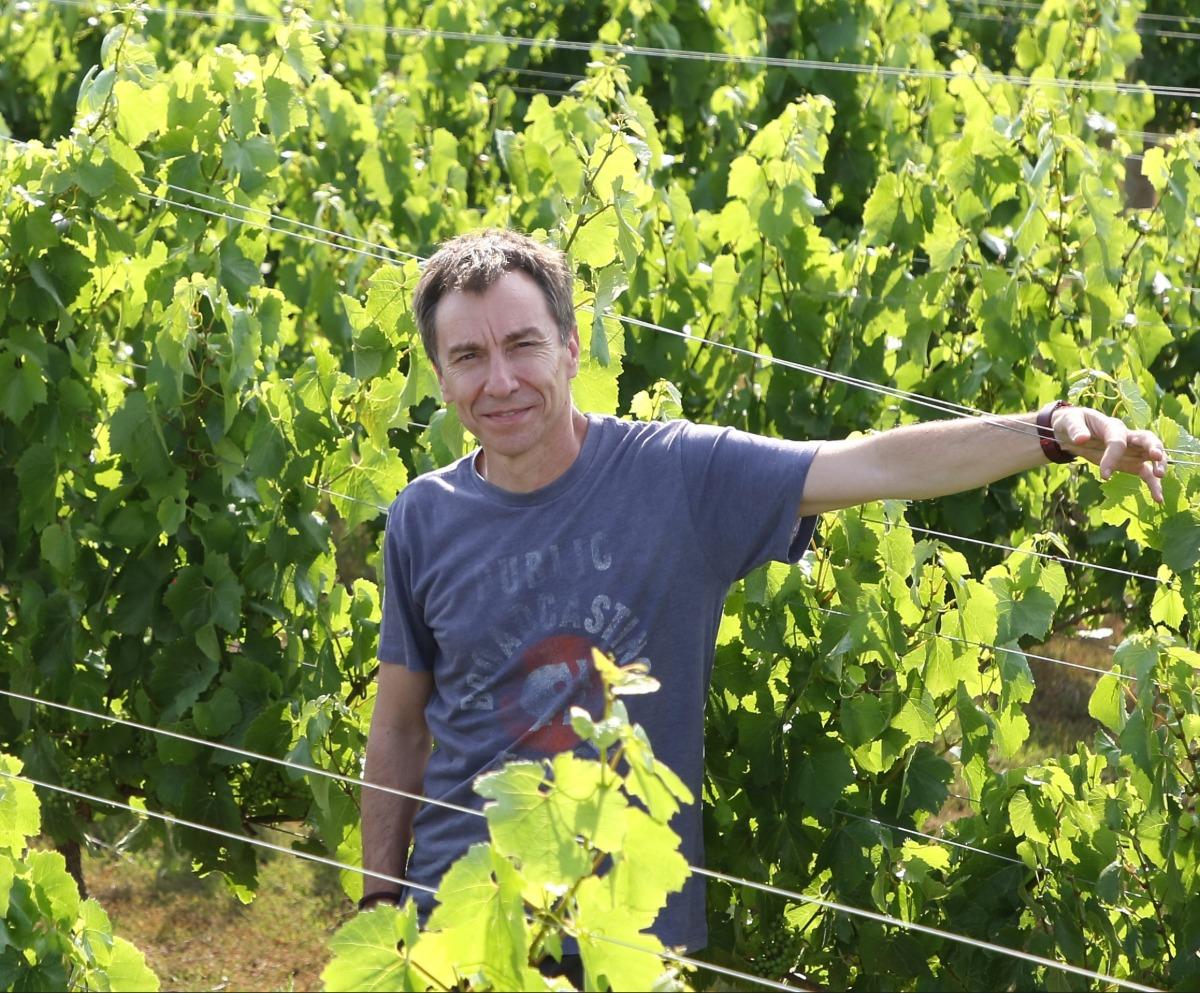
Francisco Baettig reflects on Chile's past, present, and future, and why this remarkable nation still struggles to shake its value-driven image.
Your wines are often praised for their technical precision as well as their sense of place. What's your secret?
The truth is, we are very traditional at Vinos Baettig. We stick to the basics: for example, we don't use enzymes during must clarification. We also avoid cultured yeast. However, we do practice temperature-controlled fermentation and ensure that our oak is of the highest quality. Overall, our philosophy is very minimalist when it comes to vinification, apart from using a small amount of bentonite. It's all very Burgundian – the quality of the fruit is paramount at Vinos Baettig. This is the most important thing. I want to intervene as little as possible. The expression of the fruit should be protected, not interfered with. We want to capture and translate our terroir into the bottle.
We're seeing increasing attention on cooler coastal sites and more extreme terroirs in Chile. Which emerging regions or vineyard zones excite you most right now, and how might they redefine the country's top-tier wines over the next decade?
This is an exciting time for the Chilean wine industry. The production area has expanded from a 500-kilometre-long zone that once stretched from Aconcagua to Itata; now it encompasses over 1000 kilometres, including the region of Osorno in the Región Vitícola Austral in the south. This is a positive development, as these emerging regions are particularly suited to cool-climate varieties such as Pinot Noir, Sauvignon Blanc, and Riesling.
This part of Chile's viticultural landscape is more European in character in terms of terroir; we can dry farm here, and there is less solar radiation in the south compared to the Central Valley. There is a risk of frost; however, our vineyards are fairly close to the coast, which helps mitigate this risk. These conditions yield beautifully fresh wines that showcase intense fruit and striking aromatics.
Therefore, I expect more producers to invest in the southern regions in the short to medium term, pushing further south than Malleco. Of course, this is largely motivated by climate change and the search for cooler terroirs. Chiloé is another region to watch – the climate may currently be too extreme for sustainable production, yet investors with significant resources have already begun developing this beautiful archipelago.
In the far north, there is also great potential, although a shortage of water remains a major issue.
Chile has long been associated with value and consistency. From your perspective, what still holds Chile back from being perceived globally alongside the world's great fine-wine regions?
I could write a thesis on this topic, but in the interest of brevity, I would say that Chile made a number of strategic mistakes early on that are difficult to undo. At the same time, Chile is suffering, like many wine-producing nations, from the global slump in demand - particularly from China, where wine consumption is significantly lower than it was 15 years ago.
Nevertheless, the perception of Chile as a source of value wine rests with the industry. From day one, we entered the export market as a producer of affordable, good-quality wines made in large volumes. Changing that image is extremely difficult, as consumers and the trade are accustomed to thinking of Chile as a provider of reliable quality rather than true fine wine.
Moreover, vineyard plantings expanded rapidly in the late 20th century, as investors saw wine primarily as an agricultural opportunity, planting vines in terroirs that were often unsuitable. As a result, much of what was produced was technically correct but ultimately unremarkable.
Thirty years ago, land and labour costs in Chile were far lower than in the US or Europe. However, there has been considerable inflation over the past decade. Our margins have become very tight, and at the same time, Chile has done little to reposition its global image over the past 20 years.
Of course, I'm talking in general terms – there is a small number of high-scoring icon wines that have performed exceptionally well, but we're talking about no more than around 10 labels. There was also a lack of knowledge among wealthier investors, many of whom had a limited understanding of wine, competition, or terroir.
Wineries have also made a significant mistake by embracing a pyramid structure: owners want to sell everything, from budget wines to premium brands. For me, it is a binary choice – either you work with volume-driven importers or with specialist agencies focused on the on-trade. Businesses need a more targeted and coherent approach to selling wine.
Finally, with climate volatility becoming a growing challenge globally, what changes are you implementing in the vineyard and cellar to maintain balance and freshness?
We made the decision 15 years ago to plant in Malleco in the south, where temperatures are lower, and there is more rainfall – ideal conditions for growing Chardonnay and Pinot Noir. We have also purchased old, dry-farmed vineyards in Maule, which we use for small-production wines. The vineyards are very well adapted to the drier climate of Maule, with deep root systems.
We planned ahead, as we knew climate change would alter the reality of winegrowing in Chile – as it has elsewhere. The key problem today is overripeness, and how to preserve freshness in increasingly hot vintages. The development of cooler terroirs, at least for us, was essential.

Get expert insights, weekly highlights, and exclusive stories from the world's most trusted wine competition.