


- James Lawrence
- 2026-03-10


Region: Carneros, Napa Valley
Founded: 1982
Owners: Champagne Taittinger/Kobrand Corporation
Estate holdings: 410 acres
Lead winemaker: Zak Miller
CEO: Remi Cohen
Annual production: Approximately 75,000 cases depending on the vintage
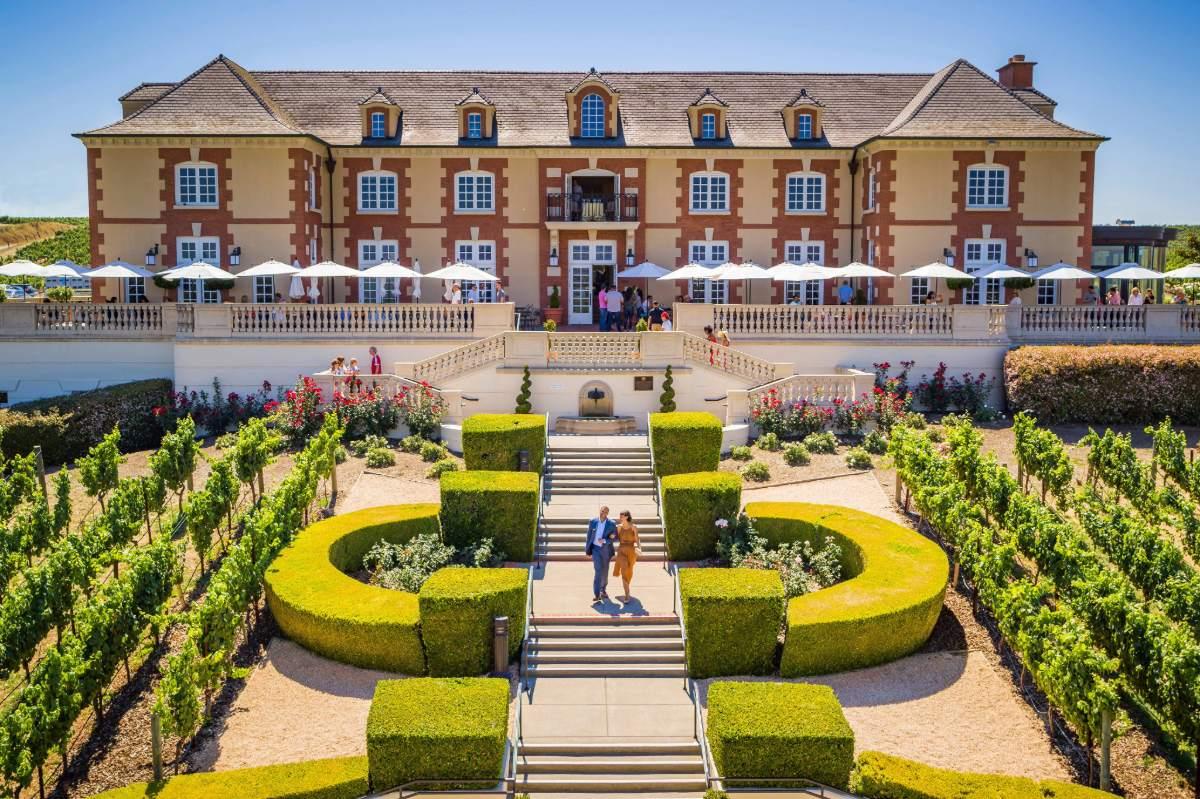
Champagne producers, ever alert to new commercial opportunities, were among the first to recognise the potential of California's cooler terroirs for premium sparkling wine production in the late 20th century. Leading the charge was Claude Taittinger, who astutely identified Carneros, situated at the cool southern end of Napa Valley and influenced by the breezes and fog of San Pablo Bay, as the ideal location to grow Chardonnay and Pinot Noir. Beginning his search for a California property in the 1970s, the estate in Carneros was purchased in 1982, and the first vines were planted on the rolling hills of this picturesque site. Yet it is the magnificent winery, modelled on the Château de la Marquetterie in Champagne, that visitors tend to remember most. Its elegant French gardens and dramatic ascent up a long sequence of steps have made it something of an Instagram sensation in the picturesque Carneros landscape.
Today, much of the brand's success can be attributed to Eileen Crane, hired in 1987 as the founding winemaker and CEO of Domaine Carneros by Claude Taittinger. Having cut her teeth at Chandon California and Gloria Ferrer, Crane was given complete autonomy to design the winery interiors – including a magnificent visitor centre – to her specifications. Sustainability was another key focus for the trailblazing oenologist; the estate's vineyards have been certified organic since 2007, while a significant proportion of the winery's energy needs are met by state-of-the-art solar panels. Meanwhile, the winery has received certifications from the Fish Friendly Farming organisation and recognition from the California Sustainable Winegrowing Alliance, reflecting a longstanding commitment to responsible viticulture and winemaking that is far more than just skin deep.
From the outset, the portfolio centred on a high-quality range of vintage and non-vintage cuvées, although the estate has produced still Pinot Noir – one of California's great bargains – since the early 1990s. The entry-level Brut Cuvée delivers the richness of New World fruit with the structure and finesse more commonly associated with Champagne. The Brut Rosé Cuvée de la Pompadour is much-loved for its red fruit aromas and vibrant freshness; there is also an Ultra Brut version of the standard NV blend, in addition to a late-disgorged release that benefits considerably from extended lees ageing. However, the house's prestige label, Le Rêve Blanc de Blancs, is a masterpiece of precision and textural finesse, offering "crisp and creamy lemon pie fruit", to quote Essi Avellan MW. Emblematic of the fusion between Champagne savoir-faire and Carneros terroir, this seminal property has helped to establish Napa Valley as a serious player in the sparkling wine landscape.
Q&A: Remi Cohen, CEO, Domaine Carneros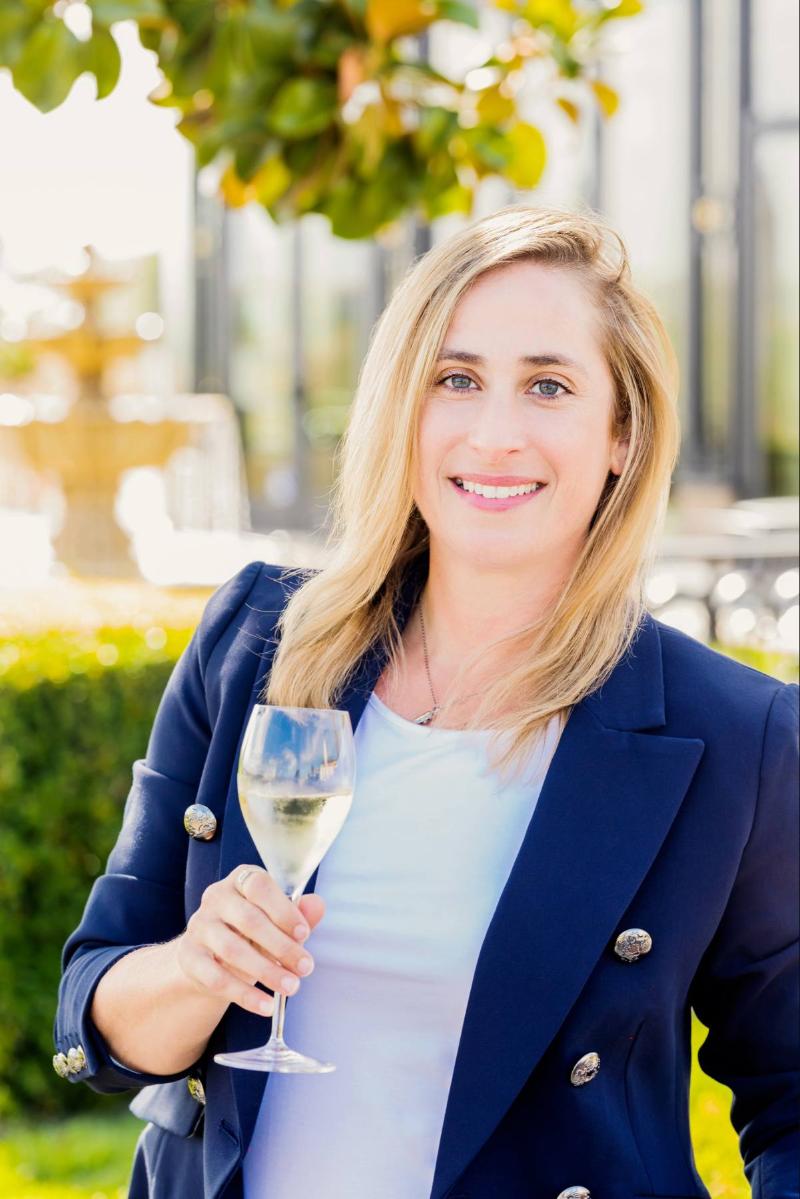
How do you position Domaine Carneros to convince buyers and sommeliers that Californian méthode traditionnelle wines deserve equal footing on premium lists?
Domaine Carneros was created to honor the incredible heritage of Champagne Taittinger while giving full expression to the vibrant and exuberant nature of our California home. Now more than ever, wine is a global conversation, and that is where Domaine Carneros belongs.
As a grower-producer, we farm over 400 estate acres entirely within the marine-influenced Carneros region, giving us complete control over fruit quality from vine to bottle. Having our own estate vineyards allows us not only to farm sustainably, but to implement the best practices to produce top quality grapes that form the foundation of our wines. We use the traditional varieties found in Champagne and the méthode traditionnelle, and all our vintage dated wines age a minimum of three years on the lees in line with champagne regulations, though that is not required in California. The quality of our fruit plus the extended aging of this meticulous winemaking process creates wines with both incredible elegance and energy but also beautiful creaminess and complexity.
The wines speak for themselves: elegant, mineral, and energetic, with the sumptuous depth that extended aging brings. But our château also plays a meaningful role. Architecturally inspired by the Taittinger family's Château de la Marquetterie, it creates a direct connection between the visitor and the wine, and those experiences generate genuine connections.
With climate volatility affecting traditional sparkling regions, including Napa Valley, how is Domaine Carneros adapting its viticulture and winemaking to protect long-term quality and stylistic consistency?
Carneros occupies a fortunate position. Our proximity to San Pablo Bay and the Pacific Ocean provides a natural moderating influence that buffers us from the temperature extremes affecting many other regions. That said, we don't take that advantage for granted, and sustainability and long-term resilience are central to how we farm. We implement many practices to preserve our vineyards and our future in light of climate change.
Our vineyards are planted with drought-tolerant rootstocks selected for our specific soil types. We've invested in a rainwater collection system that captures winter rainfall for summer irrigation, eliminating our dependence on groundwater entirely. All water used in the winemaking process is also recycled back to the vineyards. Vineyard orientation and trellis design are calibrated to minimize direct sun exposure to fruit during the hottest part of the day, and all canopy management is performed from the morning side of the vine to preserve natural vegetative coverage on the afternoon-facing fruit.
In the cellar, our approach reinforces what the vineyard provides. We harvest early to protect natural acidity, the backbone of great sparkling wine, and we minimize malolactic fermentation to retain brightness and freshness. The result is a consistent house style that is precise, mineral, and alive, with the complexity that patience and the traditional method can deliver.
From a commercial standpoint, where do you see the greatest growth opportunity over the next five years?
For us, our future begins with relationships, and that shapes how we think about growth across all areas. Domestically, our foundation is strong. Our partnership with Kobrand Wine & Spirits gives us broad national reach, and our on-site hospitality experience in Carneros continues to be one of our most powerful tools for building genuine loyalty.
At the same time, we see meaningful export opportunity as global sparkling wine consumption continues to evolve. Consumers around the world are moving away from treating sparkling wine as purely occasion based. Sparkling wine is increasingly appreciated for its versatility, lower alcohol, and natural affinity with food.



.png)