




- Henry Jeffries
- 2026-03-10


The name Bryan Armen Graham might not mean anything to you - he's the Guardian's deputy American sport correspondent. Some of his work on the Milan Cortina Winter Olympics has recently attracted a great deal of attention, so much so that the Guardian has been forced to issue a statement. I say "his work" but it is alleged that it is not in fact his work at all. Instead, critics claim he has been using AI to generate reports on that day's action. According to Pangram, an AI- detection service, his most recent article shows a 100% probability of being machine- generated.
Of course, the machines are not infallible at detecting other machines. The Guardian is standing by its man and issued this statement: "Bryan is an exemplary journalist, and this is the same style he's used for 11 years writing for the Guardian, long before LLMs existed. The allegation is preposterous." Have a read of the article in question and see for yourself.
The big AI tell is the "it's not one thing, it's another" formulation. This occurs again and again in Bryan's report. For example: "This wasn't just a mistake. It was a chain reaction." Or: "What unfolded in Milan was not just an Olympic upset. It was a case study in how modern figure skating scoring works at its most unforgiving." There are also no quotes from any of the skaters, no first-person opinions, and no local colour.
There is a surface-level fluency and sheen to much AI writing. It sounds impressive initially until you parse for meaning and realise that you haven't actually gained any insight. It reads like a load of phrases stuck together - which is exactly what it is. AI is simply a highly advanced plagiarism machine.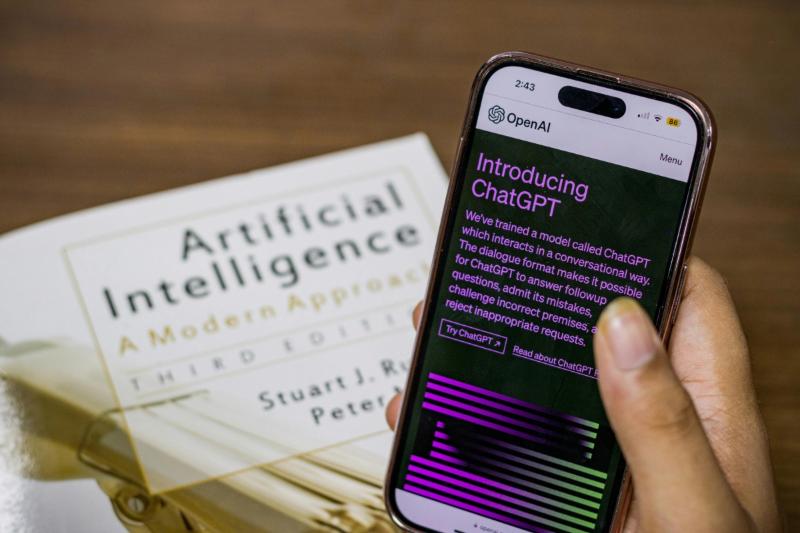
Do cheating journalists think they are the only ones with access to ChatGPT? I've noticed work like this in the drinks trade press: superficially convincing pieces that aren't actually saying anything. They read like aggregates of articles that have already been published, with nothing new added. I had a back-and-forth with an editor about one such piece this month. He assured me it wasn't AI-generated, it was the author's style. But it showed all the tells above, and Pangram was 100% certain it was AI-generated. Who is right?
In the end, it doesn't really matter whether the article was or wasn't AI-generated, because the result is the same: you're not getting an interesting perspective, just a run-down of received opinion. This can be helpful if you want an overview of an issue but it offers nothing new. Over the years I've been writing for the trade press, I've received comments from wine producers, distilleries, and large drinks companies that read as if they haven't been written by a human. This precedes the AI era which for most of us began in 2023.
On quite a few occasions I will send questions to a winemaker, for example, and get a lot of corporate guff back from the PR which I later notice is cut and pasted from a press release. A waste of everybody's time. That is something AI is good for: plausible-sounding corporate guff. Marketing presentations, press releases, collating statistics, an instant overview of a category - these are all areas where
AI can save you time, though do check the facts, as it will occasionally make things up. For churnalism and the rewriting of press releases, which sadly is a large part of the online press, AI can be a great help.
The reason AI-generated copy gets through is that much of the human-generated stuff is not good. I noticed this from my own time in the drinks industry. There was often a confusion between plausible-sounding marketing talk and comment. Conor Fitzgerald, the Irish cultural commentator, thinks the problem is worse than that. Many people, including editors, journalists and readers, may be losing the ability to distinguish between real writing and AI. He observes: "The fact that someone can gloss over these details is an indication to me that their aesthetic instincts are malfunctioning, and that their ability to distinguish insight from technical proficiency and superficial professionalism is underdeveloped."
Perhaps we have been marinated in pseudo-insight and marketing guff masquerading as journalism for so long that, when a machine learns to do it, we can't tell the difference. If the 2010s was the era of fake news, then the 2020s is turning into the decade of fake comment. You read something and it sounds fluid and plausible, but have you learnt anything? Did you laugh? Were you surprised, shocked, or irritated?
Writing is thinking. If you're not writing and researching an article yourself, you are not really thinking about it. When I'm writing a piece, I have the bare bones in my head but I don't really know where it's going to go, or what thoughts it is going to spark. I tend to arrive at my own insights, such as they are, in the act of writing.
There are certain people in the drinks industry who do it far better than me. I'm not going to name names, but you probably know and follow their work already. Then there are those who are always good for a quote: people who can spice up an article with something controversial or funny.
Last month I interviewed the former head of a Scotch whisky company for a project. He was positively bubbling over with bold takes on the future of whisky globally: things I had never heard before. While the best stuff was off the record, it was exciting to talk with someone who had something to say. It's all grist to the mill. This is something that machines can't do. At least not yet. AI isn't a threat to journalism — it's a challenge to journalists. Sorry, I couldn't resist ending with a bit of classic ChatGPT. You spotted that, didn't you?




.png)