


- James Lawrence
- 2026-02-12


During my 15 year tenure as a wine journalist, India's incredible potential as a global wine market – underpinned by an expanding middle class expected to reach 60% of the population by 2047 - has been stymied by a mixture of cultural/infrastructure barriers, and crippling tariffs on imported wine.
Yet after nearly two decades of negotiations, India and the European Union have concluded a landmark free trade agreement (FTA) that could, at least in theory, transform price dynamics and consumer access. Described by Indian officials as the "Mother of All Deals", tariffs on imported wine – currently reaching up to 150% - will be progressively reduced; premium and mid-range wines are set to face duties of around 20-30% once fully phased in under the pact.
"Lower tariffs won't transform things overnight, but they can change the trajectory of demand. This is particularly important in the current climate, given the heightened friction with the US," says Alexander Westgarth, founder and CEO of investment platform WineCap.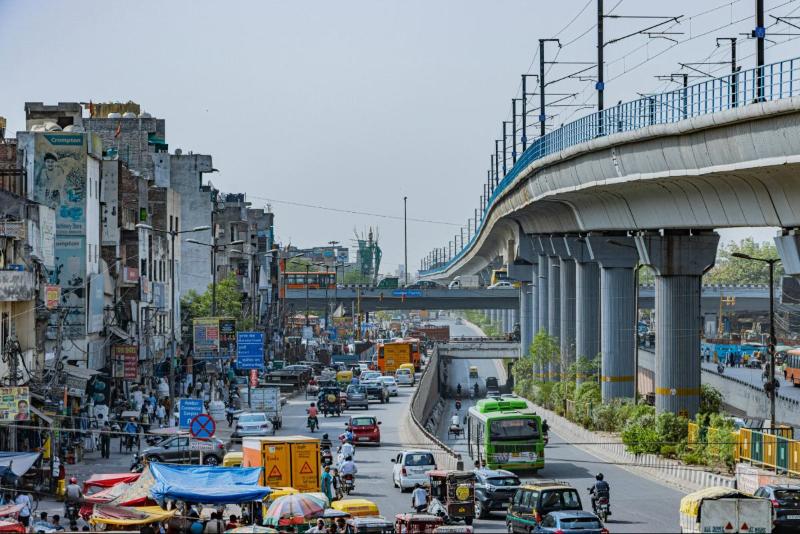
"With global trade becoming more fragmented, India's opening could prove one of the most important long-term developments for fine wine." However, Westgarth adds that the economic story isn't just about headline tariff levels. For the drinks industry, the question is whether these reductions will improve margins, simply distribution, and ultimately grow India's population of wine drinkers?
Headlines vs. reality
According to Wine Cap's CEO, while national tariff cuts are a necessary advance, they are only one of several hurdles for producers attempting to gain access to this complex and variegated market. State-level taxes, regulatory fragmentation, logistical weaknesses and distribution challenges remain substantial obstacles in the subcontinent.
"Changes in national level taxes are a necessary but not sufficient condition for a dramatic uptick in India's significance as a wine market. Arguably, it's the balkanisation of state level taxes that is the real issue to overcome," he observes.
But while the "Indian wine dream" has been talked up for well over a decade, often prematurely, what's genuinely different this time around, he adds, "is the necessary condition of changes at national level has taken place, and there is considerable lobbying happening at the state level now too."
Meanwhile, wine education - pioneered by figures such as India's first Master of Wine, Sonal Holland MW - is now a vital part of the country's slow evolution toward nurturing a wine-drinking middle class. "The changes unveiled in the FTA will not just move the needle but start a chain reaction," says an optimistic Holland MW.
She believes that the entry point for European wines in the Indian market will likely drop by 30 to 40%, "making quality international wines accessible to a wider audience." Moreover, consumers will feel encouraged to explore beyond familiar labels due to "the availability of a greater diversity of styles and regions at more approachable price points." And, perhaps most importantly, increased access will accelerate "the consumer learning curve, driving tastings, wine clubs, trade events, and education, because when consumption grows, the entire wine ecosystem grows with it."
Market access
India's wine market, while still embryonic compared to developed economies in the West, has grown significantly in recent years. According to wine platform vinetur, Australia has led the volume surge, following early trade deals and subsequent tariff reductions; however, France dominates the high-value segment, which will surprise no one. Imported wine is projected to take a larger share of overall consumption by 2030, a concomitant of tariff reductions, demographic trends, and rising disposable incomes – factors that can fuel demand even as regulatory and taxation barriers remain. At the same time, domestic producers such as Sula have welcomed regulations that protect domestic wines below certain price bands, while allowing increased competition in the premium segments.
Nevertheless, the initial effects are likely to be incremental rather than transformative, says Westgarth. "In the near term, it's likely to be super-premium and higher-priced wines that will benefit, especially the luxury tier," he argues.
"Wines above €10 a bottle have a more favorable treatment, the buyers are less price sensitive, and because shipping volumes will be lower, the complexity of logistics is slightly less burdensome." Looking further ahead, he adds, "domestic policy reform will be necessary alongside national level policy changes to fundamentally reshape India's role in the global wine trade."
For stakeholders in Europe, there is both opportunity and significant complexity to navigate in India today. Lower tariffs may improve margins and widen access, yet the real prize lies in deepening consumer engagement and navigating the country's punishing regulatory landscape. Major investment will be key – not just in importing wine, but in education, distribution partnerships, and long-term market development.
The EU-India FTA may well be a strategic milestone for the trade – provided it is accompanied by urgent domestic reform and sustained political commitment. Prime Minister Narendra Modi has framed the agreement as emblematic of India's emergence as a confident trading partner, signalling a gradual softening of the nation's once hard-line protectionist stance. If domestic policy catches up with international ambition, the rewards for producers and consumers alike could be unprecedented. Watch this space.




.png)