

US importers rejoice: refunds are beginning after the overturning of Trump's "Liberation Day" tariffs. Yet not all stakeholders are set to benefit, as Christy Canterbury MW explains.
"The system is experiencing high volume."
Despite some experiencing delays, Scott Saul, Executive Vice President of importer MHW, Ltd., said, "Kudos to CBP (Customs and Border Protection). The system handled the volume of refund submissions without a glitch. We almost expected it to crash like Ticketmaster when Taylor Swift tickets went on sale."
Yesterday - 20 April 2026 - some of the 56,497 pre-registered US importers began logging into the US government's CAPE (Consolidated Administration and Processing of Entries) portal at 8 a.m. ET. That figure represents just 17% of the roughly 330,000 importers - wine or otherwise - who have collectively paid an estimated US$166 billion in tariffs since Donald Trump's "Liberation Day" tariffs took effect on 2 April 2025.
Not all importers - registered or not - are eligible to file. The administration is applying a LIFO (Last In, First Out) accounting method, meaning those who paid most recently are first in line for reimbursement. Only importers who have paid tariffs within the past 80 days qualify under Phase I, and no details have yet been released regarding subsequent phases.
The refunds follow a landmark decision two months ago, when the US Supreme Court struck down Trump's use of the 1977 International Emergency Economic Powers Act (IEEPA). The case was brought by Victor O. Schwartz, founder of the New York-based importer VOS Selections. Enacted nearly 50 years ago, IEEPA had never before been used in this way.
While the initiation of refunds - on which interest must be paid - appears encouraging, the US wine trade remains pragmatic. "Take a hit" and "eat some margins" broadly capture the mood across a supply chain that has been bracing for impact since the tariffs were announced.
The outlook has been grim from the outset, compounded by multiple pressures. In March 2025, after Trump floated the possibility of 200% tariffs on European wines, the US Wine Trade Alliance issued a stark warning: "We strongly advise American businesses to halt all shipments of wine, spirits, and beer from the EU. The current tariff risk is too high." In the end, tariffs on EU alcoholic beverages were set at 15%, while South Africa faced a 30% rate.
It's different this time
In November 2019, Trump imposed 25% tariffs on certain alcoholic beverages in retaliation for illegal subsidies to Airbus. These were paused for five years in March 2021 by President Joe Biden. John Coyle, Regional Manager for New York and New Jersey at North Berkeley Imports, explains: "These new tariffs mark a shift in US trade policy and are far more expansive and aggressive than those implemented during the initial trade war. The 2019 tariffs targeted still wines from France, Spain, Germany, and the UK.
"Italy was spared, and importers could pivot to Portugal and other regions. Champagne was unaffected, and the tariffs were relatively stable. In contrast, the current round - particularly the threat of 200% tariffs on EU wines - has created extreme volatility. There is nothing the market hates more than uncertainty."
Compounding matters, the 15% tariffs have coincided with roughly a 15% depreciation of the US dollar, effectively pushing invoice costs for European wines up by 30% or more.
The downstream effects are significant, even if not immediately visible to consumers or producers. Bertrand Leulliette, President and CEO of Bertrand's Wines, notes that some producers dismiss the impact as "just 15%" - a view he suggests is sometimes reinforced by local wine boards. But that figure is misleading.
"During COVID, everyone was drinking. That has changed," Leulliette says. "There was also government support then, and the dollar was strong. Now I pay storage for three to five months before selling the wine, and many producers require upfront payment."
On John Coyle's Drinking on the Job podcast, Victor Schwartz outlined the cost escalation using a simple example of an inexpensive Loire white.
Before the Trump tariffs, a standard container - 1,200 cases at $100 per case - cost $120,000. Now, including the 15% tariff ($18,000) and the 13% exchange rate impact ($15,600), the increase amounts to $33,600
Schwartz also highlighted regulatory constraints in states like New York and New Jersey, where importers must post prices four to six weeks in advance. "If you get the vintage or price wrong, you take an involuntary hit," he said.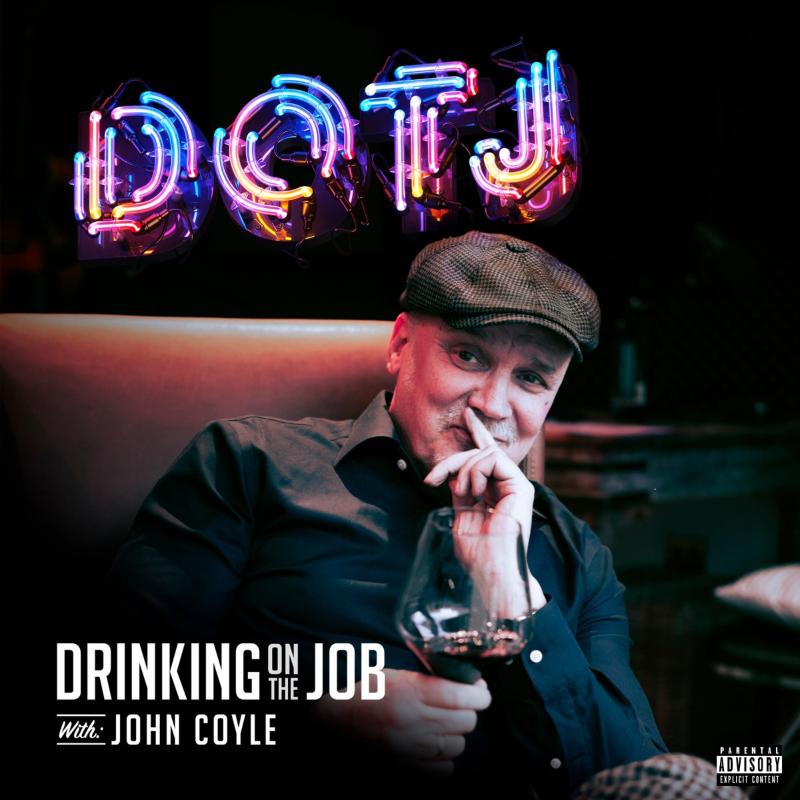
Refunds for Customers Seem Unlikely
Claire Papparazzo, Wine Director for Sunday Hospitality Group - which includes Sunday in Brooklyn (Brooklyn and London), the Tavern at Relais & Châteaux Bedford Post Inn, and the food and beverage programs at the Hotel Chelsea - does not expect refunds to trickle down.
"Refunds will go to importers," she says. "They've likely absorbed more of the costs than they've passed on."
Several importers confirmed they have not been asked by customers for reimbursements. In practice, refunds are difficult to distribute further down the chain. Most on- and off-premise buyers - and certainly consumers - lack invoices that clearly itemise tariff costs. Legally, importers are under no obligation to share refund proceeds.
Some class-action lawsuits have emerged in other consumer sectors - particularly involving private-label goods such as Costco's Kirkland Signature (which includes wine) - arguing unjust enrichment. But the fragmented nature of the US alcohol distribution system makes tracing and reallocating funds especially complex.
Consumers who arranged direct shipments to the US may fare better. Where tariffs were explicitly charged by carriers such as DHL, FedEx, or UPS, refunds are more straightforward. FedEx, for example, has stated it will return collected tariffs.
Papparazzo notes that price increases have been more noticeable in French wines than in Italian ones, along with inconsistencies in communication. "Not everyone flags price increases," she says. "Some smaller companies have added a tariff line item. Ultimately, this forces us to redo work we had already done well. It's disheartening."
After brief relief, tariffs return
Despite the Supreme Court ruling, tariffs quickly resurfaced through alternative legal channels. One mechanism is Section 122 of the Trade Act of 1974, which allows the President to impose tariffs of up to 15% for 150 days without prior congressional approval. Trump has so far set these tariffs at 10%, due to expire on 24 July.
In response, 24 states and numerous businesses have filed lawsuits. On 10 April, the US Court of International Trade (CIT) heard arguments in a case led by Oregon Attorney General Dan Rayfield. According to Oregon Public Broadcasting, it's particularly tricky because the court struck down Trump's IEEPA tariffs, saying that he could use Section 122 tariffs to deal with trade deficits (the matter claimed to be at hand), but Trump's counsel argued against Section 122, saying they were about payment problems.
Scott Saul, Executive Vice President of MHW, Ltd, hopes the CIT will act decisively, potentially before the end of April. Any ruling, however, could be appealed to the US Court of Appeals for the Federal Circuit.
Reality check
While legal battles continue - and lawyers benefit - the wine trade is pressing on. Nick Jackson MW, founder of Crescendo Wines, describes a pragmatic approach: "My small producers rely on me to navigate the US market. They're dealing with multiple export markets and can't track every development. Tariffs aren't new, and producers often help by offering modest discounts. Then they return to the vineyards. Larger producers may behave differently."
Ultimately, tariffs are borne primarily by those who pay them - importers and, indirectly, consumers. Trump's tariffs are among the highest the US has imposed in nearly a century, yet they account for only about 5% of federal revenue, according to NPR.
As refunds begin, some financial relief will reach importers. But for the broader market - especially end consumers - meaningful restitution remains unlikely.

Get expert insights, weekly highlights, and exclusive stories from the world's most trusted wine competition.