



- James Lawrence
- 2025-12-16


The bulk wine market is in a state of flux. Geopolitical turbulence, climatic volatility, supply-side scarcity, and the green economics of shipping and packaging have forced stakeholders to rethink sourcing, inventory, and the trade-offs between bottling at source and bottling in market. Yet despite softer global consumption, premiumisation persists, as bulk's share of global trade continues to grow in value. In 2024, bulk accounted for around 35% of export volume and €3bn in value, with +3.3% volume / +9.8% value vs. 2023 - "reflecting both constrained production and supply-chain agility," as industry commentators note.
According to Paul Braydon, director of business development at Kingsland Drinks, one key trend is that generic whites have become scarcer and more expensive in some origins, prompting buyers to explore new markets and lock in multi-origin cover for vulnerable lines.
"We're observing a tighter supply for generics, especially whites, with prices up in Spain and parts of the Southern Hemisphere," he says.
"Successive shorter crops (2023–2024) have constrained availability; buyers are diversifying origins (France, Chile, Argentina) and paying more for standard varietal whites."
At the same time, a growing volume of premium styles, hitherto bottled at source, are entering the world of bulk shipping. Oversupply pockets – particularly in the US and parts of Australia – combined with weaker demand and cost advantages have pushed better-quality wines into the bulk market. A striking example? In 2025, Kingsland Drinks imported "the most expensive wine the firm has ever purchased" for bottling at its plant in Salford – from Napa Valley, no less.
"This is due to a combination of factors from retailers CSR responsibilities, significant improvements in global shipping and availability of premium wines from the USA due to their own domestic consumption reducing," notes Braydon. As premiumisation narrows the historic quality and perception gap between bottled-at-source and bulk wine, own-label buyers can now access vineyards and regions previously reserved for bottled imports, without compromising brand trust.
However, this evolution is taking place against a backdrop of mounting operational strain. "Ships are currently running at just 55% on-time performance, which is horrendous," says Lanchester Wines' CEO Tony Cleary.
He continues: "The administrative burden of rescheduling and reforecasting delayed deliveries costs both time and money. The journey from Australia used to take 14 weeks; now it can be 21 weeks. Dry goods often arrive well before the wine, meaning we pay for packaging weeks before bottling – impacting cashflow and storage." Compounding this are external factors beyond anyone's control: labour strikes in Antwerp and Rotterdam, the US Government shutdown delaying documentation, and storms preventing ships from docking.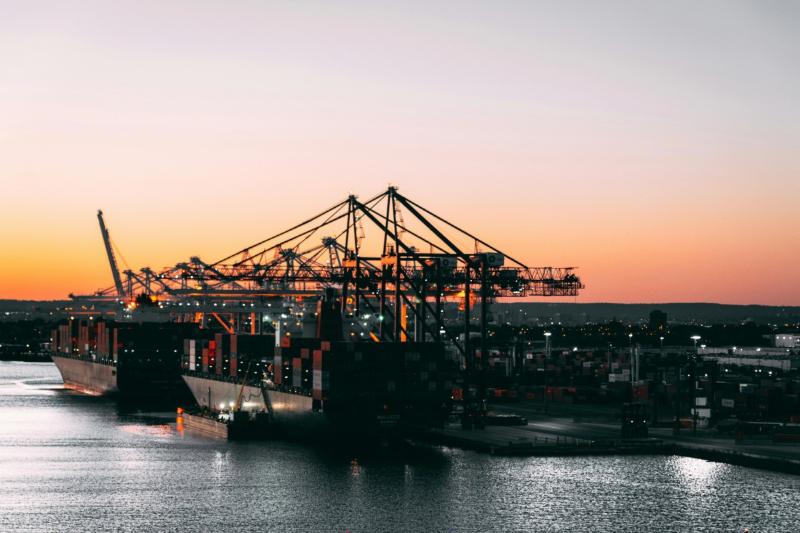
Sustainability oversight
Meanwhile, rising ESG oversight continues to encourage producers to ship in bulk and bottle in market. As has been widely reported, this delivers meaningful carbon and cost savings – industry analyses estimate CO₂ reductions of approximately 30-40% per litre when wine is transported in flexitanks and tank containers. In 2025, Kingsland Drinks started shipping in 26kl flexitanks from Australia, New Zealand and South America. "In a pioneering step with our partner Andrew Peace Wines from Australia we have started to move 3 x 26kl flex tanks behind one lorry tractor unit/road train for movements from the winery to the port of Adelaide," explains Braydon.
"This is moving the equivalent of over 100,000 bottles of wine per movement (in bulk)," he adds. This is all the more pertinent when one considers that the UK's Extended Producer Responsibility (EPR) scheme increases the penalty for heavy, single-use packaging – retailers increasingly ask suppliers for emissions estimates, recycled content and EPR-ready packaging as standard. As a result, bottlers such as Greencroft have invested significant capital in UK-based lines and lightweight glass to reduce exposure to freight and tariff volatility. "One 24,000-litre container of bulk wine equals 32,000 bottles, whereas a 20ft container of bottled wine holds just 9,900 bottles," reveals Tony Cleary.
That efficiency continues to underpin the economic case for producers switching to bulk shipping, particularly for high-volume or fast-moving SKUs, although negative ripple effects are an inevitable consequence of companies not bottling at source. As Bernard Fontannaz, CEO and founder of Origin Wine, recently noted: "We could stop bottling in South Africa and ship entirely in bulk, but that would create massive job losses at our facilities, disadvantaging local communities and their families. The move toward sustainability is not as black and white as certain people make out – there are always trade-offs."
Thus the sustainability case is more complex than first appears – and the commercial reality nuanced. In the UK, for example, industrial power prices remain high compared to European neighbours, raising overheads associated with bulk bottling even as it shrinks transport emissions. As a result, companies are prioritising efficiency gains alongside investment into clean energy to blunt electricity price exposure. Yet political ineptitude and fiscal pressure remain major areas of concern.
"The biggest structural threat over the next five years isn't ESG or consolidation – it's political unpredictability," argues Cleary. "The government recently announced a £725 million apprenticeship reform package to support sectors like hospitality and retail, which is positive. But with respect, they're simultaneously undermining hospitality with tax and business rates. If this continues, there will be fewer opportunities for apprentices to even start their careers."
Indeed, risk management is a key part of the day job – now more than ever. Increasing carbon oversight, geopolitical volatility and climate change have compressed margins while raising complexity across the supply chain. But for now, long-term supplier relationships, flexitank technology, and contractual flexibility are helping to offset rising overheads and supply disruptions.
Today, the modern bulk trade offers a green, efficient, and flexible route to market for a growing number of wineries reassessing how – and where – their wines should be bottled. Including, increasingly, the great and the good of the world's premier wine regions.




.png)