


- Andrew Catchpole
- 2026-01-27


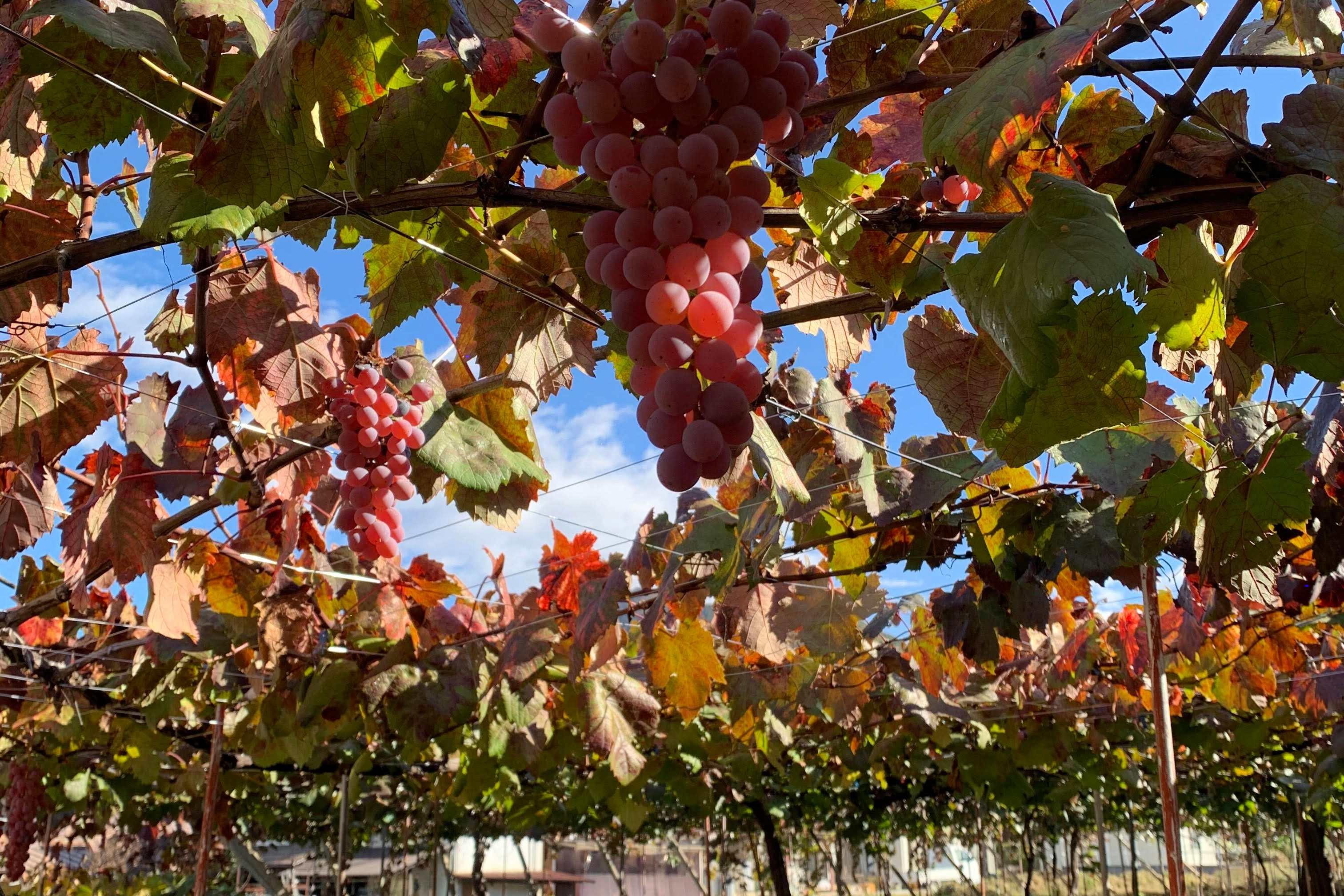
There's possibly no better place to begin an exploration of the essence of Japan's Koshu wines than in the vineyards of Suntory's Tomi no Oka winery. The name means 'a beautiful hill to climb', and here among the immaculate rows of vines, the views towards the ever-looming Mount Fuji take in the broad, vineyard-studded Kofu Basin, where around 30% of Japan's wines are produced in Yamanashi Prefecture. And the tinted Koshu grapes – with their distinctively dusty-pink skins – are to the fore. They are known for delivering an elegant, appealingly aromatic white wine that also often reveals a subtle lick of minerality, reflecting the volcanic origin of many of the soils. 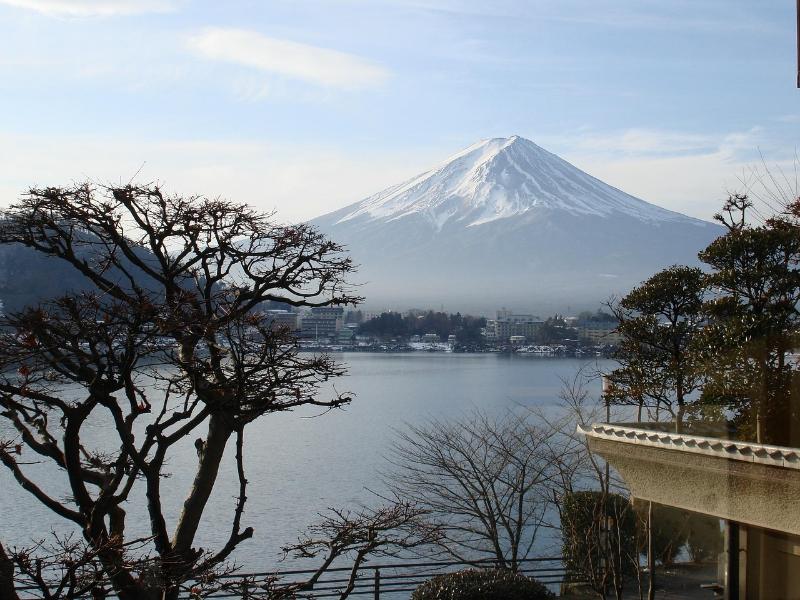
Fuji itself is some 50 kilometres away, but from our 600-metre-high vantage point winemaker Kentaro Shinoda explains that this hill was formed by an ancient pyroclastic flow from a now long eroded volcano called Black Fuji. And that is just one part of the favourable viticultural jigsaw that helps both him and the wider Yamanashi region to grow suitable grapes in Japan's often challenging climate.
"Mountains surround us, and they protect us from rains and typhoons, we have the least amount of rain in Japan and the most sunshine in Japan," he says. "And up here, we also have a relatively large shift between daytime and nighttime temperature, sometimes up to 20 degrees, which helps keep the elegance in the wines."
As across Yamanashi and its designated GI for wine, Koshu isn't the only variety planted at Tomi no Oka – the likes of Chardonnay, Muscat Bayley A (an indigenous bright, fruity red counterpart to Koshu) Marselan, Merlot, Petit Verdot, Tannat and Cabernet Sauvignon all put in a good showing too in the prefecture. But tasting Shinoda's 2023 Tomi Koshu, with its textured citrus and peach expressiveness, it's clear why this variety is the de facto flagship for the region, and for Japanese wine as a whole.
Koshu's backstory
Koshu itself has an interesting backstory, with around 97% of its genetics traceable back to the Caucuses, and the other 3% apparently picked up along the way as it travelled east on the old silk roads. It's also a very good eating grape, commanding a premium on the typically immaculately presented shelves of Japanese grocers. But over the past 150 years, it's become a sought-after variety for making quality wine, with around 90 producers alone here in the Yamanashi GI.
Moreover, it's 'Zen-like purity' (as once described by Jancis Robinson MW), pairs remarkably well with a host of foods, from simple Japanese-style salty fried chicken to complex modern dishes at the Michelin level. Perhaps unsurprisingly, seafood and sushi are a shoo-in, too, meaning that Koshu is a popular choice with sommeliers here, and not just with Japan's own myriad cuisines, but also in the likes of Tokyo's many very good non-Japanese restaurants as well..jpg)
Style-wise, it's also a more versatile grape than some of the lighter, more subtle supermarket examples might at first belie. At the family-run Katsunuma Jozo winery, third generation winemaker Yuji Aruga only produces Koshu wines, but he reveals two further popular styles that this variety produces in Yamanashi – namely sparkling and orange wines.
From the very focused and elegant non-dosage fizz to the Branca Densho orange, and by way of a flight of various vintages of Aruga Branca Koshus, culminating in a compellingly rich single vineyard, lees-aged Issehara-labelled wine, the range that Koshu is capable of expressing is abundantly clear. And its ability to age, shown through a complex and beautifully balanced 2015 bottle, shines through too.
Aruga is part of a self-styled 'Wines of Koshu' group, which is looking to grow recognition and exports of Koshu beyond its Japanese homeland, with an eye on the influential UK market as a key platform to highlight the variety to the world. And increasing listings, from the likes of The Pig Hotels to Le Manoir aux Quat' Saisons, suggest its gastronomic possibilities are being noticed by British sommeliers.
"Koshu is very good with Japanese food, but unfortunately in Europe they tend to present European wines with Japanese food, so we want to change that, and then we'd like Koshu to be considered with non-Japanese food too," says Aruga. "It is changing, but little by little... we need to be recognised by more people."
Part of that change is down to the winemakers themselves, with a newer generation taking a more outward-looking approach to their businesses and the winemaking.
Fourth generation owner Takahiko Nozawa at Kurambon Wine is one such example, having worked in Burgundy and Jurançon. He is now back making wine in his native Katsunuma sub-region of Yamanashi, which itself is applying for a GI as the quality here stands out in the surrounding valley.
The winery itself is a charming old wooden silk-weaving house, tracing back to a time when silkworms were widely farmed and the district excelled at producing high end silk fabric. Nozawa's family have been making wine here since 1913, but it's only relatively recently that he has started exporting – currently just 5% of the 100,000 bottles he produces.
Massal selections, low yields, wild yeasts, gentle handling and so on are hallmarks here, designed to protect and retain the natural freshness and delicacy of the Koshu from these mixed gravelly and volcanic soils.
"We have our Yamanashi GI, but we want to make a Katsunuma GI just for Koshu," he says. "This region has a long history of growing Koshu for table grapes, but I think it is very important for the region to be recognised for Koshu wines."
Once again, at Kurambon, Nozawa's beautifully labelled bottles reveal the yuzu and apple freshness and balance of Koshu, seemingly able to combine gentleness and expressiveness within the same wines. And once again, those elegant qualities in the wines provide a compelling reason as to why Koshu deserves to be better known beyond Japan.




.png)