


- James Lawrence
- 2026-02-12


Although still wines from Veneto and Tuscany contribute significantly to Italy's wine export economy, the country also makes a sizeable profit from sparkling; shipments abroad totalled €1.47 billion in the first eight months of 2024, with sparkling wine now representing more than a quarter of total Italian wine exports. Prosecco, of course, accounts for the majority of that value; however, recent trends hint at both a plateau in mature markets such as the UK and openings for Italy's lesser-known regions and styles – from Nebbiolo-based fizz to the Champagne-inspired wines of Trentodoc. For stakeholders, this diversification offers a dual benefit: broadening the category's depth while providing an alternative revenue stream in a challenging moment for still wine.
In Piedmont, producers like Rivetto in Serralunga d'Alba are driving radical innovation in the sparkling category. "I decided to start producing traditional method sparkling wine because I was intrigued by the Nebbione project: harvesting the tip of the Nebbiolo bunch to capture its excellent acidity, while simultaneously enhancing the concentration of the remaining portion of the bunch left on the vine," explains owner Enrico Rivetto.
Yet, while he acknowledges that quality-led sparkling production will likely increase in the region, Rivetto is concerned that Alta Langa "is being compromised by uncontrolled vineyard plantings, damaging the natural woodland landscape of the area."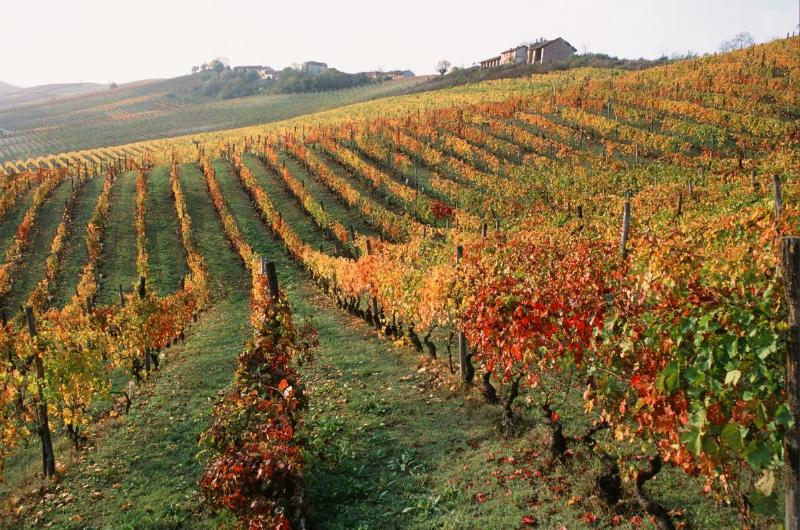
He adds: "This is why our sparkling wine method aligns with this philosophy: we produce two distinct wines from a single bunch without increasing the overall vineyard surface area."
Commercial pragmatism
Environmental concerns aside, commercial reality is proving hard to ignore. Sparkling wine – alongside still white and pink - is increasingly easier to sell abroad than red, particularly in mature export markets, and producers are under growing pressure to create viable sources of income. At Marchesi Alfieri, historic Pinot Noir vineyards, first planted in the 19th century, have set the stage for a decidedly modern project.
"After several vintages of producing Pinot Noir for red wine, the estate shifted its focus to harvest and vinify specifically for sparkling wine, with the intention of crafting a high-quality traditional method label," reveals winemaker Mario Olivero.
"The 2014 vintage proved to be a fortunate one - cool enough to show us how our hills could produce excellent wines suited for bottle fermentation and extended aging on the lees." Waxing lyrical about the suitability of their terroir, he notes that the estate's vineyards "sit at 270 meters above sea level," more recently joined by a newer parcel cultivated on north-facing slopes, "which promote slower, more gradual ripening and help preserve the acidity of the grapes."
He anticipates considerable growth in the production of local sparkling, "fueled by increasing market demand."(1).jpg)
On a larger scale, Franciacorta – already firmly established in the fine dining sector – and Trentodoc boast growing international recognition. In 2024, over 19 million bottles of Franciacorta were sold, with an average selling price per bottle of 24.52 euros; key export markets have shown consistent growth in both value and average price over the past decade.
Even France, home of Champagne, has started importing more Italian traditional method wines, albeit from a very small base.
According to Alessandro Massano, brand director at Bellavista: "Franciacorta is a relatively young wine region, celebrating its 35th anniversary in 2025, but in the last 15 years it has undergone a significant transformation, consolidating itself as one of the benchmark appellations in the classical method sparkling wine scene internationally."
He identifies limited production volumes, uniform focus on premium quality, and the category's "exclusive positioning" as being fundamental to the appellation's ongoing success.
"The Franciacorta Consortium asks producers not to compete on price, but to focus on value, establishing themselves as an alternative to the big names of Champagne in the most refined and selective contexts," he says.
Prosecco fatigue
Meanwhile, the IWSR has coined a eye-catching phrase: "Prosecco fatigue." Exports of the seminal style to the UK, for example, declined by 6.2% in the early part of 2025 according to a report by Wine Intelligence, although Italian sparkling wine as a whole remained resilient. And in an environment where premiumisation continues to shape purchasing decisions, traditional method wines have an edge.
"'Prosecco fatigue' is definitely a real phenomenon: customers are now slightly embarrassed to ask for it as they fear it looks a bit naff," reports Rupert Pritchett, MD at Taurus Wines in the UK.
Phil Innes, MD at Loki Wine, also believes that the category is no longer in vogue with certain consumers.
"I think Prosecco was always a gateway product - a launch pad for the more premium sparkling wines," he says. "People naturally progressed to things such as Champagne, however, younger people aren't choosing Prosecco as their gateway into sparkling wine as much as previously."
At the same time, as consumers seek engaging stories and greater authenticity, wines that speak of place, such as the Nebbiolo sparklers of Piedmont, become more compelling.
"Alta Langa DOCG requires a minimum of 30 months ageing on the lees, released in the fourth year after the harvest," emphasises Tenuta Carretta's technical director, Paolo Scaiola. He underlines the point that this comfortably exceeds the minimum ageing requirements in Champagne - reinforcing Alta Langa's premium credentials.
In 2026, Italy's sparkling wine landscape is more diverse – and nuanced – than ever before. Beyond Prosecco – and indeed Franciacorta and Alta Langa – frizzante and ancestral-method wines such as Pignoletto are finding a welcome home in New York and Milan's most progressive wine bars. With strong regional identities, generally high standards and compelling narratives, these wines stand in marked contrast to DOC Prosecco's mass-market image. For the trade, listing top Italian fizz has never been more attractive – or commercially compelling. The revolution is in full swing.


.png)