

From precision viticulture to data-driven decision-making, artificial intelligence is beginning to reshape how wine is grown, made, and understood, says Gemma Boucher.
Vineyards have long relied on winemakers' instincts, careful observation, and a deep understanding of terroir, handed down from generation to generation. Yet across the world, producers are embracing a new age of technology alongside the traditions that have long defined wine.
At the heart of this shift is the rise of artificial intelligence. Algorithms and advanced data processing have become invaluable tools for winemakers, offering new ways to respond to climate change, mounting disease pressure, and shifting consumer preferences.
Rethinking the vineyard
Until now, vineyard management has relied on observation, instinct, and the expertise of previous generations. Now, vineyard owners are turning to AI-driven vine monitoring, sensor networks, and mobile apps to detect viticultural threats.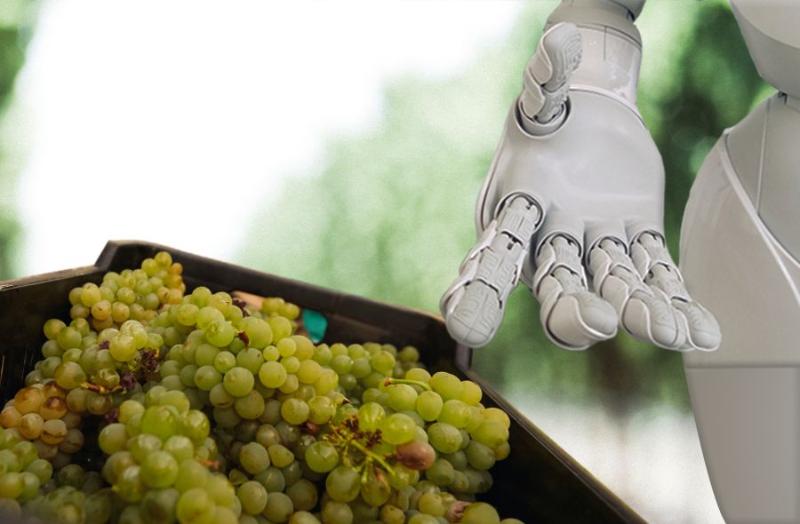
At California's Château Montelena, digital vine monitoring, using technology adapted from facial recognition software, enables managers to assess vine health on their smartphones. By capturing images of the vines, datasets are generated and analysed in real time. These systems can detect subtle changes in leaf angles and correlate them with sun exposure and water stress, allowing issues to be identified earlier and more precisely.
In Germany, innovators Maria-Theresa Licka and Mario Schweikert have developed a similar AI-powered mobile application that detects vine diseases, reducing the need for pesticides in viticulture.
"In order to recognise patterns correctly, we created an image-processing pipeline, at the end of which is a TensorFlow model [a machine-learning system developed to help computers interpret and learn from visual data]," explains Schweikert.
The system also maps geographic spread, allowing early intervention and reducing the need for widespread pesticide use. By targeting specific problem areas rather than entire vineyards, growers can minimise the buildup of copper and other chemicals in the soils.
Water management is another critical area in which artificial intelligence is proving its value. AI-powered predictive models can now analyse soil moisture levels, weather forecasts, and vine stress indicators to determine where and when to irrigate.
Based in Santa Rosa, California, Lumo is a technology company working with growers to tackle water challenges head-on, using advanced sensor networks and data-driven irrigation systems to support more efficient vineyard management. Estates using these systems have reported water savings of up to 30%.
At Clos du Val in Napa Valley, viticulturist Ryan Decker notes that "a flow meter is incorporated into each valve that is capable of delivering irrigation sets by volume, rather than by duration," helping to reduce water waste and improve fruit quality.
Technology meets tradition
Beyond the vineyard, AI is increasingly influencing decisions in the winery. Few producers have explored this more extensively than Moët Hennessy, where data has played a central role in its pursuit of quality for more than two decades.
"Our company was probably one of the first in the wine business to try to unlock the power of data, launching data acquisition and treatment projects as early as 2000," explains Marc Brévot, R&D director of the Champagne house's Robert-Jean de Vogüé Research Centre. Data now underpins Moët Hennessy's approach to fermentation, helping to assess grape quality and optimise harvest timing through a more detailed understanding of grape maturation. A real-time fermentation monitoring system is now implemented across Moët & Chandon's wineries, allowing teams to track and respond to changes in temperature and activity with precision and speed.
While optical sorting machines have been used in the wine industry since the late 1990s, their precision has advanced dramatically in recent years. At Tenute del Cerro in Montepulciano, Italy, a next-generation optical sorter is now capable of analysing and selecting grapes at an accuracy rate of up to 90%. Powered by AI, it assesses colour, shape, and overall quality, separating healthy berries from those that fall outside the set parameters. The estate's oenologist, Emanuele Nardi, emphasises: "Artificial intelligence does not replace human intelligence — it enhances it. The emotions of wine remain the domain of people."
However, few estates are embracing technological advancements quite as boldly as Château de Sours in Bordeaux's Entre-deux-Mers. Here, four autonomous, laser-guided robots (the only system of their kind in the world) transport grapes from sorting to fermentation vats, moving up to ten tonnes per hour.
"It's a powerful technology, but being among the first to use it comes with its challenges. Because it relies on sensors, and we are working with juices that are sticky and highly pigmented, the sensors can become disrupted and need to be monitored closely," explains Sébastien Jacquey, GM of Château de Sours.
Technology, Taste and Trust
In addition to production, AI is influencing how wine is marketed, sold, and protected. Tastry, a US-based application, analyses the chemical composition of wine to map its flavour and aroma profile, bypassing traditional tasting descriptors in favour of millions of data points. By matching this information with consumer preferences, it predicts the wines an individual is most likely to enjoy.
For producers and retailers, this means more targeted marketing, refined product development, and better alignment with consumer tastes. It can even identify oak profiles most likely to appeal to a target audience.
Meanwhile, in Italy, AI is being used to combat fraud. Prosecco, one of the world's most imitated wines, is now protected by an AI-powered authentication system developed in partnership with Microsoft and Italy's State Mint. By scanning a bottle's label, consumers can instantly verify its authenticity and access information about its origin and production.
The aim of artificial intelligence in wine is not to replace instinct or the intuition of the winemaker. Instead, it supports growers and producers by allowing them to focus on what only humans can truly provide: sensory perception, creative decision-making, and a deep, lived connection to the land.
From helping producers adapt to climate change and work with greater precision to reducing environmental impact and strengthening trust between producers and consumers, AI is becoming an increasingly valuable ally to the wine industry.

Get expert insights, weekly highlights, and exclusive stories from the world's most trusted wine competition.