
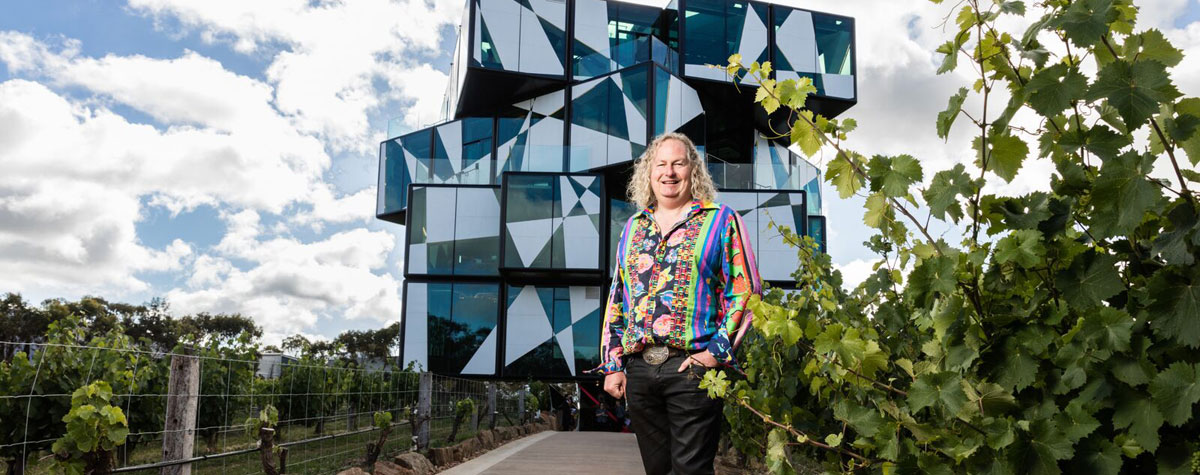
Fourth-generation custodian of d'Arenberg, Chester Osborn is a living Antipodean legend. Yet even after decades at the top, he remains willing to admit mistakes and learn from them, as James Lawrence discovers.
You've built a reputation on backing your instincts, often against prevailing wisdom. Looking back over the past 20 years, is there a belief about viticulture or winemaking that you once held very strongly but were ultimately forced to abandon?
I became interested in biodynamics many years ago, including practices such as burying cow manure in horns and applying it in small amounts throughout the vineyard. The aim was to encourage fungal activity, alongside maintaining permanent ground cover rather than relying on herbicides or cultivation.
From there, it seemed logical to use sheep for winter mowing. I grew up with sheep in the vineyards during the 1960s. My father eventually stopped using them because livestock theft was common at the time, but I felt they could once again play a useful role. By moving sheep from block to block, we could reduce tractor mowing in early spring, lowering diesel consumption and our carbon footprint. In theory, their presence and manure would also help stimulate soil biology.
However, over time, I noticed the vines gradually losing vigour. During one particularly hot spell near harvest, I observed bunch stem necrosis, where entire grape clusters begin to shrivel. The problem was most noticeable around vineyard edges, where vines were already competing with nearby trees.
After seven years, I realised what was happening. We were effectively carbon farming with sheep. The sheep were consuming the winter vegetation and converting it into animal mass, which was then removed from the vineyard. In doing so, we were exporting carbon that would otherwise have been returned to the soil. As soil carbon levels declined, so did water-holding capacity and fungal activity, increasing vine stress.
To reverse this, we introduced organic composts and focused on rebuilding soil carbon. This has encouraged stronger winter plant growth, improved moisture retention, reduced irrigation requirements and enhanced both disease resistance and resilience to extreme weather.
Part of my thinking was influenced by the evolutionary relationship between plants and fungi. Fungi colonised land around a billion years ago, while plants arrived roughly 500 million years ago. Plants were only able to thrive on land through their symbiotic relationship with fungi. These fungal networks, known as mycelia, connect plant root systems, moving nutrients and chemical signals through the soil in exchange for sugars from the plants.
I believe these fungal populations play a major role in grape flavour and the expression of terroir. Different soils and geological formations support different fungal communities, which in turn contribute distinctive characteristics to the wines they produce.
What's one piece of inherited wisdom from previous generations that you think modern wine culture romanticises too much, and something that remains a vital maxim?
Modern wine culture is incredibly diverse. Some consumers prefer soft, approachable wines that are ready to drink immediately. Others enjoy richer, more textured styles, while many seek wines that express terroir, possess complex tannins and reward long-term cellaring.
Four generations of the Osborn family have produced age-worthy wines in McLaren Vale. My role has been to refine that tradition and move ever closer to perfection.
One of the most significant quality improvements has come from eliminating nitrogen inputs in the vineyard. This has helped produce grapes with better pH balance, purer fruit expression and less herbal character at lower sugar levels, resulting in wines with greater energy and drive.
We have retained our traditional submerged-cap fermentation method, combined with very lightly toasted oak and extended ageing on fine lees. Together, these techniques help create wines that evolve slowly and gracefully over time.
During the 1940s, 50s and 60s, my father sold substantial quantities of bulk wine to Penfolds. In the 1980s, Max Schubert famously remarked that d'Arenberg was the closest thing to Grange among all the bulk wines they purchased. That probably means some of it was finding its way into Grange itself.
When I created The Dead Arm Shiraz, I initially modelled it on Grange. Over time, however, I refined the style to better reflect our vineyards and their natural strengths.
Throughout the 1990s and early 2000s, many producers were making very rich, oily wines that often aged poorly. My focus was on producing terroir-driven wines with genuine longevity. More recently, lighter, youthful red wines with minimal tannin have become fashionable. While they certainly have their place, they do not always complement food particularly well.
I believe consumers still want wines with flavour, balance, richness and aromatic length — wines that enhance a meal rather than dominate it. That remains the style I strive to make. Encouragingly, our Australian sales are currently stronger than they have ever been, which suggests the approach continues to resonate with wine drinkers.
Have you noticed yourself becoming more cautious, more interventionist, or more willing to take risks because of climate change and its impact on viticulture?
Both heat and cold extremes are increasingly affecting vineyards in McLaren Vale. Frost is now appearing in areas where it was rarely, if ever, seen before. To address this, we have installed frost fans in vulnerable sites. However, I have observed other wine regions where frost events have become so severe that even fans are no longer sufficient.
Extreme heat presents another challenge. When very hot weather is forecast, we increase irrigation in the days beforehand to help the vines cope with the stress. Canopy management is also crucial.
In McLaren Vale, we typically use sprawling two-wire vertical trellising systems. With slightly greater vine vigour, the canopy provides additional shade for the fruit, reducing sun exposure and heat stress while helping preserve freshness and fruit character. In cooler seasons, however, excessive shading can work against us.
As a result, we aim to maintain different levels of vigour across our vineyards, creating blending options that allow us to respond to varying seasonal conditions.
We are also planting varieties better suited to warmer climates, with excellent results. In particular, Fiano, Sangiovese, Montepulciano, Mencía and Nero d'Avola have shown great promise.
Wine marketers promote "authenticity" all the time. What does the word mean to you?
For me, authenticity means being true to the site where the grapes are grown. That philosophy sits at the heart of d'Arenberg. Our goal is to produce wines that express the strongest possible sense of place and terroir from every vineyard.
Many of the winemaking decisions I have already mentioned, including restrained oak use and traditional fermentation techniques, are driven by that objective. Even our iconic red-striped label has changed very little over the years, reflecting a sense of continuity and authenticity.
Sustainability has rightly become a major focus across the wine industry. At d'Arenberg, we believe sustainability must be genuine rather than simply a marketing exercise. Building healthier soils, improving vineyard resilience and reducing environmental impact are all fundamental to our long-term approach. Being authentically sustainable is every bit as important to us as being authentically expressive of terroir.

Get expert insights, weekly highlights, and exclusive stories from the world's most trusted wine competition.