
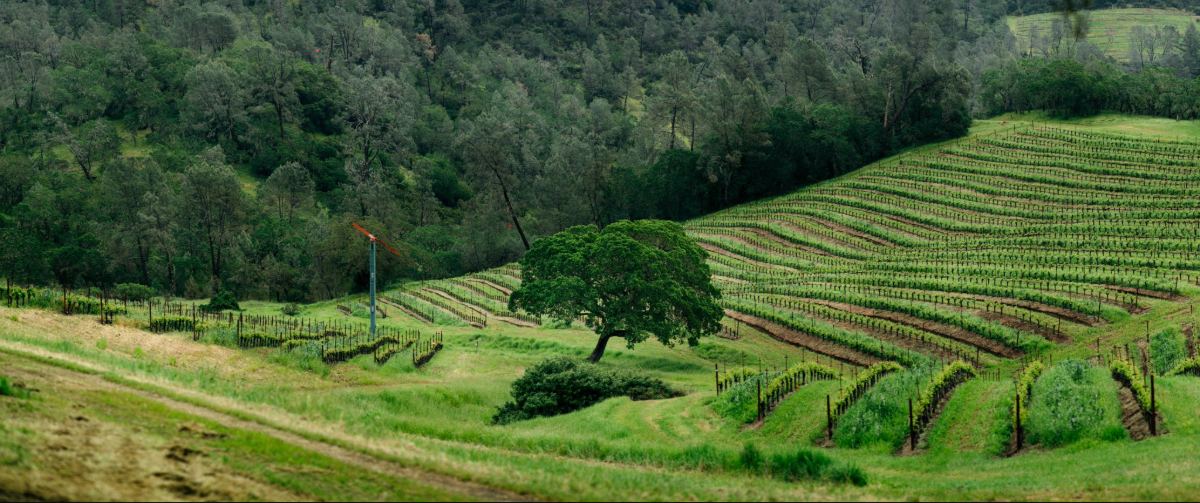
One of Napa's finest, Joseph Phelps Vineyards continues to produce the seminal Bordeaux blend Insignia. Yet the estate is not standing still, as James Lawrence discovers
Region: Napa Valley, California
Founded: 1973
Owner: Moët Hennessy (LVMH) since June 2022
Vineyard holdings: 525 acres across 11 estate vineyards in Napa Valley and the western Sonoma Coast
Winemakers: Ryan Knoth, Napa County; Justin Ennis, Sonoma County
Annual production: Not publicly disclosed
Of all the great pioneers of Napa Valley, Joseph Phelps ranks among the most influential. Founded in 1973, the estate has played a central role in promoting Napa as a source of exceptional red wine, helping to overturn the presumption that fine Cabernet was an exclusively Bordeaux preserve. In the 1970s, a handful of ambitious producers - Phelps among them - were producing Cabernet Sauvignon of ripeness and quality seldom witnessed in the Médoc. The old European hierarchy had been challenged.
Yet an interesting human interest story lies at the heart of Joseph Phelps. Born in Maysville, Missouri, and raised in Colorado, Joe Phelps arrived in California with an engineer's and builder's mindset – hardly an obvious candidate for a wine legacy. However, on 1 March 1973, he took possession of a 600-acre former cattle ranch, situated just east of St Helena - prime Napa real estate. Exploiting a favourable mixture of clay, loam and gravelly soils, he planted an eclectic mixture of vines, including Cabernet Sauvignon, Riesling, Zinfandel, and Gewürztraminer. A year later, Phelps created what the estate describes as California's first varietally labelled Syrah, and became an early advocate of Rhône varieties in the Golden State.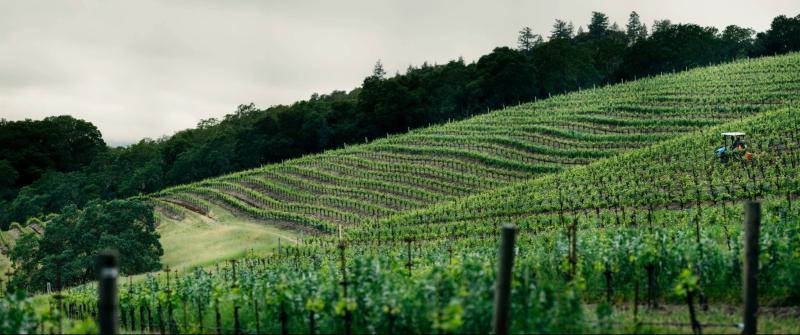
Nevertheless, it is the singular blend Insignia that has carried the estate's reputation around the world. In 1974, Phelps conceived what was, at the time, a revolutionary project: selecting the finest lots of a vintage and blending them into a single wine, without allowing varietal designation to dictate the result. Over time, however, Insignia took on a more recognisable identity: a Cabernet-led blend that continues to garner high critical praise.
Today, Joseph Phelps is an estate farming 525 acres of vines across 11 estate vineyards - including two parcels in Sonoma – that encompasses a diverse collection of terroirs including St Helena, Rutherford and Oakville. Assembled over decades, this enviable collection of climats provides the winemaking team with a very broad palette from which to construct the final blend.
Insignia remains one of the great Bordeaux-style blends of Napa: a wine of richness, concentration and substantial tannic architecture, albeit the winemaking has changed in recent years, with a stronger emphasis on what the estate calls 'restrained power'. The 2023 vintage, for example, was matured in French oak for a period of 20 months, as opposed to the traditional 24, and aged for a year in bottle. The result is a more lifted and precise expression of the house style – refined and elegant.
In 2022, Moët Hennessy acquired Joseph Phelps Vineyards from the Phelps family, bringing one of Napa's established luxury producers into the LVMH portfolio. The challenge now is to maintain Insignia's status and broaden distribution at a time of global contraction. Indeed, Silicon Valley Bank's 2026 industry report estimated that US wine volume fell 2% in 2025, although higher-priced wines have remained more resilient than the bottom end of the market. Will Joseph Phelps falter in the years ahead? It seems unlikely. All the cards are in order: the wines are exceptional, the marketing is shrewd, and the brand recognition is strong. For anyone seeking a prestigious Napa red with zip as well as vigour, Insignia is not a bad place to start.
Q&A: David Pearson, Maison President, Joseph Phelps Vineyards.jpg)
Joseph Phelps has such a distinctive place in Napa's history. How do you balance protecting the estate's identity and legacy with the need to keep evolving?
We do both. We cherish and honour the history of innovation and quality while at the same time bringing new innovation and a fresh energy in striving for top quality in our wines. The power behind Joseph Phelps today is the alignment with our storied past and the future we envision.
While the landscape in Napa is indeed evolving, we believe there will always be a place for wines of historical importance and modern relevance. We are reconnecting with wine consumers as we reconnect with nature and the earth in our farming.
Looking at the wines today, what do you think most clearly expresses the character of the estate and its vineyards?
The consistent character of the wines of Joseph Phelps, and in particular the iconic wine Insignia, is a remarkable balance of rich mouthfeel with soft, ripe tannins.
The trend of Phelps' wines has been a move towards wines of restrained power and greater elegance. We feel that the finest wines are those of great complexity and character but restrained elegance - power and finesse in tension, but also in balance. We are working in the vineyards and wine cellar to enhance this style.
Napa is facing a very different set of challenges from those that shaped the region's modern wine industry - what do you think Joseph Phelps needs to be doing now to remain relevant for the next generation?
It is all in the vineyards. We need to reinvent our farming so as to grow healthy vines that will be more resilient to climate change and health pressures.
We are fully committed to the philosophy of agroecology, as the French refer to it. This philosophy brings back the full biodiversity of nature, in the subsoil and on the surface. We consider this approach to farming the best strategy for producing wines of the highest quality while also responding to water pressures and climate change.
The next generation is focused on the quality of their experiences rather than the quantity of their acquisitions. Moreover, the younger generation is attracted to experiences which align with their values. People are desirous of reconnecting with each other and with nature.
Joseph Phelps will invite our visitors, guests and patrons to join us for unique moments and experiences - to participate and engage with nature and farming, in all of its diversity and pleasures. We have already seen how positively and intensely the younger generations respond to this.
It is an optimistic and joyful view of the future, which we all can appreciate.

Get expert insights, weekly highlights, and exclusive stories from the world's most trusted wine competition.