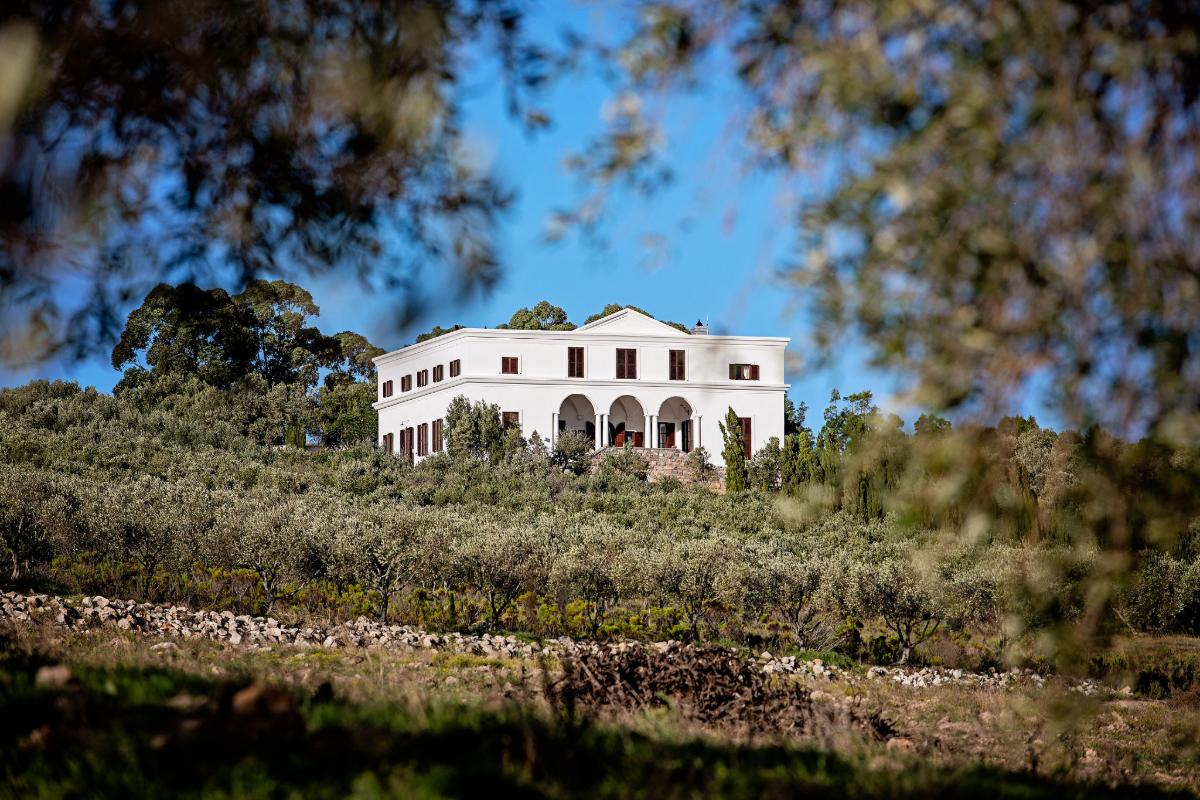
Once an unknown quantity, Hamilton Russell Vineyards has risen to become one of South Africa's leading producers of wonderfully fragrant Chardonny and Pinot Noir.
Region: Hemel-en-Aarde Valley, Walker Bay, Hermanus, South Africa
Founded: 1975
Owner: Anthony Hamilton Russell
Winemaker: Emul Ross
Estate holdings: 52 hectares of vineyard within a 170-hectare property
Annual production: 144,000 bottles
All the outmoded stereotypes about South African wine being about as subtle as a fluorescent Porsche instantly melt away at Hamilton Russell Vineyards. Situated in the cool, maritime Hemel-en-Aarde Valley, just behind the former fishing village of Hermanus, the estate is one of the most disciplined and quality-focused wineries in the Western Cape. In this small corner of paradise, cooled by its close proximity to the Atlantic, winemaker Emul Ross produces exceptional Chardonnay and Pinot Noir.
The estate was founded in 1975, when Tim Hamilton Russell purchased an undeveloped, 170-hectare property in the then little-known Hemel-en-Aarde Valley. The first vintage, in 1981, produced 11 wines from eight different grape varieties. However, when Anthony Hamilton Russell took over from his father in 1991, he decided to focus exclusively on Burgundy's signature grapes. This focus has helped the brand enormously, consolidating its position in the 21st century as one of South Africa's leading sources of cool-climate Pinot Noir and Chardonnay.
Today, much is made of the estate's "Burgundian" philosophy - a cliché, to be sure, but nonetheless an accurate one. An extensive soil study, undertaken in 1994, identified 52 hectares of particularly stony, iron- and clay-rich, shale-derived soils as possessing outstanding potential - a 'Grand Cru' monopole that continues to supply all the fruit for Hamilton Russell's estate wines. Benefiting from a prime position - cool maritime conditions and the moderating influence of the cold Benguela Current - and small yields, both the Chardonnay and Pinot Noir showcase remarkable freshness, balance and poise. The wines are unmistakably New World in origin, yet there is a savouriness and restraint more readily associated with the Côte d'Or. 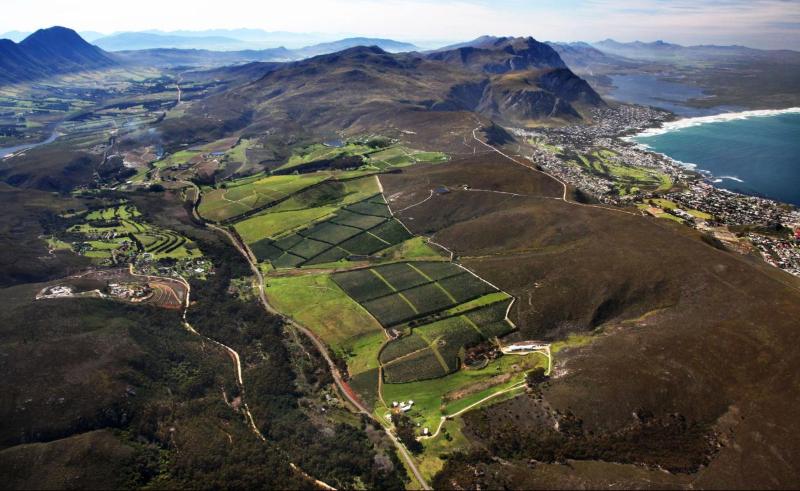
The winemaking, too, has clear echoes of Burgundy. The riffs are numerous: the red is fermented in small open-top fermenters before being matured in French oak; the Chardonnay is vinified and aged in 300-litre French oak barrels for around nine months. The winery uses indigenous yeasts and abandoned sterile filtration in 2005; more recent vintages are bottled unfined and with only coarse filtration. There is no reserve wine, and there are no second labels.
By South African standards, the wines are relatively expensive - the Pinot Noir currently retails for approximately £45 a bottle in the UK. Yet when benchmarked against world leaders from the US, France, Australia and New Zealand, they remain attractively priced. There is no shortage of wannabes attempting - and often failing - to work miracles with the world's most fashionable red variety. But Hamilton Russell Vineyards is firmly up there with the best.
Q&A: Anthony Hamilton Russell, owner, Hamilton Russell Vineyards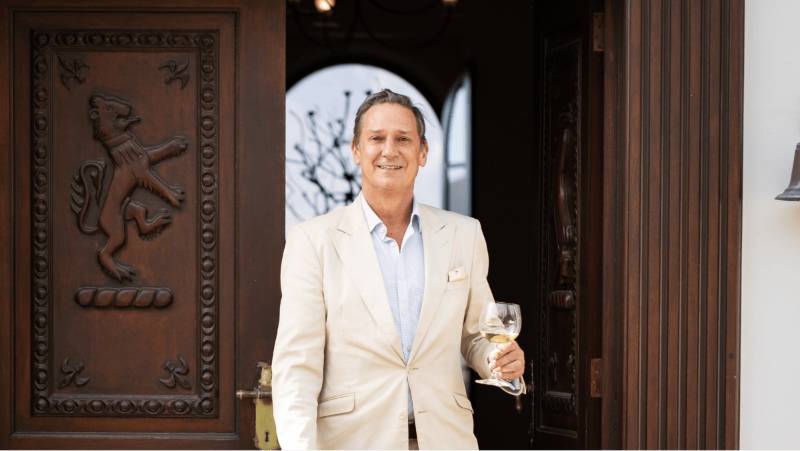
South Africa's Pinot Noir and Chardonnay scene has become increasingly crowded with ambitious producers. What do you believe Hamilton Russell Vineyards still does that genuinely sets it apart?
I am thrilled by the development of the Chardonnay and Pinot Noir scene in South Africa, particularly in the Hemel-en-Aarde. We were the only people selling wine in the area in 1991; today there are 13 wine cellars and nearly 30 people making wine from one or more of the three Hemel-en-Aarde appellations. We are incredibly proud to have pioneered such a high-quality and vibrant wine region.
Our longstanding focus on a single Pinot Noir and a single Chardonnay, with no reserve wines or second labels, sets us apart to some extent. Our wines are an ongoing expression of a defined 52-hectare monopole in a particular vintage, through the single red and white varieties best suited to the site and its soils. They are not selections shaped by our own aesthetic preferences, but rather an expression of what the site naturally gives us.
As climate change alters growing conditions, how are you thinking about the future of the estate's vineyards - and do you foresee a point at which the style or even the grape varieties that define Hamilton Russell will have to change?
I don't foresee any need to change our focus on Pinot Noir and Chardonnay. Interestingly, the climate here has actually become cooler and wetter over the 35 years I have been running Hamilton Russell Vineyards. And if I compare our hottest vintages with our average conditions, we could sustain fairly significant increases in temperature and still make wines of real beauty.
Our great climatic advantage is our very close proximity to the cold Benguela Current, which flows northwards from the Antarctic region. It is a wonderful stabilising influence and gives us considerable confidence about the future.
Hamilton Russell has built its reputation on restraint, precision and terroir rather than sheer volume, yet South Africa fights a constant uphill battle in terms of global perception. Do you think the battle will ever be won?
It is a great frustration for our industry that there is still an ongoing "country of origin discount" applied to South African wine. This is despite the fact that our leading wines can, and often do, outperform the world's best in blind tastings.
Progress is being made, however, albeit slowly. The first Pinot Noir we sold into the US, for example, was $5.95 a bottle. It now averages $63 a bottle — and in restaurants, which account for 66% of our sales, the price is of course significantly higher.
There are certainly a good number of top producers fighting the perceptions that continue to hold South African wine prices below those of their international peers. And, being by nature an optimist, I believe we will win the battle.

Get expert insights, weekly highlights, and exclusive stories from the world's most trusted wine competition.