
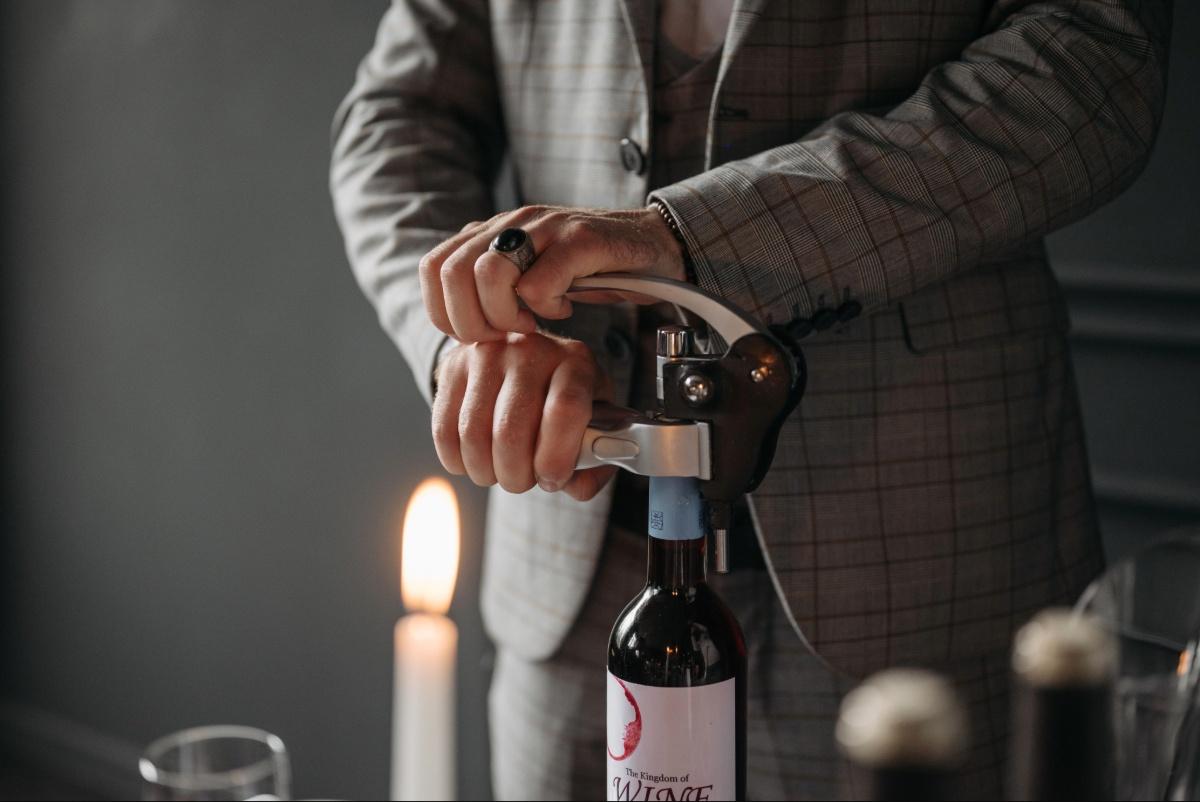
In 2013, Coravin revolutionised by-the-glass wine service. Yet not everyone in the trade has embraced the technology with equal enthusiasm, as James Lawrence discovers.
Remember when Coravin arrived with loud fanfare in 2013? In the world of fine dining, it was heralded as virtually on par with the Second Coming – one of the most significant innovations the wine trade had ever seen. Many, myself included, were seduced by the premise: rare vintages of Latour served by the glass without fear of oxidation or costly wastage. And, more than a decade later, few would deny that Coravin has changed the economics of premium wine service..jpg)
Yet the conversations around its usefulness and practical application have matured. Having lived with the technology for over a decade, sommeliers are reevaluating their attitudes to this undeniably innovative piece of technology. Has it encouraged better hospitality, or simply bigger by-the-glass lists aimed at the well-off? And are some operators placing too much faith in a system that, while transformative, is far from infallible?
"Coravin has undoubtedly enabled more restaurants to offer super-premium wines by the glass, giving wine enthusiasts the opportunity to experience bottles that might otherwise be beyond their budget if purchased in full," says Jiachen Lu, head sommelier at Cord.
However, Lu is quick to point out that there are still considerable practical and commercial limitations. "While Coravin significantly slows oxidation, it does not preserve a wine indefinitely, and the quality will gradually decline over time," she explains.
For rare and expensive bottles, the financial risk of having unsold wine therefore remains considerable. "Unless an establishment has sufficient demand to sell the bottle by the glass within a reasonable timeframe, most of the fine and rare wines will continue to make more commercial sense as bottle-only offerings.".jpg)
Other sommeliers, however, raise almost philosophical reservations about Coravin's role and relevance within fine dining. Rachel Coe, wine director at Quince in San Francisco, believes that a by-the-glass selection "should essentially be a snapshot of the wine programme as a whole."
She continues: "For me, a wine by-the-glass list should be focused, with a few options in each category. Seeing a restaurant that over-utilises Coravin programming (say 20+ wines by the glass) is somewhat discouraging. One of the most beautiful things about wine is enjoying a bottle with a friend or partner, and seeing it evolve over time and the conversations that are shared alongside."
Mixed blessing
I interviewed several leading sommeliers in 2013, not long after Coravin hit the market. The excitement was palpable, with one individual describing it as the "democratisation of fine wine", allowing guests to finally experience mature bottles that would have previously remained inaccessible. As Marco Nardi, sommelier at Caractère, observes: "It made the unthinkable suddenly possible. There are close to no limitations to what your by-the-glass selection or your wine pairing experiences can include, compared to pre-Coravin."
Yet while the technology initially inspired a belief that almost anything was possible, experience has encouraged a more measured approach. Even Coravin's strongest advocates now speak less about what the technology can do, and more about when it should be used.
"I first used one around 2020. We decided to offer every bottled wine on our short list by the glass - it was chaos," laughs Alex Mammone, sommelier and GM at Luna and Legare. But she remains convinced that "the ability to enjoy and allow others to experience exquisite, rare or just downright expensive bottles without feeling as though you are up against the clock is, quite frankly, a game changer."
Of course, there are caveats. The device itself and the argon gas are expensive; moreover, as Mammone underlines, "ultimately that price is passed onto the customer when used in a restaurant or wine bar."
She adds: "In some circumstances, the money saved on wastage (for midrange pours anyway) can often match the cost of the gas."
However, opposition to Coravin is often psychological rather than simply derived from a cost-benefit analysis.
"We don't have anything poured by Coravin. I think the wine should breathe and be opened! And I think there are so many great producers with wine in my by-the-glass range that sometimes I feel spoiled with options," says Paris McGarry, wine director at Cove restaurant in New York..jpg)
Even Mammone, an overall fan of the technology, concedes that "realistically most wines benefit from contact with air - it's such a joy to have a glass or bottle develop over the course of an evening."
For the team at Luna, the decision ultimately comes down to three questions: will the bottle sell before it fades; do the economics justify the gas and capsules; and, perhaps most importantly, what does the guest actually want?
To Coravin, or not to Coravin
According to sommelier and consultant Stuart Skea, there is another vital dimension to this conversation which is often overlooked - operator error.
"Coravin is a useful and excellent tool, but merely a tool - I believe that the vast majority of sommeliers use this incorrectly, not purging after use or even cleaning the device, for example, and I have witnessed many a sticky residue-laden tool," reveals Skea.
Echoing Lu's point about spoilage, he adds that "after the third or fourth entry there is a very real risk of oxidation, especially when bottles are stored upright with crumbling desiccated corks."
Meanwhile, the still-common practice of 'Coravining' wines at the table, he notes, can result in "filling the glass with cork detritus and spraying the tablecloth – and maybe even your guests - with wine droplets."
He adds: "I know this from my own experience and I know that a number of Michelin two- and three-star venues will have a number of high-end bottles which are 'pooched', to quote a faultlessly polite Canadian sommelier colleague.".jpg)
Thirteen years ago, the trade became swept up in a wave of enthusiasm about this technological marvel, celebrating what seemed like the end of one of wine service's oldest frustrations: oxidation. But the halo has nonetheless faded, with critical voices becoming bolder in their objections and reservations. Some professionals embrace it enthusiastically. Others use it sparingly, and some reject it entirely. Yet perhaps most tellingly, none of the sommeliers interviewed praised Coravin unreservedly.
"Although I appreciate the benefits of Coravin both professionally and at home, I don't believe the current system is ideally suited to tableside service," says Lu. She explains that on several occasions, she has experienced older or more fragile corks failing under pressure, causing significant splashes of wine and creating potential safety concerns.
"I have also encountered bottles where the cork did not fully reseal after needle penetration, despite advances in the technology. Coravin is already leading preservation technology, but continued improvements will determine whether it will become indispensable rather than merely a specialist tool."
More than a decade after its launch, Coravin has come of age. The debate is no longer about what a marvellous piece of technology it is. It's about something more interesting: where it belongs, where it can be improved, and whether, sometimes, it should be left in the drawer.

Get expert insights, weekly highlights, and exclusive stories from the world's most trusted wine competition.