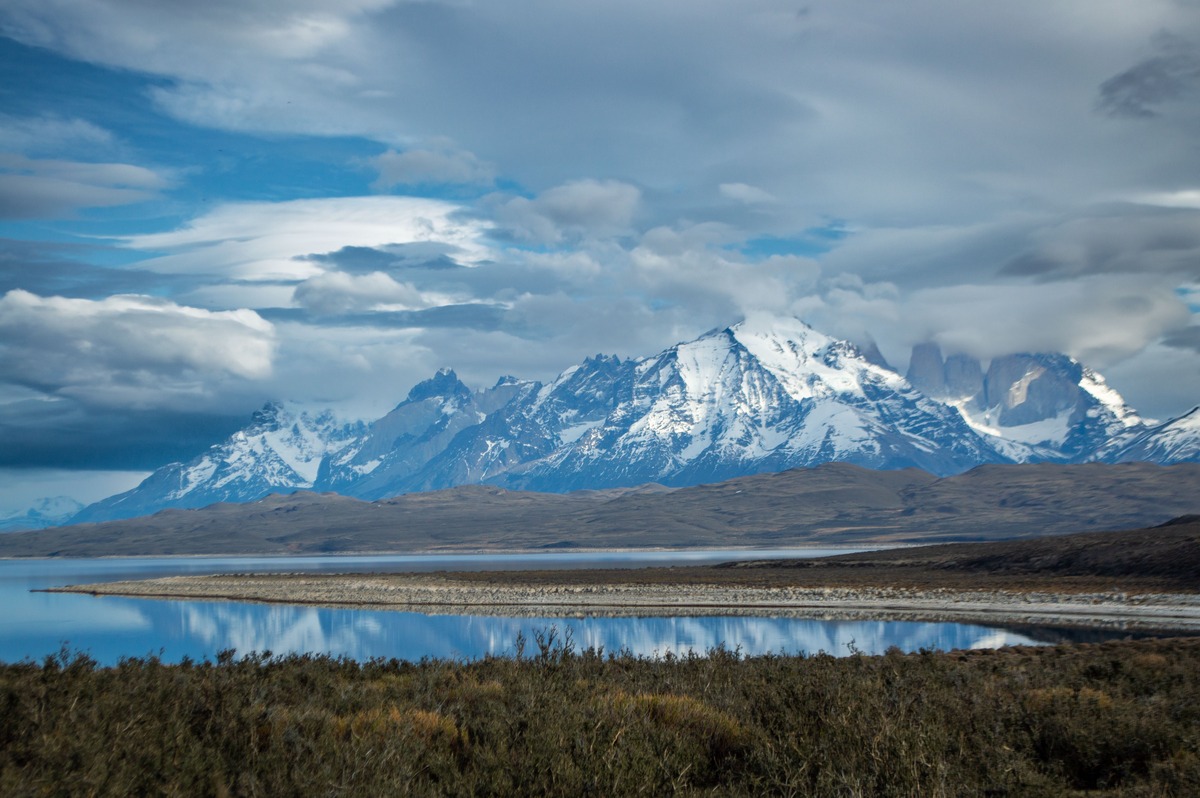
From century-old vines in Río Negro to the wind-battered vineyards of Chubut, Patagonia is a gateway to Argentina's most vivid landscapes - and unique terroirs.
In Mainqué, on the northern bank of the Río Negro, plots of Pinot Noir and Malbec planted a century ago are still producing fruit on their own roots, sheltered from the wind by rows of poplars. A few kilometres away, these vines share the landscape with vineyards planted twenty years ago in San Patricio del Chañar, among the pioneers of modern Argentine viticulture, and with far more extreme sites where the deep south sets limits on which grape varieties can thrive. Together, these elements explain better than any map why Patagonia deserves to be understood on its own terms.
In my previous piece, I suggested reading Mendoza through its soils. Patagonia calls for a different lens: latitude. Its vineyards stretch between 38 and 45 degrees south, in valleys at around 300 metres above sea level. Here, freshness comes from the distance from the equator, while dry winds help limit disease and favour organic viticulture. Río Negro, Neuquén and Chubut account for 2,889 hectares of vines, according to Argentina's National Wine Institute (INV), based on figures at the end of 2025. Together, they represent 1.5% of the country's vineyard area and are home to 43 producing wineries, according to the institute's latest regional report. La Pampa can also be included: wine statistics treat it as Patagonia's northernmost province, with 322 hectares concentrated in the department of Puelén.
Río Negro
Río Negro is the province with a memory. In 1975, it had 17,579 hectares under vine, and its cooperatives ranked among Argentina's largest wineries by capacity. Overproduction, competition from Cuyo and a shift towards pears and apples reduced that area to 1,260 hectares by 2025. What remains is worth more than the losses alone might suggest. The province still has 208 hectares planted before 1970 and is home to 24 of Patagonia's wineries. Some 65% of its vineyard area lies in the department of General Roca, in the Alto Valle, downstream of the confluence where the Limay and Neuquén rivers meet to form the Río Negro.
In the early 2000s, visionary projects with a European outlook rescued these old vines and gave them their due, producing ambitious wines. Malbec accounts for 27% of the province's vineyard area, followed by Merlot and Pinot Noir, while old-vine Semillon provides a distinctive signature of its own. Río Negro Malbec tends to be more floral and delicate than its Mendoza counterpart, with finer tannins.
Neuquén
Neuquén is the province of scale. Some 87% of its vineyard area was planted between 2000 and 2009, on a desert plateau made productive through irrigation: an oasis created by human hands. The department of Añelo, around San Patricio del Chañar, accounts for 91% of the area, while the average vineyard size is 17.5 hectares, the second largest in the country. With nine producing wineries, the province accounts for three-quarters of Patagonia's wine production.
Plantings are dominated by Malbec, at 37%, followed by Cabernet Sauvignon, Pinot Noir and Merlot, each accounting for more than 13%. Depending on the site, soils are alluvial or colluvial, ranging from sandy loam to loam. Alongside Chardonnay and Pinot Noir, these conditions also favour the Bordeaux varieties. The diurnal temperature range is pronounced, while persistent winds can encourage thicker grape skins and help preserve acidity.
Neuquén is also the province that makes the greatest commercial use of geographical origin. Of the wine it sells on Argentina's domestic market, 60% carries the Patagonia Argentina Geographical Indication, compared with 2.5% nationally. This offers a measure of the importance Patagonian provenance holds for the trade and consumers.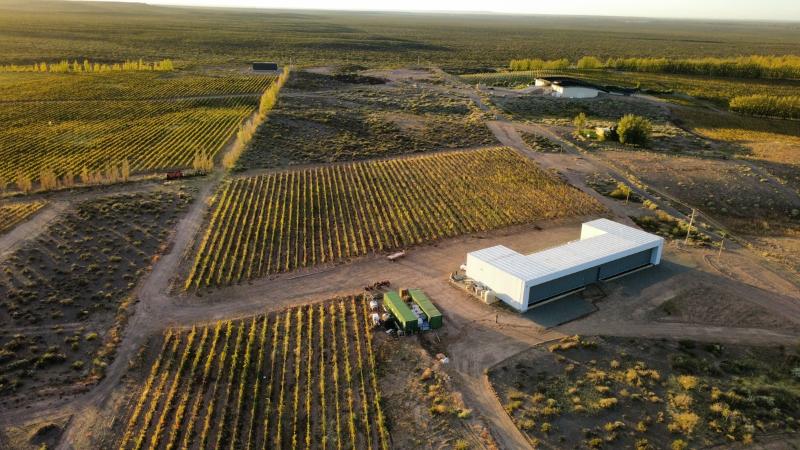
Chubut
Chubut is the frontier. Its vineyard area grew from 66 hectares in 2016 to 122 hectares in 2025, an increase of 84%. Pinot Noir accounts for 37% of the province's vineyard area, the highest proportion of any province in Argentina. The number of wineries and artisanal producers rose from 10 in 2019 to 24 in 2023, while the number of export destinations increased from one to 20 over the same period.
The INV recognised the Trevelin Geographical Indication in 2020, followed by Sarmiento and El Hoyo in 2023. In Trevelin, close to the 43rd parallel and the Chilean border, frost can strike even in January, at the height of summer. Vineyards may need to activate sprinkler systems for frost protection up to 40 times a season.
Sarmiento lies beside Lake Musters, at 45° 33′ south, where winter temperatures can fall to −20°C and winds reach 100 km/h. This is where the Rosé of the Year in Tim Atkin's 2026 report was produced. Further towards the coast, projects facing the Atlantic in Chubut and Río Negro are opening up a third expression of the region: oceanic Patagonia.
Why Patagonia carries less weight than it deserves
The usual explanation is volume, and it is partly true. In 2022, Patagonian wines accounted for 0.6% of Argentina's export volume. The more revealing figure, however, is value. That same year, the region contributed 1.3% of export value, while in 2023 a litre of Patagonian wine sold for US$7.10, twice the national average. The United States, Brazil and the UK are the leading destinations.
I believe the real obstacle lies in how Argentina is understood. For 20 years, the world has learnt to buy Argentine wine through the lens of high-altitude Malbec. Patagonia challenges that shorthand at every turn. Its vineyards lie at relatively low altitudes, far to the south and often exposed to relentless winds. Its most compelling varieties include Pinot Noir, Merlot, Chardonnay and Semillon. The three provinces together account for 19.5% of Argentina's Pinot Noir vineyard area on just 1.5% of the country's total vineyard area.
Even the name took time to establish itself. The Patagonia Geographical Indication dates from 1999, but a trademark dispute delayed its use for more than 12 years, with its full use confirmed only in 2022. For years, the region was also marketed as a postcard: the end of the world, the remoteness. That image can prompt a first purchase. The second comes when the buyer understands the origin.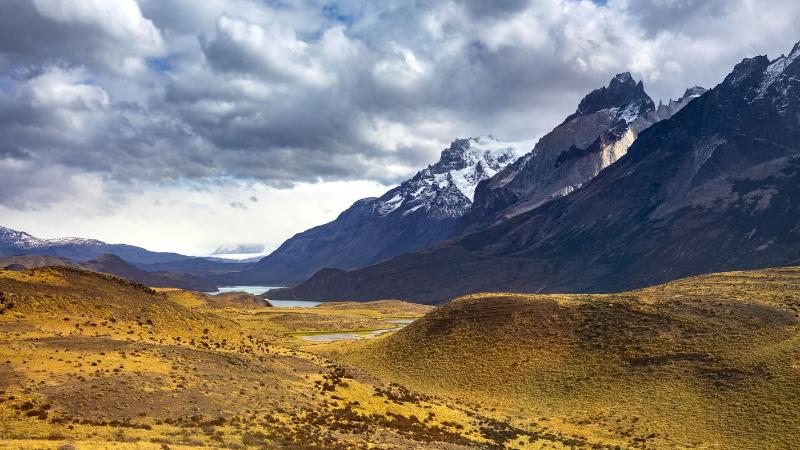
What to ask about a Patagonian wine
Its latitude, to understand where its freshness comes from.
The age of its vines, because Río Negro preserves a heritage that is rare not only in Argentina but across the New World.
Its province, because Río Negro, Neuquén, La Pampa and Chubut offer four different expressions of the same broad geography.
Its Geographical Indication, because Mainqué, Trevelin, Sarmiento and El Hoyo already identify specific places within Patagonia.
Patagonia already has the wines. Now it is time for them to earn their place on retailers' shelves and restaurant wine lists.

Get expert insights, weekly highlights, and exclusive stories from the world's most trusted wine competition.