
From Rioja to Kent, wine tourism is booming. But is the industry's greatest success story about to become its biggest headache?
You heard it here first (for the millionth time): global wine tourism is booming. "The number of total visitors to Chile estimated for the 2019/23 period exceeds 3.7 million, based on tours, restaurants and accommodation in wineries," explains Claudio Cilveti, GM, Wines of Chile – a remarkable number.
"This is relevant given that in 2019, the composition of the 1,100,000 wine tourists was 75% international and 25% national." Meanwhile, Rioja welcomed 1.16 million visitors in 2025 according to the Consejo Regulador. But while there is clearly a strong – and often essential for smaller wineries – impetus to make as much cash as possible from tourism, the consequences are not all positive. Today, producers in key destinations are essentially straddling two identities: working agricultural businesses on the one hand, and sophisticated hospitality destinations on the other. These roles are complementary, but not always compatible, and it is far from certain that the two can coexist without one gradually reshaping the other.
"There are certainly moments where the two worlds meet," laughs Tim Ford, MD at Domaine Gayda in the Languedoc, and not always harmoniously.
"Visitors often imagine vineyards as peaceful places, whereas in reality they are working farms. During harvest, tractors start before sunrise, forklifts move constantly, deliveries arrive throughout the day, and the winery operates around the clock. That is the reality of making wine." Nevertheless, he believes that tourism is an essential market device, an asset that "gives us the opportunity to tell our story directly."
He adds: "Over the last decade, we have invested considerably in welcoming visitors because we believe people increasingly want to understand where their wine comes from. When someone spends time here, they leave with a much deeper appreciation than they could ever gain from simply buying a bottle on a supermarket shelf."
Cost-benefit analysis
The visitor economy undeniably creates jobs, stimulates investment and strengthens brand recognition. Yet a cursory glance at major urban destinations – Venice and Barcelona spring to mind – reminds us of the challenges that inevitably follow success: impact on infrastructure, environmental resources, accommodation, transport, and local identity. Protesters hurling missiles at cruise ships docked in Venice may seem far removed from the vineyards of Stellenbosch and Napa, but it illustrates a broader truth: tourists inevitably change – some would say ruin – the places they celebrate.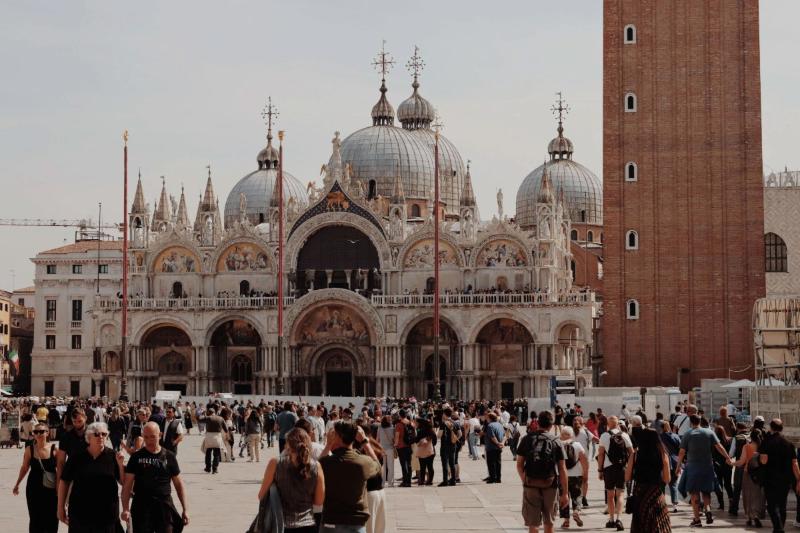
Anna Belani-Ellis wrote about this issue in May, focusing on one of global wine tourism's biggest totems: Napa Valley. "There wasn't a single moment when Napa decided to become a destination. It just...kept leaning that way," observed Belani-Ellis.
"Wine used to be made, and then people would taste it. Now, in many cases, wine is made knowing how it will be tasted. Where someone will sit. What they'll see. How long will they stay? For many producers, direct-to-consumer sales now account for over half of total revenue. Without them, the model becomes difficult to sustain. So the line between agriculture and hospitality doesn't disappear. But it softens."
Some friends of my mother recently visited Napa and, to put it mildly, returned unconvinced. Instead of bucolic bliss they found horrendous crowds, overpriced tours, and Instagram overload. Of course, tourists complaining about other tourists is as old as Bacchus. I'm as guilty as anyone. Deep down, I remain convinced that a destination should exist solely for my enjoyment. Yet beneath the irony lies a serious point. Success comes at a price – the very popularity that made a region desirable can radically alter the experience itself.
And then there's the infrastructure. Wine tourism is frequently discussed in terms of visitor numbers and revenue by investors, yet comparatively little attention is paid to finite resources or the mood music of the permanent population.
"Our greatest concern is the cumulative pressure that growth places on the landscape, infrastructure and communities that make Stellenbosch distinctive," says Mike Ratcliffe, owner of Vilafonté Vineyards and chairman of the Stellenbosch Wine Route.
"Our response is increasingly about value over volume: attracting visitors who stay longer, spend more widely and engage more deeply with the destination." He adds that distribution is equally important, and that "by encouraging visitors to explore the broader Stellenbosch wine community", the region spreads both the economic benefit and the pressure beyond a handful of well-known areas.
"Infrastructure is something that always needs careful management," agrees Ford. "Rural roads, parking, public transport and seasonal accommodation all come under pressure during the busiest months. Water is another resource we all have to treat with great respect, particularly as southern France experiences hotter, drier summers."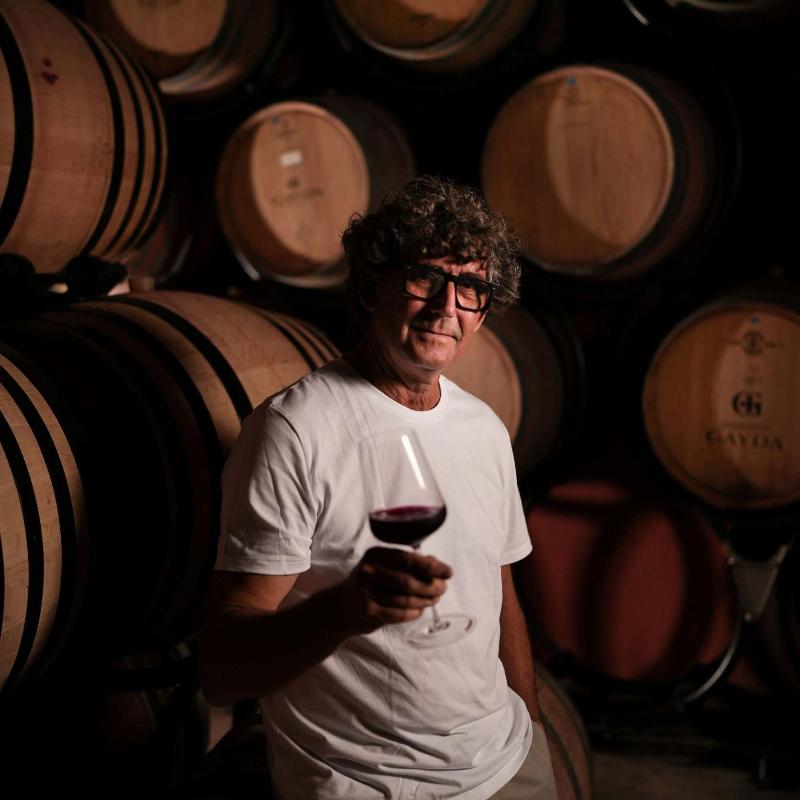
Visitor numbers continue to grow, year-on-year, in regions worldwide; it is one of the few booming industries in 2026. Therefore, questions about infrastructure investment, environmental resilience and the relationship between local communities and tourism businesses will continue to mount, with the latter in very real danger of alienating the former.
"As a business, we believe it is our responsibility to minimise our environmental impact. We farm organically, practice regenerative viticulture, encourage biodiversity, use lighter bottles wherever possible and continually look at ways to reduce waste and resource consumption," emphasises Ford.
Nevertheless, sustainability becomes an increasingly elastic concept once visitor numbers reach the millions. More humans equals greater CO2 emissions - it's a fair bet some of them travel to France by air - more crowds, waste, and greater demands on finite resources. It's hardly an environmental triumph.
Fawlty Towers
Meanwhile, there is a concerted drive to increase visitor numbers in the UK, albeit they managed to hit an impressive 1.5 million in 2025, compared to 1 million in 2021.
According to Kirsty Rushby, head of communications and marketing at WineGB: "Our new campaign, Back British Vineyards, shows how vineyards have become one of the UK's fastest-growing rural tourism destinations. But there are structural barriers in place, holding back a sector that could be a genuine rural-economy success story."
As a result, the organisation is campaigning for a Wine Tourism Relief - "a targeted duty relief saving to allow for investment only for on-sales through the cellar door."
Rusbyby adds that this would "deliver £6m in savings to UK vineyards, which could be reinvested in rural jobs, infrastructure and visitor facilities. "
For decades, hospitality was simply an extension of wine production. In 2026, hospitality is becoming an increasingly pivotal business in its own right; industry estimates suggest it accounts for around a quarter of total winery income in England and Wales, a figure that would have seemed remarkable in the early 2000s. But restaurants, accommodation and events all require considerable expertise that may not be readily available, note certain stakeholders.
"Wine tourism is an entirely different offer and skill set from wine production and sales. Very few wine businesses understand this difference and employ people without the experience and culture needed to fulfil guests' hospitality requirements," says Leslie-Balfour Lynn, CEO and co-founder of Balfour Winery. final.jpg)
Pertinently, she adds that "wine is only a small part of providing a tourism offer", and that the 100,000 visitors who visited Balfour so far this year came primarily to enjoy the experience economy, with Balfour's exceptional sparkling wines sometimes referenced as a footnote.
"At the end of their stay, many visitors comment, 'and the wine was good as well' - they didn't originally come for the wine, but the hospitality offering."
I had always assumed that tourism exists to sell more wine. But perhaps the opposite is increasingly true. Wine is the discovery rather than the initial attraction – the experience comes first. And if wineries ultimately earn more from hospitality than from wine itself, doesn't that radically alter their identity? At what point does a wine estate become Fawlty Towers with vineyards attached? final.jpg)
"In South Africa, wine tourism represents 17.3% of turnover for cellars that crush grapes, rising to 36.3% for micro cellars with turnover below R10 million," reveals Ratcliffe. Yet he recognises the dangers of overtourism, adding that "if visitor growth diminishes the landscape, communities or authenticity that people travel here to experience, then growth has defeated its purpose."
Today, popular regions face important choices about how tourism develops, and whether it can develop sustainably. There are not yet major crises in the world's leading vineyards. But neither were there in Rome, Prague or Dubrovnik when visitor numbers first began to accelerate. Tourism remains one of the industry's most effective ways of building brands. Yet pretending there are no trade-offs - as some interviewees appeared keen to do - strains credibility. 
Oenotourism can be a wonderful thing. It could equally turn into Paris in high season, complete with selfie sticks. Now tell me you aren't scared?

Get expert insights, weekly highlights, and exclusive stories from the world's most trusted wine competition.