
 final.jpg)
Female winemakers are no longer noticeable by their absence. So why do we insist on treating them as a story?
Many years ago, the former editor of Meininger's Wine Business International, Felicity Carter, took me to task. I had proposed asking Margareth Henriquez, then CEO of Krug, some questions about her experiences as a woman, celebrating her achievements in reaching senior corporate leadership. "Don't you dare ask her that - would you ask a man about being a male in the corporate world"? came the quintessentially blunt rebuttal.
At the time, I privately disagreed; women have historically been woefully underrepresented in positions of power in the wine industry, and surely, I reasoned, drawing attention to their achievements was one way of challenging the assumptions that had kept them out.
Yet increasingly, I'm starting to wonder if the language of inclusion has become counterproductive: whether it sometimes draws attention to the very difference it is supposed to make irrelevant. Celebrating women in wine is a big deal today – we champion all-female wine lists, celebrate women-led wineries and spotlight female winemakers and executives.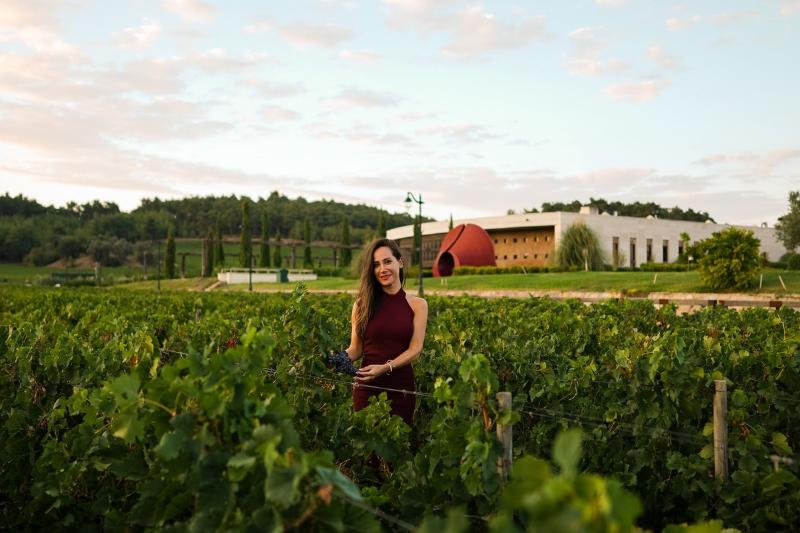
And therein lies the problem: the wine industry applauds women for occupying positions that, if held by men, would simply be regarded as normal business leadership, no?
"I believe that's a valid observation," replies Bianca Ferrini, owner of Giodo in Tuscany.
"I think this kind of attitude from the media can actually be much more harmful. Sometimes they prefer to emphasise the fact that a woman has been appointed to a certain position rather than focusing on her career and what she has actually done to earn that role."
During our conversation, I ask Ferrini what genuine equality would look like in Tuscany: would it, for example, involve continuing to create visibility and opportunities specifically for women?
Again, she pushes back, pointing out that if a man takes over a historic winery, his gender is unlikely to be the story, yet when a woman assumes the same position, this is news.
"When I look at the wineries I love, I'm happy if there's a woman leading them, but that's certainly not the main reason why I like them," she says.
To DEI, or not to DEI
Of course, visibility matters. If women have traditionally been excluded from senior winemaking or leadership roles, celebrating individuals occupying those positions can provide important role models for the next generation.
"I often think about how different things already are from when I started, when many of us felt we had to act like our male peers to be taken seriously," says Kiara Scott Farmer, cellar master at Hazendal Wine Estate.
"The women I've met in the wine industry are so inspiring - Jolandie Fouché, Elizma Visser and Marelise Nieman, for example. I'm excited to see young women coming into the industry now and feeling they can not only lead a cellar, but also have a family, and most importantly, not have to change who they are."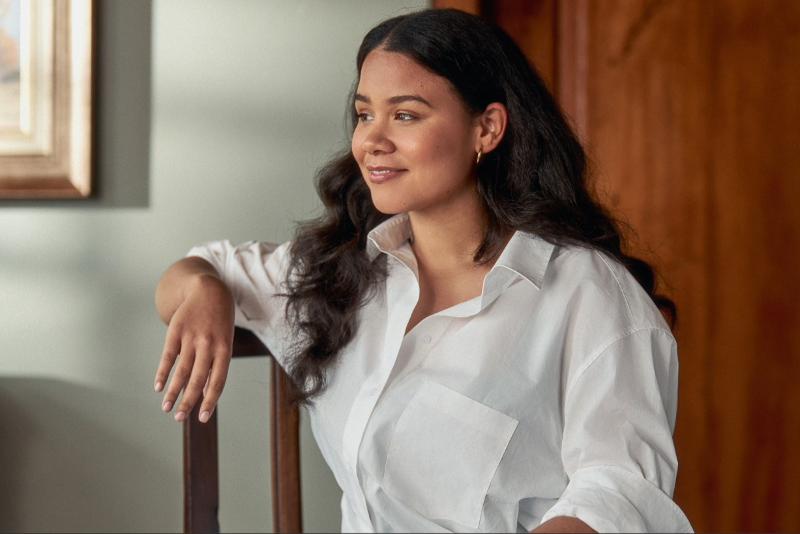
But there is a paradox at the heart of DEI: the objective of promoting representation is ultimately to make representation quotidian. However, the more we single out women as women, the more we risk suggesting that their presence in leadership remains exceptional.
According to Federica Massimelli, President and CEO of Bersano in Piedmont: "Being the first woman to lead Bersano is part of our history, but it should not define my leadership. Gender matters when it creates barriers or limits opportunities. Beyond that, I believe business should be very simple: leadership is about competence, vision, decisions and results."
"Ultimately", she adds, "the best sign of progress will be when a woman leading a wine company is no longer a story. It is simply leadership."
Indeed, one of the stranger habits of modern discourse is the tendency to treat identity – whether colour, sexual orientation or gender – as a qualification in itself. Do we talk about "men in wine"? Of course not - it would be absurd. Maleness is rarely the most interesting thing about any wine story. So where does the industry draw the line between recognising gender imbalances and reducing someone's professional identity to their gender?
"For me, the two things are not incompatible. It is important to acknowledge that obstacles and inequalities still exist, because if we do not make them visible, it is difficult to change them. But that does not mean that I want my professional career to be explained by the fact that I am a woman," replies Eva Plazas, CEO of Vilarnau and president of CavaWomen.
Plazas believes that the media should be able to talk about women and the inequalities that still exist without losing sight of the fact that, ultimately, "what defines a professional is their knowledge, their expertise, their leadership skills and the results of their work."
However, she concedes that initiatives specifically designed to celebrate women may, occasionally, reinforce the idea that being a woman in wine is itself an achievement.
"It is something I do think about, and that is precisely why I believe it is important to explain clearly what the purpose of CavaWomen is. I do not believe that being a woman and working in the wine sector is, in itself, an achievement."
Delphine Barboux, technical director at Chateau Lascombes, shares her desire to change "precisely the way we continue to talk about women in the wine industry. I would like in 2026 for us to finally focus first and foremost on their profession, their expertise, their choices and their vision, rather than on their status as women." Amen..jpg)
Progress but no meritocracy
Few would deny that we've come a long way since the 20th century, when female leaders and winemakers were far less visible and, in many workplaces, had to contend with overtly sexist attitudes. However, no one, least of all me, would claim that we live in a perfect world of total equality. Several years ago, an Australian winemaker contacted me, using a pseudonym, to share her experiences of sexism in the industry.
"Not too long ago we had nude girly calendars up in the cellar. I've had my cellar notes screwed up and thrown on the ground because they didn't want to take orders from a female," she explained.
"The cellar [staff] often go to the male winemaker to ask a question, even though it's my work. I've lost count of the many times I've jumped on the forklift and someone asks me if I've got a forklift licence."
Catarina Vieira, co-owner of Rocim winery in Alentejo, reminds us that wine and agriculture were traditionally very male-dominated sectors, and recognising the progress that women have made in these areas, as in so many others, is important. Yet she adds that, even today, "there are still some situations (increasingly fewer, I believe), where it can be easier for a man to be heard, or for his authority to be accepted more immediately. I think we have to be honest about that, and I have felt it myself at different moments."
Are their experiences anomalous or far more common in wineries than we'd like to believe? I can't say. But Mita Castiglioni, owner of Querciabella, insists we need to "acknowledge the inequalities that women still face in the wine industry and actively work to reduce them."
She continues: "We will have achieved true equality when women in the industry no longer face workplace discrimination, whether in the form of lower wages, fewer opportunities for advancement, or interview questions about their family plans."
There is therefore clearly an important role for initiatives that improve visibility and create networks. If nothing else, they can encourage younger generations to pursue ambitions without being constrained by preconceptions and traditional expectations.
"Recognising women's achievements is important, particularly in an industry where leadership has traditionally been associated with men," says Adriana Burkard, owner of Arillo in Terrabianca.
"However, recognition should go beyond celebrating the fact that a woman occupies a particular position. It should highlight what she has accomplished, the contribution she has made and the changes she has helped bring about."
Nevertheless, the danger remains that if the industry repeatedly identifies successful women primarily by their gender as the opening gambit, we inadvertently reinforce the very assumption we are trying to dismantle: that a woman occupying a senior position is unusual enough to require explanation.
Representation truly succeeds when it becomes boring. Unfortunately, we're not there yet.

Get expert insights, weekly highlights, and exclusive stories from the world's most trusted wine competition.