
.jpg)
Rioja is changing: commercial pragmatism, competing visions and climatic pressures continue to exert considerable influence. But can its soul remain intact, asks James Lawrence.
Rioja was the first vineyard I set foot in, on 'secondment' from my studies at the University of Deusto (Bilbao) in 2003. It was love at first sight, and not just because I was very borracho by the end of the weekend. This beautifully undulating landscape, blessed in places with favourable calcareous soils, continues to produce some of my favourite wines. During a recent trip in April, it looked much the same. Except, of course, it isn't.
The region I encountered in my youth was a relatively stable entity, not one embroiled in a schismatic identity crisis, with a breakaway movement seeking a separate DO for the subregion of Rioja Alavesa, despite the Spanish Supreme Court's definitive rejection of the proposal in 2025.
Neither was the proliferation of single-vineyard designations attached to leading bodegas conceivable, nor a rise in the volume and ambition of dry whites. "Rioja is the most important of all Spain's wine-producing regions. It is therefore only natural that it should always be evolving," observes key investor Pablo Alvarez. But the question is: how far can Rioja evolve without ceasing to be Rioja?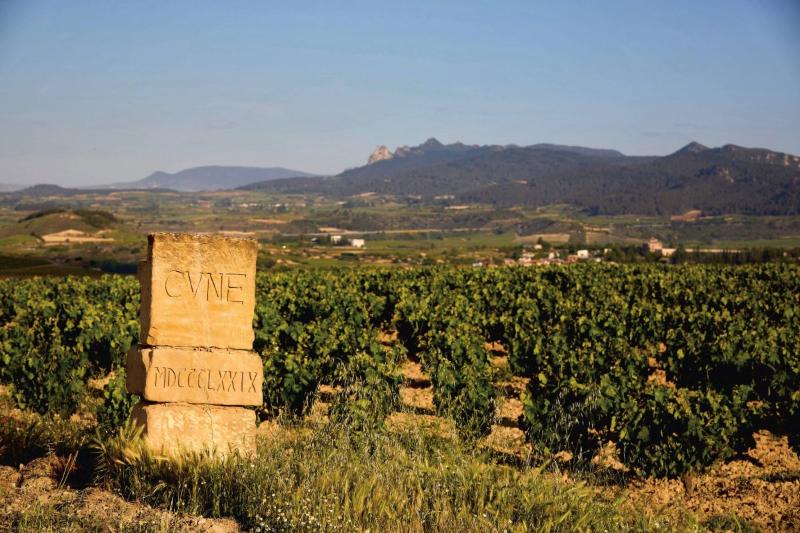
For many in the trade, however, the enormous amount of experimentation, upheaval and diversity that defines Rioja today - from village and single-vineyard wines to old vine Graciano and Mazuelo bottlings – can only be a good thing. "I think it makes Rioja more exciting and relevant," enthuses London-based sommelier Daniel Marzotto. "The diversity shows the region can go far beyond Tempranillo and oak."
Yet there are two Riojas competing for attention in 2026 – the one that excites the trade, and the one that still holds a decisive sway over many British consumers, for example.
"I think the traditional image of Rioja still has a very strong hold in the UK. Crianza, Reserva and Gran Reserva still remain important reference points for consumers, along with classic Rioja continuing to offer excellent quality and value across all price-bands," notes Wine Society buyer Harriet Kininmonth. By way of contrast, I asked Jeroboam's wine director Peter Mitchell MW (two years ago) whether the hype over super-expensive cuvées like Las Beatas and Contador had caught on?
"We have stocked various modern styles, often labelled outside of the traditional ageing classifications and they have not sold well," he replied. "The traditional style still holds sway with the majority of consumers and I suspect that all but the most engaged are not really aware of the modern/traditional bifurcation."
This disconnect may be Rioja's greatest dilemma; the region has changed far faster than its reputation, while many consumers remain perfectly content with the Rioja they already know.
Becoming Burgundy
For some of Rioja's trailblazers, however, being taken seriously requires a major paradigm shift – a move away from marketing based on ageing to the promotion of site-specific wines over blended styles. "We need a pyramid hierarchical classification – we should ask ourselves why such an amazing region like Rioja (DO founded in 1925) does not have any iconic wine? We need to focus on the exceptional, rather than the generic," says Telmo Rodriguez.
For as long as I have been writing about Rioja, this debate has been raging. And, while Rodriguez is unlikely to get his wish in the near future – can you imagine the political fallout? - the proliferation of single-vineyard bottlings continues apace – and not just among garagiste wineries.
"At CVNE, with our four wineries in Rioja, we believe we have found the right balance. Rather than a debate, we see this as a natural evolution of Rioja's story," explains CEO Victor Urrutia. But while this venerable estate continues to produce iconic wines such as Imperial Gran Reserva and Viña Real Gran Reserva, it also now markets a single-vineyard wine from Viña Real, La Virgen, that was, until recently, subsumed into the blend for Pagos de Viña Real.final.jpg)
"However, its distinctive personality convinced us to bottle it separately. It is a good example of how Rioja can move from a blended style towards a more site-specific expression without losing its identity," says Urrutia. The great man of Rioja, as ever, favours pragmatism: the blend remains a legitimate expression of place, he argues, while exceptional individual sites are increasingly given their own voice.
In 2004, the Alvarez family behind Vega Sicilia joined forces with Benjamin de Rothschild to establish a new bodega in Rioja Alavesa. The estate's signature label, Macán, could broadly be described as "modern Rioja", albeit its creators have stayed clear of over-extraction. Nevertheless, the winemaking prioritises fruit expression – its wines are wonderfully fresh – and vertical structure over long-term oxidative maturation in the López de Heredia mould.
Yet Alvarez has become an outspoken critic of what he views as Rioja's contemporary obsession with single-site wines and Burgundian philosophy.
"We have gone through years when wines were expected to have a lot of everything. Now it seems that we are all supposed to make Burgundy. Forgive me, but if we want to drink Burgundy, we should drink Burgundy," he laughs.
"Yes, parcel wines are fashionable. But how many fashions have we been through? Several. Where are they now? We are trying to create Burgundy in just a few years, and that is not possible. We cannot skip the hundreds of years Burgundy has needed to get to where it is today. We have to continue developing Rioja."
A new normal
Meanwhile, Rioja continues to face the global challenges of climate change and shifting/declining consumption patterns, and is responding accordingly. In tandem with many regions, white and rosé production has risen in recent times due to commercial necessity and changing consumer demand, while financial pressures have begun to reach even established producers. Last year, more than 3,300 hectares in La Rioja underwent green harvesting, while leading stakeholders continue to push for structural vine removal to address oversupply.
"At CVNE, we have been developing vineyards under keyline design in some of our estates for several years, while also identifying higher-altitude sites that promote slower ripening," says Urrutia.
"We are increasing the surface area planted with white varieties and applying regenerative viticulture practices across a number of our vineyards, including the creation of biodiversity corridors, the installation of raptor perches and insect hotels, the careful management of cover crops and the use of a wide diversity of clones.".jpg)
In 2026, Rioja has a great deal going for it: a diversity of expressions that would have been unthinkable 40 years ago. Moreover, the liberalisation of production rules in the 21st century has encouraged a greater number of growers to release their own labels, rather than sell their fruit. Today, there are over 580 registered producers in Rioja, compared with 425 in 2014.
And yet, it has never faced so many challenges, at least in its modern history. Rioja has swapped a largely monolithic image for a multifaceted one. And greater diversity can create its own problems.
"Rioja is undoubtedly more complex to navigate than it once was, because you can no longer necessarily predict the style of a wine simply from seeing 'Rioja' on the label or even from knowing its ageing classification," agrees Kininmonth. But, notwithstanding her earlier comments about the overall popularity of traditional Rioja among UK drinkers, Kininmonth believes "the balance will shift gradually towards greater interest in provenance and individuality."
She adds: "There's a growing interest in wines where fruit, vineyard and place are more clearly expressed, with more restrained use of oak and a fresher, more energetic profile. In our fine Spanish Rioja offer this year, we offered a mix case of both traditional and 'new wave' styles. We had expected the traditional case to perform better than the new wave, but in fact, they sold the same amount."
The region has not abandoned its past so much as added layers to it: more single-site labels, more producers, and more ways for consumers to engage with the wines. The challenge is now to ensure that there is still a coherent Rioja at the centre of these competing visions – the one I fell in love with.

Get expert insights, weekly highlights, and exclusive stories from the world's most trusted wine competition.