
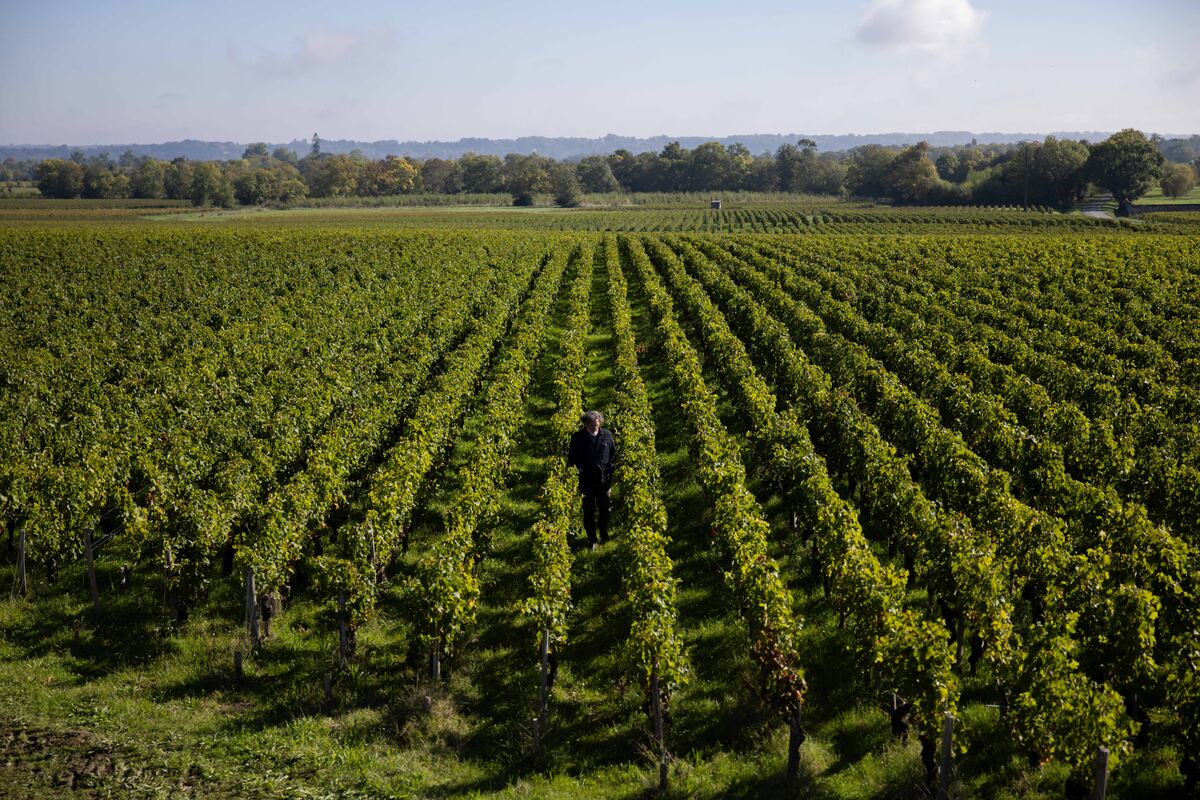
The Médoc has it all: fabulous wines, impressive pedigree and supremely talented winemakers. So why the long face, asks James Lawrence?
15 years ago, investors rushed to gobble up Médoc real estate. In 2011, 21 properties were purchased by Chinese buyers, while China became Bordeaux's largest export market by volume. Buoyed by skyrocketing Asian demand and a rush of capital into the region, Bordeaux's premier source of fine wine seemed a fairly safe bet.
Would they do the same today? The Médoc in 2026 is a region with an exceptionally strong traditional identity confronting a myriad of problems: declining consumption, a stalled en primeur system, and changing consumer behaviour.
Many of these challenges are, of course, not unique to Bordeaux. Yet the Médoc is unusually exposed because so much of its identity and commercial model rests on age-worthy red wine at a time when demand is weakening. Decline is everywhere; according to French Customs data compiled by DRAAF Nouvelle-Aquitaine, Bordeaux exports (of which the Médoc is a key component) in the 12 months to May 2026 fell 8% in volume and 15% in value. Shipments to Asia fell by 13% in volume, including a 27% decline to China, while US volumes declined by 9%..jpg)
Meanwhile, in its latest analysis, Liv-ex says Burgundy has overtaken Bordeaux as the most-traded wine region by value – the first time that has happened since 2022. And if these changing demand patterns are structural, as Liv-ex argues, rather than a short-term anomaly, the Médoc cannot simply wait for the old market to return.
"Around 20,000 hectares across the Bordeaux region have been pulled out over the last three years. This was necessary to reduce volumes and address the crisis," responds Matthieu Bordes, director general at Château Lagrange. Yet he is still bullish, arguing that "we have never made such amazing wines at Lagrange", as climate change helps Cabernet Sauvignon achieve full ripeness more consistently.
"Today, Médoc wines have seen their window of drinkability widen dramatically: you can enjoy them from three or four years old and continue to keep them for decades if you want. Which other region in the world could offer that?" he says.
"If you look back over the last 60 years, Bordeaux has gone through several crisis cycles. Every day we get closer to the end of this one. And I think it would be a mistake to suddenly lurch into producing a different style of wine just because it is fashionable."
White shoots
For many regions across Europe, however, producing more white and sparkling has become a commercial necessity. According to Liv-ex, the value of white wine traded on its exchange has risen by 650% since 2010, while sparkling has risen by 1,110%. Red wine, by contrast, has remained relatively flat; in 2025 its trade value was 15% below the 2010 level. This may explain why French authorities amended the existing Médoc appellation in 2025 to allow white wines to bear the Médoc name. Last year's vintage has begun to emerge; around 29 producers made approximately 200,000 bottles from 63 hectares, according to Gault&Millau.
More broadly, sales of Bordeaux Blanc and Crémant de Bordeaux have risen in recent times, while Graves Blanc - textured and supremely elegant - and dry whites from Sauternes continue to offer astounding value.
So is making more white a no-brainer? Not necessarily, say some.
"Lagrange was among the first châteaux in the Médoc to replant some white grapes in the 1990's - nowadays you have in the Médoc more than 100 châteaux which are producing some whites and every year a new one is launching its dry white," reveals Bordes.
"Yes, the demand is real; however, this is but a drop in the ocean compared with red production. This is more an opportunity for communication than a real commercial opportunity in my view." He also counsels caution, noting that "making good white wine is more technically complex compared to a red" and that marketing a poorly made white is potentially very damaging to an estate's reputation.
"It is not something that can be improvised," he adds.
Nevertheless, a continuation of the status quo is not feasible. Bordeaux's commercial model has long depended on far more than admiration for the wines – and their innate quality. En primeur turned quality, relative scarcity, and reputation into one of the world's most important wine futures markets, allowing producers to recoup production costs before the wines were even in bottle.
However, en primeur is increasingly under strain. As Union des Grands Crus boss François-Xavier Maroteaux admitted in a Wine-Searcher interview in April, Bordeaux merchants have plenty of unsold stock. Meanwhile, Liv-ex's survey of UK merchants found 2025 sales were flat by value on 2024, while its members were generally disappointed by the campaign. The vintage quality was widely praised; the commercial response was not. Whither en primeur?
"It is difficult to predict today how the en primeur system is going to evolve in the future. It has its virtues and its downsides, the latter particularly highlighted in uncertain economic times," says Axel Heinz, CEO of Château Lascombes.
"But no matter if through selling en primeur or other types of sales, Bordeaux will have to make itself desirable to a broader range of consumers, highlighting its diversity of styles."
Saving grace
The search for a single, defining panacea to get the Médoc out of the doldrums is as fruitless as attempting to climb Mount Everest in a leotard. But after talking with winemakers, buyers and sommeliers, a broad consensus emerges: the wines have never been better, but the overall market focus needs to change – and how they are presented must evolve..jpg)
Indeed, one of the region's historic problems has been that its strongest commercial attributes – classification, longevity and vintage hierarchy – reinforce the notion of claret as an asset rather than a delicious drink to be enjoyed with food.
"We need to move away from a model driven mainly by investment and bring the wines back to the table," agrees Heinz.
"That starts with stronger partnerships with engaged merchants and the on-trade, and with clearer conversations around style, drinkability, and genuine drinking occasions. Markets like Hong Kong, Japan, South Korea and parts of Southeast Asia, for example, still have a strong connection with Bordeaux, but the relationship needs to be rebuilt on consumption, not purely trading."
On the restaurant floor, sommelier Jiachen Lu implores the Médoc to "break the mystery" and refine its messaging.
"This is not an appellation that belongs to older generations, nor does every bottle have to break the bank. Not every wine needs 10+ years in the cellar before it becomes enjoyable, and the entry-level reds don't necessarily do justice to the overall quality and diversity that Médoc can offer," she says.
Few wine regions possess such a diverse collection of assets: historical pedigree, a broad range of styles and price points, and an increasingly sophisticated wine-tourism offer that gives consumers another way into the region. In 2026, Bordeaux faces some significant structural headwinds, but that doesn't mean a wholesale reinvention is required. There is no quick fix. But making a stronger case for why the Médoc is still relevant - now more than ever - seems a good place to start.

Get expert insights, weekly highlights, and exclusive stories from the world's most trusted wine competition.