Once the savvy buyer's secret, Chablis is no longer the bargain it once was. But does it still taste of oysters, wonders James Lawrence?
The wine writer Hugh Johnson, a man of impeccable taste, once told me that savvy buyers "purchase more Chablis than any other wine style." Other than my grandfather's imperative to "stop doom scrolling and focus on the positives", I always thought that was some of the soundest advice ever given. At its best, Chablis is a distinctive and delicious expression of Chardonnay that I can afford. Just. It works well with a variety of food. It has occupied a special place in the wine trade for donkey's years: a reliable choice for drinkers seeking minerality rather than richness.
Yet a reputation built over generations is not a guarantee of future relevance. A combination of inflationary pressures, volatile harvests and climate shifts has changed Chablis – the region I discovered in the 1990s is not the Chablis of today. Its USP isn't moribund, but it may be fraying at the edges.
"It is evident that smaller harvests can tighten supply and push prices up, particularly for sought-after premier cru and grand cru wines," says Will Morley, general manager at The Woodcote.
"Today, rising Burgundy prices mean Chablis isn't automatically a bargain anymore. For us, that means buying more strategically - you have to be more selective than you might have been in the past." As a result, he is increasingly exploring alternative options from Beaujolais Blanc, Mâcon, and high-altitude Argentine sites.
"We need to respect the economics of producing great wine, but we also need bottles guests can comfortably afford," admits Morley. "After all, a wine list needs to earn its keep as well as impress the Burgundy enthusiasts."
International cachet - at a price
In two of its key export markets, however, Chablis has demonstrated considerable resilience. According to the Bourgogne Wine Bureau (BIVB), UK exports of Chablis rose from 3.05 million bottles worth €30.43 million in 2024 to 3.663 million bottles and €35.99 million in 2025. That represents a rise of approximately 20% in volume and 18% in value.
Meanwhile, 3.87 million bottles worth €47.1m were shipped to the US in 2024, up 28.8% in volume and 27.7% in value year on year, retaining its position as the appellation's leading export market. Of course, these are destination-market export figures, not a comprehensive measure of global retail sales or final consumer demand. They nevertheless suggest that Chablis remains a powerful name in major export markets, even if its reputation for "great value" has diminished of late.
"Nobody is rushing home on a wet Monday evening and cracking open a premier cru to watch The Traitors as it has long moved on from the price point of 'fridge door white'," agrees Rupert Pritchett, managing director of Taurus Wines.
"But just try putting together a serious restaurant wine list without one, and you'll quickly get complaints, despite grumbles about the price."
Indeed, a snapshot of UK supermarket listings puts village Chablis at above £15: Tesco Finest Chablis comes in at £16, while Waitrose's No.1 Chablis is £19.50. And the market is crowded: unoaked New World Chardonnay from cooler climates, Albariño, Picpoul and Muscadet are just some of the fresh and mineral-driven competition. Yet Chablis retains an impressive price inelasticity, at least according to independent retailers.
"Pricing is obviously key in the current climate, and nobody is pretending otherwise," notes Pritchett.
"However, Chablis sits in an interesting niche alongside names like Sancerre or St Émilion - these are wines with such powerful brand recognition that consumers go through a very predictable ritual of wincing at the price, having a grumble, and then ordering it anyway."
According to Jason Haynes, founding director at Flint Wines: "The market for Chablis remains incredibly strong, if not even stronger than it used to be. It is such a staple of so many wine lists. Its unique character means there are few obvious alternatives. Plus, its innate vibrant character suits the sort of lighter food we are eating these days."
Maintaining face
Yet Chablis is far from being in a perfect position - and we shouldn't pretend it is. As the late Burgundy expert Clive Coates MW observed: "The Chablisien vastly overproduce", referring to regulations that have been liberal, shall we say, about yields. Current regulations permit maximum yields of 75 hectolitres per hectare for Chablis and 73hl/ha for Premier Cru, following increases from 70hl/ha and 68hl/ha respectively in 2025. This is considerably higher than maximum legal limits in the Côte d'Or. And there is still plenty of lacklustre wine produced at the lower levels, while stylistically there have been some major shifts in the 21st century.
Over the past few years, I have tasted more than a few wines that, if sampled blind, could easily pass for Mâcon Blanc, Meursault, or even ripe New World Chardonnay in certain cases. The wines were clean, well-made, and totally anonymous – they had little discernible sense of place or typicité.
"Warmer vintages can bring riper fruit, more generous textures and sometimes higher alcohol, while earlier harvests and unpredictable weather make vintage variation more pronounced," agrees Morley.
"The challenge for the vigneron is preserving that signature freshness, salinity and tension that make Chablis such a brilliant food wine." But despite all the tools at a winemaker's disposal - earlier harvesting to preserve acidity, a different approach to oak ageing, using older, larger barrels rather than new barriques, and a greater use of stainless steel – there is no simple cellar fix for changes that begin in the vineyard. Moreover, yields are likely to fluctuate more in the coming years, potentially putting further upward pressure on prices, particularly when meagre harvests coincide with firm demand.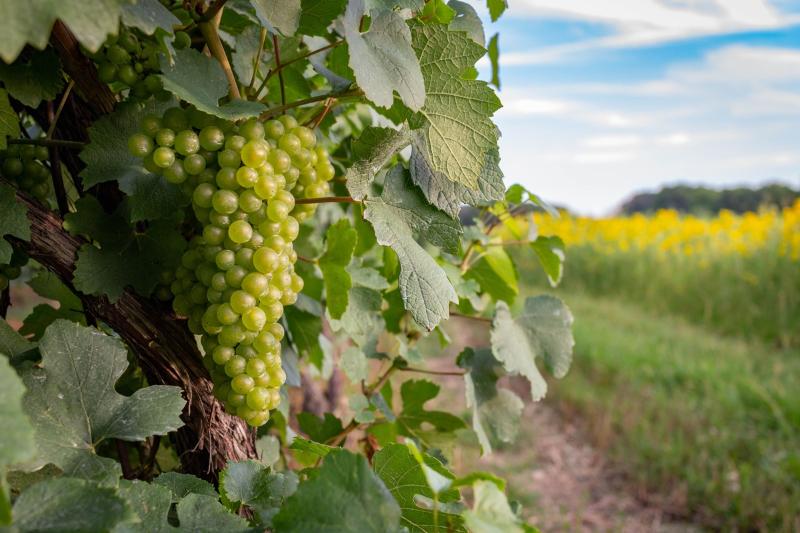
"The hailstorm of 2024 was so severe that there was nothing that could have been done to avoid it. The apparent increase in such extremes of weather is very concerning for growers and importers alike," reveals Haynes.
"Frost is only having more of an impact because of the warmer winters, meaning the vineyards are more advanced than they used to be and therefore are more impacted when the frost arrives. Small changes in viticultural practices can perhaps help a little to delay bud break, but a heavy frost at the wrong time will still be devastating."
Today, amid a clear evolution of style caused by warming growing conditions, Chablis offers an established identity and a long association with food. But producers face an uphill struggle - a battle to maintain stylistic coherence and protect the accessibility that made Chablis a restaurant staple.
"The risk [for Chablis] is pricing itself out of everyday restaurant drinking and turning it into a trophy bottle. I'd rather offer guests a clear choice, from an accessible glass to a special-occasion bottle. Ultimately, Chablis should be as comfortable beside grilled fish as it is in a collector's cellar," says Morley.
The cachet of this Burgundy stalwart remains strong. But it is not untouchable. Let's hope that in 15 years, Chablis still resembles the wine that won me over in the 1990s: fresh, taut, saline, and brilliantly affordable.

Get expert insights, weekly highlights, and exclusive stories from the world's most trusted wine competition.