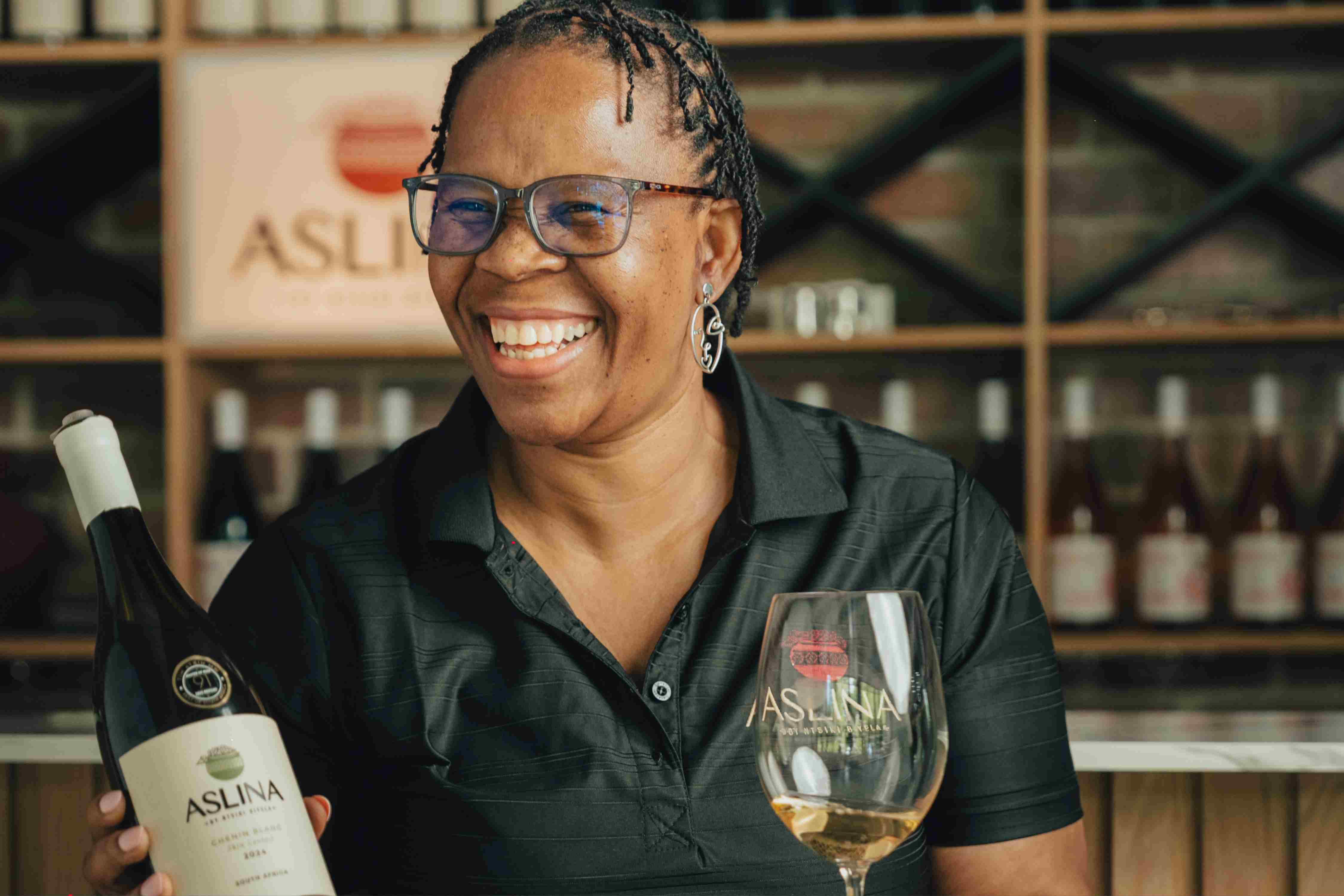
The first black female winemaker in South Africa, Ntsiki Biyela has spent her career breaking barriers while building a formidable wine brand.
South African wine is still grappling with the legacy of land ownership and labour inequality. Looking at the industry today, where do you think the biggest structural barriers remain?
I've been focused on building the business I envisioned: growing the market, establishing our tasting room and, ultimately, owning our own cellar. While we've made significant progress, access to land and finance remains one of the biggest challenges for emerging wine brands. Acquiring land is a lengthy and often difficult process, so long-term growth requires patience, resilience and persistence.
Your story is often told as one of breaking barriers, but do you ever worry that being cast as a 'trailblazer' can overshadow your work as a winemaker?
No, I don't think being a trailblazer overshadows my work as a winemaker. In many ways, my trailblazing happens because I am a winemaker. It opens doors for people who have never seen themselves in the wine industry, as well as those already working in it, to realise that there is space for them to explore and belong.
For wine lovers, the trailblazing story is fascinating because it leads them into the heart of the winemaking process. They want to know where the wine is made, how it is made, what makes it different, and what story or message I'm sharing through each bottle.
For me, trailblazing and winemaking go hand in hand. The way I make and present my wines reflects who I am and how I feel about them. That's how I build a genuine connection with people.
I also think there are other questions people should be asking. For example: what makes each vintage unique compared with the previous one? And how do we maintain consistency while still allowing every vintage to express its own character? Those are the conversations that really tell the story of the wines.
What has success taught you?
Success has taught me to stop making myself endlessly flexible just to keep things running for everyone else. Most importantly, I've realised that I don't have to live in constant firefighting mode or treat every day like a test of survival. Real success isn't only about what you've achieved; it's also about what you no longer have to carry.
Climate change is forcing winemakers everywhere to rethink tradition. Is there something that South Africa has historically done that you think the industry needs to let go of if it's going to thrive over the next 20 years?
The South African wine industry has been placing a strong focus on sustainability. Every year, we invest in research and explore new ways to improve how we farm and make wine. We're constantly looking at how to use our natural resources more responsibly, adapt to climate change and continue producing high-quality wines.
In your opinion, which grapes – or styles – are the unsung heroes of South African wine today?
I believe Pinotage is one of South Africa's unsung heroes, but it still hasn't been given the spotlight it deserves. We celebrate Cabernet Sauvignon and Chenin Blanc, yet Pinotage hasn't been positioned as a flagship in the same way.
I think many consumers are still trying to understand Pinotage because it's one of the more complex grape varieties to get right, both in the vineyard and in the glass. It can be a challenging wine to fully appreciate, which is why it is sometimes misunderstood.
My hope is that we reach a point where Pinotage is recognised as a true hero of South African wine. It has incredible potential and deserves to stand proudly alongside Cabernet Sauvignon and Chenin Blanc.
Finally, if you could change one perception that the international wine trade still has about South African wine, what would it be – and why do you think that perception has proved so stubborn?
If I could change one perception about South African wine, it would be the idea that we only produce good-value wines. The industry has evolved. Today, winemakers are producing wines that reflect diverse terroirs, old vineyards and a deep commitment to quality.
We craft world-class wines with exceptional quality, character and a strong sense of place that deserve to stand alongside the best in the world.

Get expert insights, weekly highlights, and exclusive stories from the world's most trusted wine competition.