
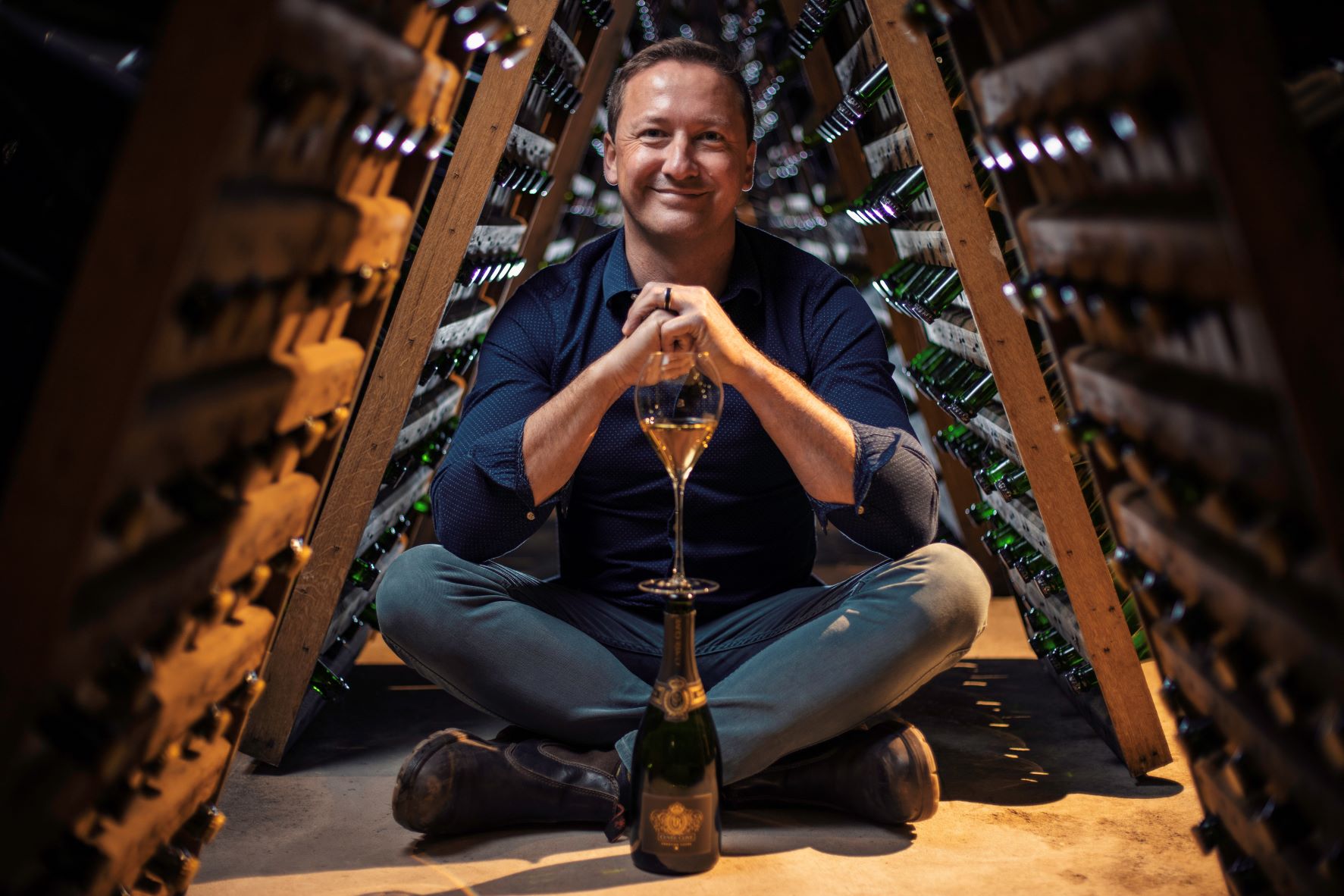
Longtime protégé of Pieter Ferreira, Pierre de Klerk is now firmly out of his mentor's shadow. But are changes afoot at Graham Beck, or is it business as usual, asks James Lawrence?
You've now had several years to make decisions as cellarmaster rather than as Pieter Ferreira's protégé. What is something you have deliberately changed at Graham Beck that, had Pieter still been in charge, you suspect might not have changed?
Yes, I took over from Pieter as Cellarmaster in 2022, but the title itself was really just a symbolic passing of the baton. What may not have been evident to everyone was that, behind the scenes, during the preceding 12 years of working together, Pieter and I had an incredibly respectful and almost brotherly working relationship. We openly discussed and exchanged ideas and made decisions together, rather than him pulling rank. Pieter has always given the winemakers who worked alongside him plenty of freedom to experiment and express themselves - perhaps no one more so than me.
What I can point to, perhaps, is that it took some convincing on my part to start broadening our horizons when it came to fermentation vessels. We moved from focusing primarily on stainless steel and pièces champenoises to incorporating Clayver ceramic pots, Austrian foudres, larger-format French oak, cement vessels and terracotta amphorae.
Night harvesting was another principle I had to push particularly hard for. So much so that I initially thought I had overplayed my hand during the meeting where we decided to give it a go, by putting an ultimatum on the table. Luckily, it worked out - both for the quality of the wines and for me!
For the uninitiated, how would you describe Graham Beck's house style - and, indeed, what is unique about premium Cap Classique?
Graham Beck's house style can be summarised in a few words: elegant, fresh, balanced, fruit-forward and yet layered.
Our Classic Collection (NVs) focuses on the consistency and continuity of the elegant, fruit-forward, vibrant style that we've been known for for close to four decades. Our vintage range, Artisan Collection and Prestige Cuvée also focus on elegance and balance, but bring much more layered complexity, texture and structure to the fore, thanks to prolonged lees ageing of a minimum of four years.
What makes premium Cap Classique unique on the world stage? Sunshine-filled fruit, meticulously handled with care to produce exquisitely vibrant and elegant wines, perfected by time.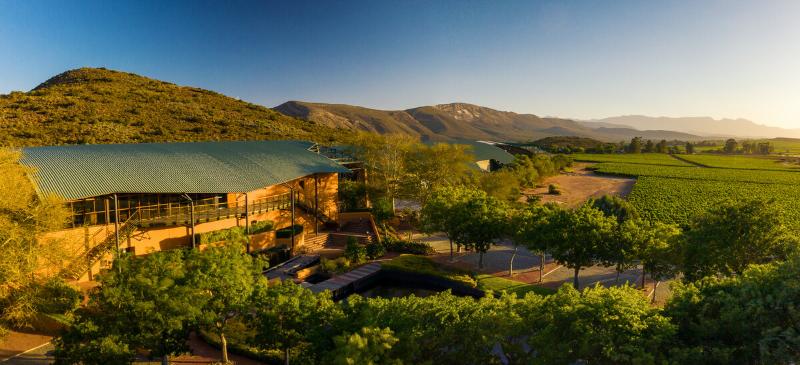
What did working with English fruit teach you about sparkling wine that you couldn't have learned in Robertson?
Acid management! Yes, acid, not asset...
Because the two countries are almost literally polar opposites when it comes to growing conditions, we've had to make some fairly significant and interesting changes in mindset.
Traditionally speaking - and setting the last two vintages aside for this particular point - England does not have the sunshine conditions we enjoy so much in South Africa, and harvests can turn from highly promising to extremely challenging in a matter of days, or sometimes even hours.
The combination of low temperatures, low radiation, high rainfall, short summers and chalky soils gives rise to fruit with relatively lower sugar levels and higher acidity than we see in South Africa. The fruit aromas and flavours in English sparkling wine are more subdued and delicate than those in Cap Classique, with much lower pH and higher acidity.
Personally, one of the most intriguing challenges of making top-quality English sparkling wine is managing and coating that acid structure. Not every vintage gives you the fruit structure needed to balance it all out, and malolactic fermentation alone is not sufficient. Building texture and depth is therefore more challenging than under South African conditions, and longer lees ageing is something I believe is essential in England.
But at Graham Beck, we avoid malolactic fermentation at all costs, whereas in England I believe it can be hugely beneficial. I also believe English conditions necessitate long lees ageing to build depth, complexity and roundness, whereas South African conditions may allow wines to reach that point at an earlier stage.
If Cap Classique is going to be taken seriously as fine wine rather than simply as a value alternative to Champagne, what is the one thing the South African category still needs to prove?
To name only one thing is tough. Let's try three: commitment, focus and cohesion.
We are a young category, but certainly a vibrant and buoyant one. It's only been 55 years since the first Cap Classique was made, and until around 20 years ago, uptake was relatively slow. Even at Graham Beck, we only started focusing wholly on Cap Classique a mere 10 years ago.
We are still in a period of transition, moving away from the mindset of producers saying, "Let's make a Cap Classique because we can't ripen the fruit from that block due to virus or its location," or, "This block is bearing too much fruit, so let's pick early and make some Cap Classique," towards more brands, producers and growers saying, "Cap Classique is what we want to make. Let's plan and plant for it, and focus our efforts on it."
If you look at why Champagne, Prosecco and Cava have done so well in dominating world markets, cohesion within their respective industries has been a significant factor, alongside powerful and well-backed marketing campaigns that have helped make them so famous.
From a Cap Classique Association perspective, we are working hard to achieve that same kind of cohesion and buy-in from producers across the category.
Is Graham Beck prepared to do what is necessary? Absolutely. We are fully committed to and focused on producing the best Cap Classique we can, as well as doing whatever is necessary to elevate the category to where it belongs on the world stage.
We believe that a rising tide lifts all boats, and we will always do our part to ensure greater cohesion within the category.

Get expert insights, weekly highlights, and exclusive stories from the world's most trusted wine competition.