
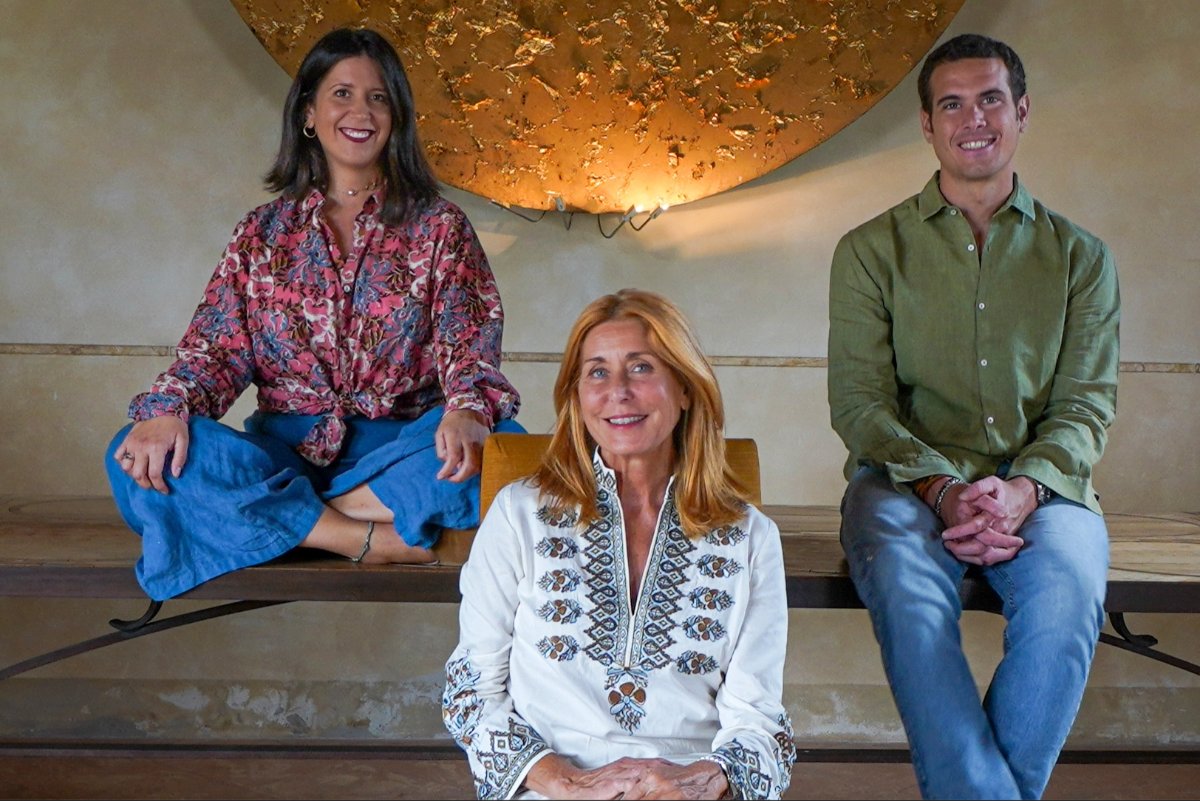
One of the pioneering figures of Maremma in southern Tuscany, Elisabetta Geppetti first planted her Saffredi vineyard to Bordeaux varieties in 1985. But much has changed since then, as James Lawrence discovers.
Maremma has moved from being regarded as an emerging region to having genuine international credibility. Do you think the region now risks becoming too closely associated with the Super-Tuscan model?
I don't think it's a risk, although I can understand why some producers might be tempted to follow that path. Maremma's international success was built in part on Bordeaux varieties and the Super-Tuscan style, which helped open doors for the region. But what truly distinguishes Maremma is Sangiovese, known locally by some as Morello. Our warmer, coastal climate gives the grape a generosity and approachability that are distinctive within Tuscany, while preserving the freshness and savoury character that make these wines so well suited to the table.
For Morellino to take centre stage, we need to be confident in telling its story, with producers united around a clear message about what Morellino di Scansano represents. At Le Pupille, for example, we make two distinct expressions. Our annata Morellino focuses on indigenous varieties, with vibrant, crunchy fruit and an emphasis on drinkability. It is a wine made to be enjoyed around the everyday table. Our Riserva has a very different profile, combining greater structure and elegance with the pleasure of drinking it on release and the capacity to develop beautifully in bottle.
You began making Saffredi in 1987, at a time when the idea of a great Bordeaux-style wine from Maremma was still relatively radical. Nearly 40 years on, what aspects of that original vision have you had to rethink in response to climate change?
When I began in 1987, my vision was simple: to prove that Maremma could produce a great wine with real character and its own identity, rather than an imitation of Bordeaux. That conviction has never changed, and it is where we continue to stand firm. Saffredi has always been about the territory first, with elegance and balance taking precedence over power.
What we have had to rethink is how we achieve that. Climate change has made us far more attentive to what happens in the vineyard. We use canopy management not only to protect the grapes from excessive sunlight but also, where necessary, to improve air circulation around the bunches. We are meticulous about picking dates, harvesting parcel by parcel and often returning to the same vineyard several times. We have also reconsidered how we manage the soil, and we carry out massal selection, propagating cuttings from our historic vines rather than relying solely on standard clones.
Ripeness can arrive very quickly today, so the real challenge is to preserve freshness and finesse in the glass. After almost 40 years, I have learnt that consistency of vision matters more than consistency of method. We adapt our practices, but never our philosophy..jpg)
You're now running Le Pupille alongside your children, Clara and Ettore. What is hardest about handing over a winery that is so closely identified with your own vision?
The hardest part is learning to separate the winery from myself. Le Pupille has been my life's work, and after so many years it is easy to believe that your own instincts have become the winery's identity. But a winery that reflects only one person's vision cannot truly outlive them.
What I want to pass on are the foundations: respect for the land, an uncompromising commitment to quality and an enduring passion for the world of wine. How those values are expressed is for Clara and Ettore to decide.
I hope they will challenge me - and, in fact, they already do. They taste and travel differently, and they see a market and a climate that are very different from those I encountered when I began. The best legacy I can leave them is a winery that continues to evolve, remaining true to its roots while finding its own voice.
What do you think the Italian wine industry is still getting wrong about the next generation of wine drinkers - and what would you change if you were starting Le Pupille today?
I think we need to distinguish between two groups of young people: those who are genuinely passionate about wine and approach it much as I did at their age, and those who are attracted to what wine represents socially - conviviality, status and a sense of belonging.
That said, I don't see an enormous difference from when I was young. What I do notice, compared with my own experience in the 1980s, is that more young people are entering the world of wine today. Having five children, I have spent many years observing their friends and the younger generations of other wine producers, so my perspective may be somewhat subjective. But it is what I have seen firsthand.
If I were starting Le Pupille today, the things I would change would have more to do with my personal life than with the winery itself. Professionally, I consider myself extremely fortunate: I have pursued my dreams and, for the most part, managed to turn them into reality.

Get expert insights, weekly highlights, and exclusive stories from the world's most trusted wine competition.