
 final.jpg)
From Icewine to inventive farm-to-table cooking, Magdalena Kaiser wrote the book, literally, on Niagra's glorious food and wine culture. Christy Canterbury MW takes a deep dive.
Niagara lies on the shores of Lake Ontario, close to the famous Falls with which it shares its name. Geographically, it is even closer to Buffalo, New York, than to nearby Toronto, but its spirit is thoroughly Canadian.
Who better to introduce readers to Niagara's vibrant wine and food scene than the daughter of one of the pioneers of the region's modern wine industry? The winery in question is, of course, Inniskillin, now world-renowned for its Icewine.
Author Magdalena Kaiser grew up in Niagara, bottling wine alongside her father, Karl Kaiser, from the age of five. A public relations specialist, Magdalena spent 14 years at the Wine Marketing Association of Ontario, where she served as Director of PR and spearheaded the development of the annual i4c (International Cool Climate Chardonnay Celebration) conference. She also produces a small quantity of wine through her own micro-project, Tiny Batch Wine.
The book draws readers into the welcoming heart of Niagara wine country, profiling 44 wineries through their wines and family recipes. Magdalena traces the history of grape-growing in the region, showing how it gradually developed the distinctive identity it has today.
I have travelled through Niagara wine country on several occasions, and this book transports me straight back to the people, wines and tables that make the community so vibrant, diverse, compelling, generous and welcoming. Magdalena took some time to tell me about her journey and how it led her to spend a year writing this tribute to her home region.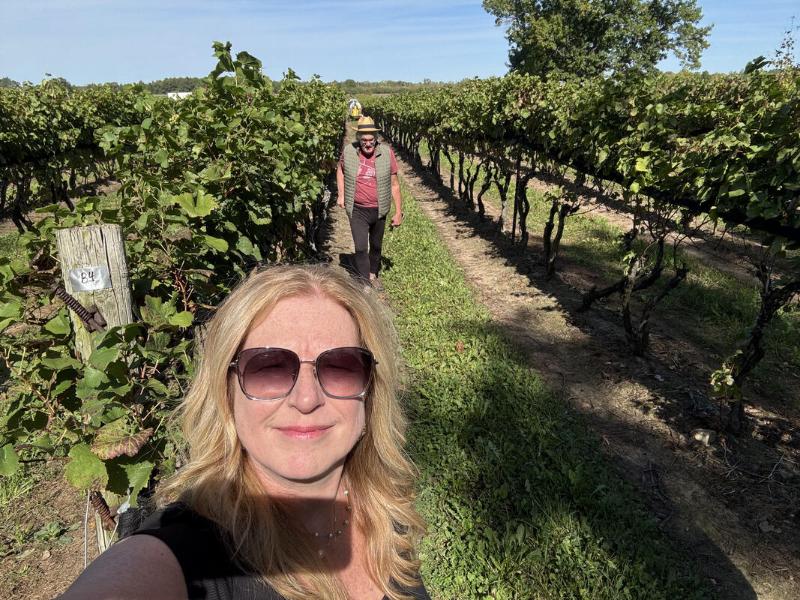
What was Ontario's agricultural landscape like when wine-grape growing began? Did the region already have a strong farming tradition, and how has its food culture evolved alongside viticulture?
Niagara has always been Canada's Fruit Belt, although grapes were only a small part of the picture. The region is known for strawberries, cherries, blueberries, raspberries, currants, blackberries, apricots, peaches, plums, apples and pears. It also produces a remarkable range of vegetables, including tomatoes, cucumbers, aubergines, beetroot, onions, green peas, green and yellow beans, Brussels sprouts, cabbage, pumpkins and squash.
Grapes were grown here, too, but many were Concord grapes, used for eating and juicing, as well as for making some wines from non-vinifera varieties before the 1970s.
The establishment of Inniskillin in 1974 marked a turning point. Viticulture began to take centre stage and is now Niagara's most important crop. The ingredients for a rich food culture were here all along, but the development of the local wine industry helped transform Ontario's culinary scene.
Were there other winemakers' children around when you were growing up? What was it like to be part of something so new to the region from such a young age?
I don't remember any other children as young as my siblings and me being involved in the wine business back then. There may have been a few who were a little older, or who joined the industry several years later, but in those early days it really felt as though it was just us. We also lived in different towns across the Niagara region.
I'm the oldest, followed by my sister Andrea and then my younger brother, Max. The wine industry has touched all of us, and we're all still involved today. Max runs a design company that works with wineries on branding. Andrea founded Drea's Wine Co, which is featured in my book, after working at Reif Winery.
I've been involved in the wine business in many different ways. I wanted to make wine with my father, but sadly, in the first year I had set aside some Cabernet Franc to work with, he passed away. I wanted to honour him, so I created Tiny Batch Wine as a hands-on learning project.
My story actually began before Inniskillin. I was six when the winery was established in 1974. When I was four or five, I helped my father make and bottle homemade wine in our garage, which he called "Kaiser's Best".
As a child, going to the winery was simply part of everyday life, and I loved it. I was fascinated by maths and science, particularly chemistry, so I was thrilled to help measure grape sugar levels (Brix) in the vineyard using a refractometer and to assist my dad in the laboratory. I also loved the weighbridge, where incoming grapes were weighed during harvest. I remember tagging along when my father visited other pioneering winemakers, too.
As a teenager, I worked in the retail area and gave tours, right at the beginning of what has since become Niagara's thriving wine-tourism industry. In the early 1980s, my father called on his three children to help pick the first Icewine grapes. It was exciting, but also bitterly cold: six hours of picking in the dark at –10°C!
One summer, I led a special research project into the winter hardiness of different grape varieties. This meant spending weeks in the vineyards counting buds. It was lovely to be out among the vines, although the work could become a little tedious!
Niagara is often described as a cool-climate wine region, but it can get surprisingly hot and humid during the growing season. Lake Ontario's moderating influence plays an important role. Could you explain how the warmer periods help later-ripening varieties, including Cabernet, reach maturity, while Niagara remains firmly a cool-climate region?
It's true that "cool climate" can be a little misleading, because Niagara summers can be downright steamy!
Lake Ontario is the key. It acts like a giant hot-water bottle for the region. In spring, the cold lake keeps temperatures down and delays budbreak, helping to protect young shoots from late frosts. In summer, we get genuine heat, and from flowering onwards, the vines develop quickly.
In autumn, the lake releases the warmth it has stored throughout the season, extending the growing season into October and November. Cool nights slow the accumulation of sugar, giving grapes time to reach full phenolic ripeness while retaining their acidity. This long, gradual finish allows later-ripening varieties such as Cabernet Franc — and, in warmer years and on warmer sites, Cabernet Sauvignon — to ripen fully.
Where you plant matters, too. The Niagara Escarpment traps and circulates lake breezes, creating distinct microclimates across the region. The warmer, lower-lying areas closer to the lake and the town of Niagara-on-the-Lake tend to suit Bordeaux varieties, while the cooler Escarpment benches are ideal for Pinot Noir, Chardonnay and Riesling, which benefit from slower, cooler ripening to preserve their elegance.
Niagara is therefore emphatically a cool-climate region, although its seasons are complex. Autumn nights turn crisp, and the winters are cold enough for the region to be one of the few places in the world where Icewine can be produced reliably, alongside a diverse collection of sparkling and still wines.
That coolness preserves the natural acidity and freshness of our wines. Even our riper reds have brightness and lift, with moderate alcohol levels that are harder to achieve in hotter regions. This balance of summer warmth and cool-climate freshness is Niagara's signature, and it is a major reason why our wines work so well with food.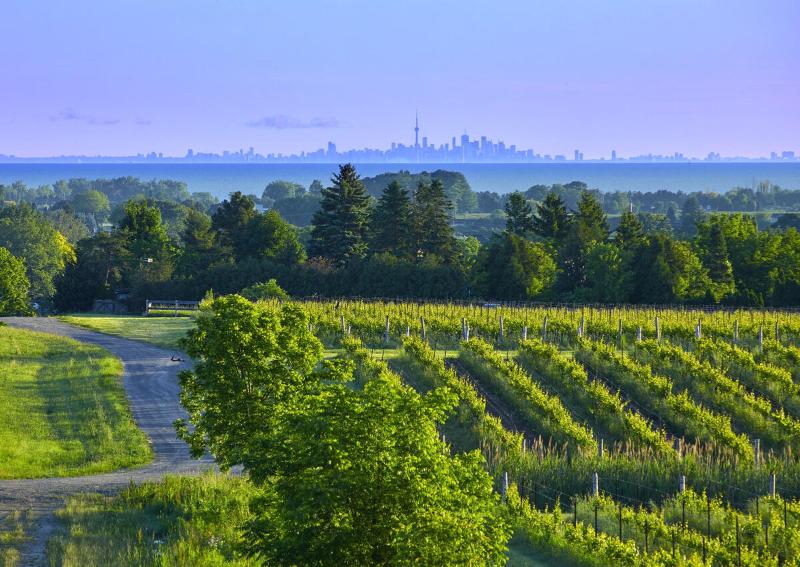
I love the accessible, achievable approach to the recipes in your book, and I can't wait to try some myself! Your father was a restaurateur. Did that influence your approach to food and food culture?
Yes, my family owned a restaurant for a while after Inniskillin. But my food culture has roots that go right back to childhood.
I dedicated the book to my father for wine and to my grandmother Oka — my mother's mother — for food. Both were immigrants from Austria. I was actually born there, but we moved when I was two.
My grandfather Silvio, who was of Italian and Austrian heritage and came from the area around Trieste, founded Silvio's Healthfood Store in St. Catharines around 1970. It had a juicer, two stools and a yoga studio.
For my first Show and Tell in Grade 2, I took in samples of dried apricots and almonds to talk about healthy food. In Grade 6, my five-minute speech was titled How to Make Wine.
Our family table was all about cooking and eating together. Sundays were for schnitzel. We ate very little processed food. I made pickles and homemade sausages with my father, and I learnt to cook goulash and bake all sorts of Austrian dishes with my Oka. Food and wine were integral to my life as I grew up.
The range of recipes is exciting: imaginative, diverse and offering something for everyone. You could eat your way around Niagara for a month without repeating a dish. That's remarkable for a rural region rather than a major metropolitan centre. How has Niagara developed such a distinctive and contemporary food culture?
Niagara is rich in agriculture, so the diversity of ingredients is extraordinary. We also have nearby lakes that provide fish. I included a wider range of ingredients from across Canada to celebrate our diversity, too. And I wanted to ensure the book offered something for everyone, with a broad selection of dishes, including vegetarian and vegan options.
When my father and his peers started out in the 1970s, there was no established tradition dictating what Niagara wine should be. They experimented, and that spirit carried over into the kitchen. Winery owners, winemakers and local restaurant chefs come from a wide range of backgrounds, bringing their own culinary heritage to the table while making the most of what grows here.
Relationships are close, too. Winemakers, chefs and farmers know one another, often on a first-name basis. There is constant collaboration and a cross-pollination of ideas. Many have trained or worked abroad and brought those influences home.
We are also just down the highway from Toronto, one of the world's most multicultural food cities. Combine all of that with a cool-climate wine style that is fresh, bright and exceptionally food-friendly, and you get a cuisine that is confident and curious rather than constrained by convention.
In the book, you let the recipes and wines speak for themselves. Looking at this collective patchwork as someone who eats in Niagara every day, what does it tell you about the region?
What strikes me most is how much Niagara has come into its own. Put all these recipes and wines side by side, and you see a region with a genuine identity — one that has worked out what it does well and is proud to showcase its strengths.
Although it might seem like a patchwork in some respects, I believe there is a strong thread running through it. That thread brings together the region's core grape varieties and wine styles with an array of wonderful recipes, drawn from both personal kitchens and professional chefs.
Living here, I'm reminded every day how fortunate we are. In summer, I can buy peaches from a farm stall in the morning and have them on the table that evening, alongside a bottle of wine made just a few kilometres away.
That connection between the farm, the kitchen and the glass is something many people experience only on holiday. Here, it's simply everyday life.

Get expert insights, weekly highlights, and exclusive stories from the world's most trusted wine competition.