
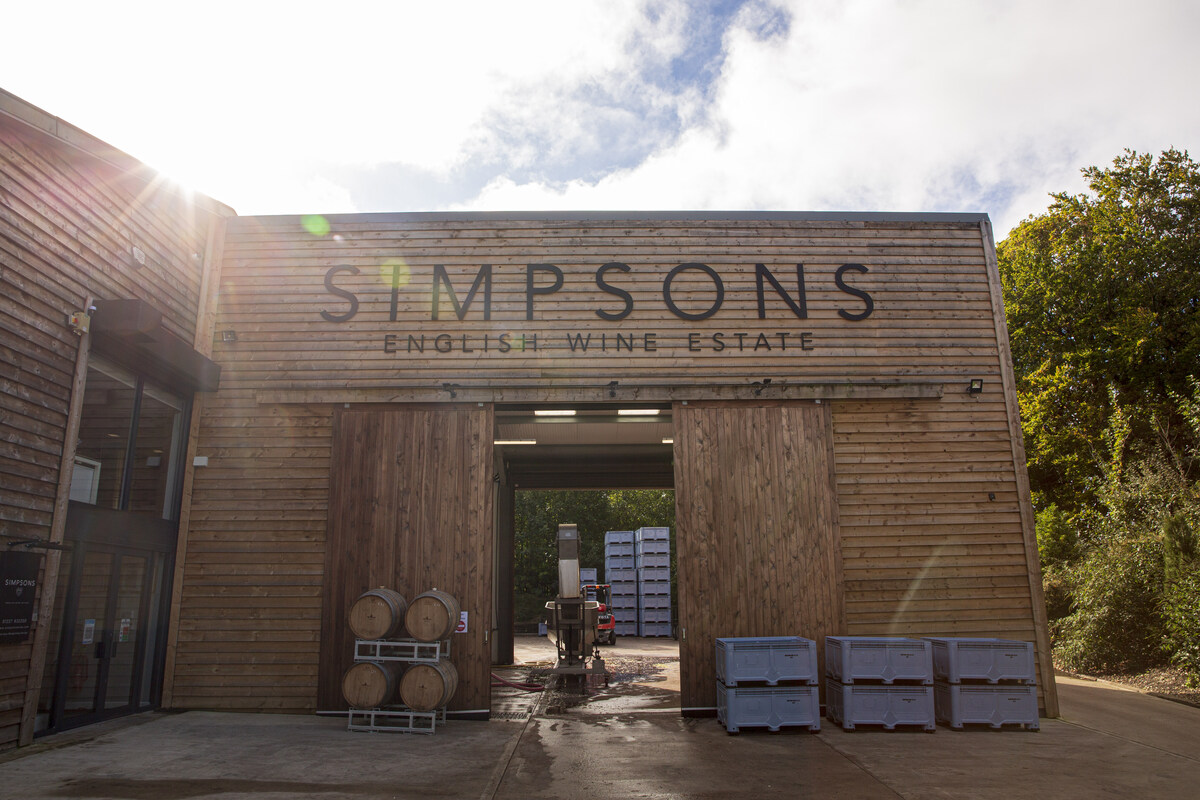
From French winemaking experience to English still wine pioneer, Simpsons Wine Estate is the potent synergy of site, ambition and savoir-faire.
Region: Kent, England
Founded: 2012
Owners: Ruth and Charles Simpson
Vineyard holdings: 38 hectares
Winemaker: Adrian Mohor
Head Viticulturist: Darryl Kemp
Annual production: Approximately 300,000 bottles
Like many investors in the UK wine industry, Ruth and Charles Simpson remember the sniggers; the derision and mirth that accompanied any suggestion that this island would one day nurture a successful wine business. They used to say British wine tasted of rain. Now they say: where next?
Simpsons Wine Estate has played a key role in this evolving story – not so much through scale as through bold ambition and a singular focus on Burgundy-benchmarked quality. The owners cut their teeth in the Languedoc, producing a range of wines at Domaine de Sainte Rose in Servian, before returning to the UK in 2012. Motivated simply by a desire to push boundaries on native soil, they planted Pinot Noir and Chardonnay on the chalk of the North Downs in Kent, a geological formation that shares its origins with the chalk beneath Champagne.
Yet further comparisons with Champagne are not entirely appropriate. What began with a primary focus on sparkling wine – structured, elegant cuvées with wonderfully bright acidity and dazzling fruit purity – has evolved considerably. Still wines now account for around 65% of production, which would, of course, be unthinkable in Champagne. That decisive shift has helped establish Simpsons as one of the leading proponents of England's still-wine movement, with Chardonnay and Pinot Noir increasingly demonstrating the potential of the country's best sites beyond sparkling wine. Indeed, the estate's Roman Road Chardonnay 2023 won a gold IWC medal in 2026, which was richly deserved.final.jpg)
Provenance and technical innovation are central to the Simpsons' credo. Only estate-grown fruit is used, allowing vineyard site and chalk terroir to remain at the heart of the wines. Meanwhile, the Inertys press system – regarded as an important element in developing the house style – is one of only a handful of systems of its kind currently utilised by producers in the UK. The Derringstone Blanc de Noirs – a still white produced from Pinot Meunier – and the use of the glass Vinolok closure system reflect a progressive, open-minded organisational culture which underpins this small estate.
But Simpsons is unusual in other ways, too. Most small-scale wineries in the UK are reliant on direct-to-consumer sales and domestic demand to earn a living; Simpsons has instead built a formidable export business, with Ruth and Charles Simpson securing listings in Norway's state monopoly, Vinmonopolet, where the brand has become the country's leading English wine by volume. Today, more than half of total production is sold overseas.
Are Simpsons' owners planning on taking it easy and enjoying their success? Not a chance: a third vineyard, Bonny Bush Hill, was acquired in 2022 and planted entirely with Burgundian Chardonnay clones. Its first small crop was harvested in 2025, with a new wine from the site expected in 2027. This is a project that never sleeps.
Q&A: Ruth Simpson, Co-Owner, Simpsons Wine Estate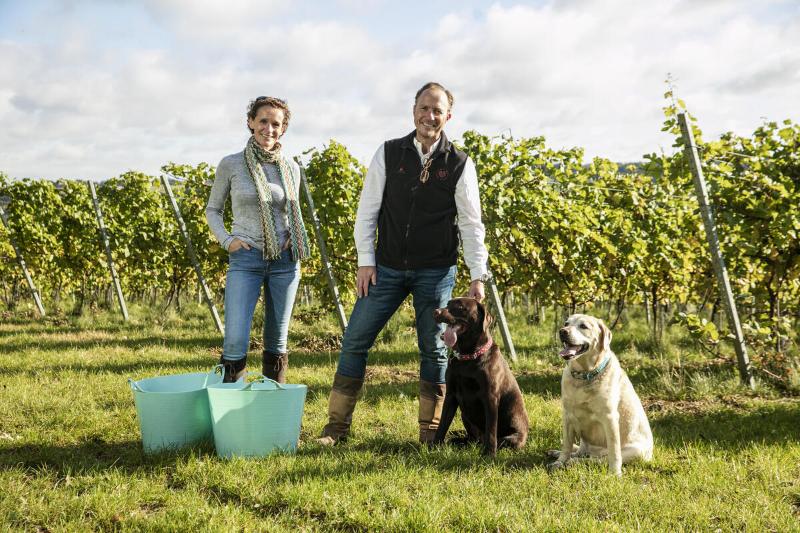
The torrid UK summer of 2026 has brought the prospect of consistently riper grapes and higher alcohol levels into sharper focus. Does a changing climate make still wine a more compelling proposition for English vineyards - perhaps one day achieving critical mass?
We initially vowed never to make still wine in England, (being too used to the 320 days of sunshine at our estate in the Languedoc!), however, given our experience making still wine in France, the fact that we have two very warm vineyard sites (it is widely acknowledged that Kent has the highest sunshine hours in the UK, with recent data showing this to be undeniable), that are situated on excellent chalk soils and have planted some Burgundian still wine clones, we had all the raw materials at our disposal so couldn't resist trying!
We are now firm believers that UK still wines, made from Chardonnay and Pinot Noir have world-class potential. You know all the arguments that support the UK's ability to create sparkling wines that challenge Champagne, but for the same reason, the same applies to still wines made from these two noble varieties. Some English Chardonnay already has the potential to challenge wines from several areas of Burgundy because the same varieties are grown on identical terroir and therefore have the potential to display the same minerality, elegance and ageing potential. This development has already attracted international interest, with new players entering the market specifically because of the still wine opportunity.
Still wines are becoming increasingly important for the UK as the industry matures, offering something new, different and exciting as well as providing breadth and depth to the English wine category. The quality of these still wines is improving year on year as producers understand what their vineyard sites are capable of and fine-tune their techniques. Warmer summers will only aid this improvement, albeit climate change has only made the English weather even more unpredictable and challenging. Our belief in the still wine potential was cemented when our Gravel Castle Chardonnay displaced a well-known Chablis to become the best-selling still white wine in the Norwegian Monopoly shops.
Looking back at the decisions that have shaped Simpson Wine Estate, which one would you make differently today - and what does that tell you about where you think the business needs to go next?
Given our initial goal was only to make sparkling wines and the subsequent success of our still wines, the only decision that we might have made differently in the early stages of our business may have been to plant more Burgundian still clones particularly of Chardonnay. As it is, in order to accommodate the increasing demand for Chardonnay, not only for our still wines, but also to ensure sufficient fruit for our sparkling wines, we did have to purchase and plant a third vineyard site in 2022. Bonny Bush Hill vineyard is also situated in the Elham Valley, very close to our winery, and benefits from equally intense chalk terroir. This site is planted in its entirety to Chardonnay vines, using only Burgundian still wine clones. We had a first small harvest from this block in 2025, so watch this space for a special new release early next year specifically from this vineyard.
Where do you see Simpson's clearest point of difference today - and how do you avoid getting caught between the scale and recognition of Champagne and the increasingly crowded field of premium English producers?
What distinguishes Simpsons is a combination of experience, provenance and a willingness to challenge convention. Provenance is central to the brand. All Simpsons wines are made exclusively from estate-grown grapes, allowing the character of the vineyards and their chalk terroir to remain at the forefront. The estate has also been an early advocate of premium English still wine, with still wines now accounting for 65% of production against 35% for sparkling. Burgundian clones of Chardonnay and Pinot Noir have been central to that development, as the estate has sought to explore what Kent can achieve beyond traditional English sparkling wine.
Today, more than half of our production is now exported, making it one of the English wine brands with the highest proportion of production sold overseas. Norway is its largest market, and figures from the Norwegian Monopoly show Simpsons as the country's number-one English wine brand by volume, accounting for 31% of the English wine market.

Get expert insights, weekly highlights, and exclusive stories from the world's most trusted wine competition.