
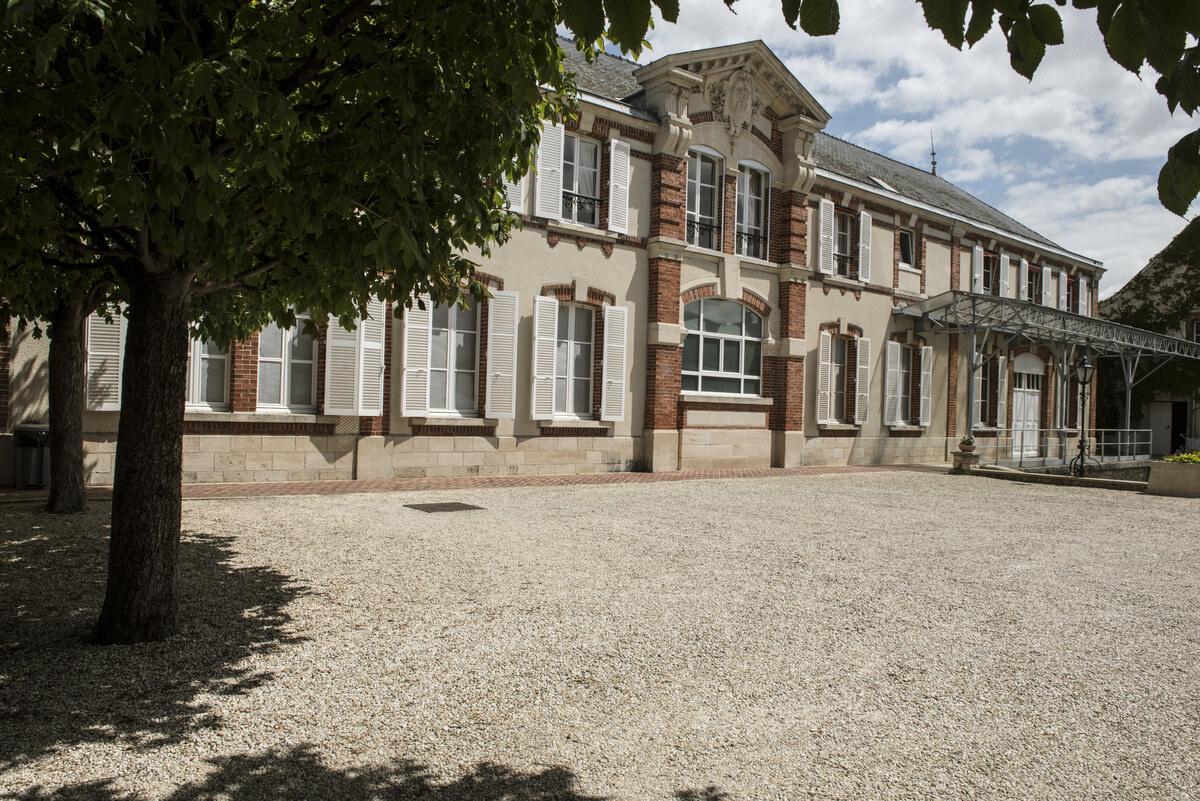
Laurent-Perrier is a marvellous contradiction: a tradition-led house that revels in pushing boundaries. James Lawrence finds out more.
Region: Champagne (Tours-sur-Marne)
Founded: 1812
Ownership: The Nonancourt family
Cellar Master: Olivier Vigneron
Annual production: Not publicly disclosed
Over a century before zero-dosage became fashionable with the hipster sommelier set, Laurent-Perrier began experimenting with sugar-free Champagne. In 1889, Mathilde-Émilie Perrier launched Grand Vin Sans Sucre - an early indication of a house willing to challenge convention, despite its traditional image. But, as aficionados of this venerable brand already know, there is more to Laurent-Perrier than meets the eye.
The house has roots dating back to 1812. Founded by André-Michel Pierlot, a former cooper and bottler, the original business was a Champagne wine merchant situated in Tours-sur-Marne, a Grand Cru village at the crossroads of Champagne's three principal vineyard areas. Following the death of chef de cave Eugène Laurent in 1887, his widow Mathilde-Émilie took over the business, combining her surname with his to create Veuve Laurent-Perrier. The house came to prominence in the 20th century following its acquisition by Marie-Louise de Nonancourt in 1939, whose son Bernard would transform its fortunes. Assuming control in 1948, he worked tirelessly to promote Laurent-Perrier on the international stage, establishing a signature style built around elegance and purity, rather than weight and power.
Yet we should not conflate lightness of touch with being forgettable. The much-loved Cuvée Rosé, introduced in 1968, remains one of the house's signature wines. Produced by macerating Pinot Noir rather than blending red and white wines, it is a rosé Champagne of remarkable elegance and tremendous depth, with an intense and vivid red-fruit character. The Brut Millésimé, meanwhile, is declared only in exceptional years, with the 2018 release marking just the house's third vintage declaration in a decade. More recently, Laurent-Perrier added Héritage to the portfolio in 2024, a Brut Champagne made exclusively from reserve wines.
The star of the cellar, however, is the prestige cuvée Grand Siècle. Launched in 1959, it eschews the single-vintage approach in favour of a blend of three outstanding years, most recently 2015, 2013 and 2012 in Iteration N°27. Nevertheless, it isn't easy to describe the brilliance of Grand Siècle through words alone - tasting is believing. My own tasting notes repeatedly return to its wonderful freshness and sublime texture: a wine of great aromatic depth that demands time in the bottle to reveal its full personality.
Today, the house is guided by Alexandra Pereyre de Nonancourt and Stéphanie Meneux de Nonancourt, who work alongside President and CEO Stéphane Dalyac. Together with chef de cave Olivier Vigneron, the team continues to balance continuity with a willingness to evolve. Laurent-Perrier has more than two centuries of history under its belt, yet it feels thoroughly contemporary in its ethos and scope. Its future, despite the vagaries of a changing world, feels secure.
Q&A: Adam Guy, UK Managing Director, Laurent-Perrier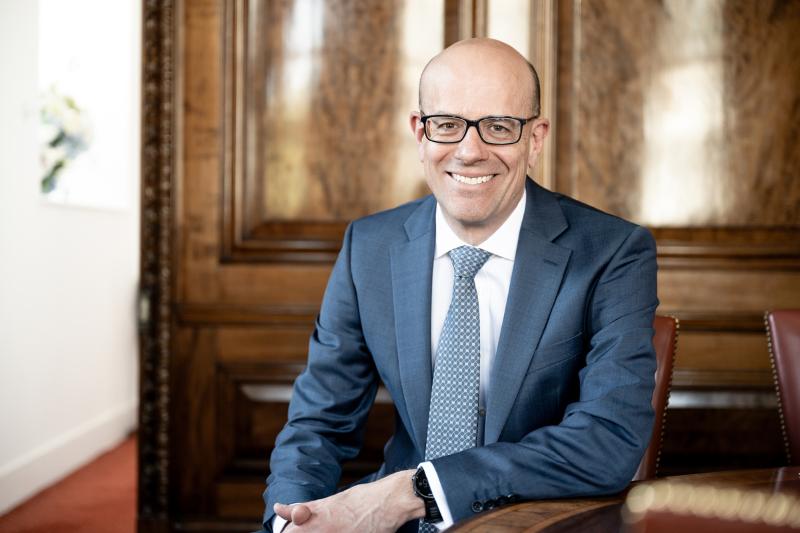
How is the UK champagne market evolving, and where do you see the biggest opportunities for Laurent-Perrier to grow its presence?
In the financial year to March 2026, the Laurent-Perrier Group grew volumes by 3.8% while the global Champagne market declined by 1.6%.
The UK Champagne market returned to growth in 2025 for the first time since 2021. It now accounts for around 15% of all Champagne exports. Nielsen data shows that UK Champagne sales volumes in retail are growing, whereas CGA data shows that Champagne sales volumes in the on-trade continue to decline.
As an independent family house, we take a long-term view on the market. Rather than buying growth through participating in double discounting in the supermarkets' multi-buy promotions, we focus on the quality of our Champagnes, the careful control of our distribution and demonstrating that Laurent-Perrier is a serious wine brand.
The biggest opportunities for Laurent-Perrier are at the top of our range. We have recently launched Grand Siècle Iteration N°27 in the UK, following Grand Siècle Iteration N°26, which was awarded 100 points and named James Suckling's Wine of the Year.
Laurent-Perrier has a distinctive identity built around innovation. How do you maintain that heritage while appealing to a new generation of Champagne drinkers?
At Laurent-Perrier, innovation is our heritage. After distinguishing himself in both the French Resistance and the French military during the Second World War, Bernard de Nonancourt inherited a small Champagne house and grew it into one of the most prestigious in Champagne by challenging conventions. He created Grand Siècle in 1959 based around a radical idea: that by blending across three exceptional years, Laurent-Perrier could recreate the perfect year, going beyond what is possible with a single vintage. In 1968, he launched Laurent-Perrier Cuvée Rosé using the cold maceration of Pinot Noir to craft a premium wine with pronounced red fruit aromatics and a vinous palate, in contrast to the conventional method of making rosé Champagne by blending red and white wine. And in 1981, he pioneered the non-dosage Champagne style with Laurent-Perrier Ultra Brut - the driest style of Champagne that reveals the purity of the crus and varietals in the blend and pairs particularly well with delicate gastronomy, especially shellfish. Since then we have released a second non-dosage Champagne, Laurent-Perrier Blanc de Blancs Brut Nature.
Younger drinkers see luxury differently. For them, it is less about displaying wealth and more about identifying with values and craft. That plays to our strengths. We have an authentic family story: we are currently led by Bernard's daughters, Alexandra and Stéphanie de Nonancourt, and the next generation of the family now also works in the business. Champagne is all that we do, and we craft our Champagnes using three distinctive savoir-faire that define our range.
We are also learning directly from the next generation. Students from Regent's Brand Lab invested more than 700 hours in a project on how to build awareness of and preference for Grand Siècle among Gen Z, including store visits, sentiment tracking and primary research. Younger consumers engage with brands online far more than previous generations, so our e-commerce partners and social media matter more than ever. Education is just as important. Our partnerships with the likes of the WSET, the Court of Master Sommeliers and the Gérard Basset Foundation all help those who recommend and pour Champagne understand what makes Laurent-Perrier different.
With consumers becoming more selective about when and what they drink, how is Laurent-Perrier adapting to changing drinking habits and expectations around premium Champagne?
Consumers are drinking less often, but many are trading up when they do. We see this clearly in the growth of Héritage, Blanc de Blancs Brut Nature and our vintage cuvées. In 2025, UK shipments of rosé Champagne fell by 1.8%, yet sales of Cuvée Rosé grew.
Expectations around style are shifting too, with a trend towards lower dosage. We have been making non-dosage Champagne since 1981, so for us this is a long-held conviction rather than a response to a trend.
Consumers are also seeking out rarer styles. We declare vintages far less often than most houses and our prestige cuvées are released less often. Grand Siècle has been released only 27 times since its launch in 1959 and Alexandra Rosé has been released only ten times since its launch in 1987. We also offer older expressions, such as Laurent-Perrier Brut Millésimé Réserves, late-disgorged vintage magnums most recently from 2002, 2004 and 2006, and Grand Siècle Les Réserves, late-disgorged magnums of select older Grand Siècle iterations, so drinkers can enjoy our wines at different stages of development.
Above all, premium Champagne is increasingly about the experience. We focus on enjoying our Champagnes with serious food, guided by the exceptional teams at our flagship Michelin-starred and five-star venues.

Get expert insights, weekly highlights, and exclusive stories from the world's most trusted wine competition.