Agroforestry, biodiversity and long-aged cuvées combine to create something quite special at this Franciacorta estate, finds James Lawrence.
Region: Franciacorta (Lombardy)
Founded: 1836
Ownership: The Barzanò family
Vineyard Holdings: 41 hectares of organically farmed vineyards
Winemaker: Flavio Polenghi
Annual Production: 250,000 bottles
Franciacorta is today synonymous with traditional method fizz, yet as leading producer Il Mosnel reminds us, for most of its long history the estate produced fresh, zippy still wines without a hint of sparkle. The company's evolution from an agricultural concern into a specialist producer of high-quality sparkling wine, much like the story of Franciacorta itself, is an interesting tale of vision, determination, and a willingness to swim against the tide.
Il Mosnel (known as Azienda Agricola Barzanò Barboglio until 1976), came to life in 1836, when the Barboglio family inherited the property, including its historic residence and stunning 16th-century cellars. However, this agricultural estate did not receive a decisive makeover until a century later, under the direction of Emanuela Barzanò Barboglio. After taking responsibility for the family business in 1954, aged just 18, she began the process of turning an increasingly outmoded farm into a modern winegrowing enterprise.
The timing was opportune. Seven years later, a young pioneer called Franco Ziliani persuaded his employer at the historic wine house Berlucchi to let him experiment with traditional method sparkling wine production. His success attracted the attention of several wine producers in the region, including Il Mosnel, which recognised an opportunity worth pursuing. In 1968, Emanuela Barzanò Barboglio began the estate's transition towards sparkling wine production, restructuring the vineyards - with Chardonnay and Pinot Noir playing a key role – and building a winery capable of producing high-quality sparkling wine at scale. Early experiments, however, included the Charmat method, before the winery shifted its focus towards second fermentation in bottle. The first Franciacorta bearing the Mosnel name was released in 1979.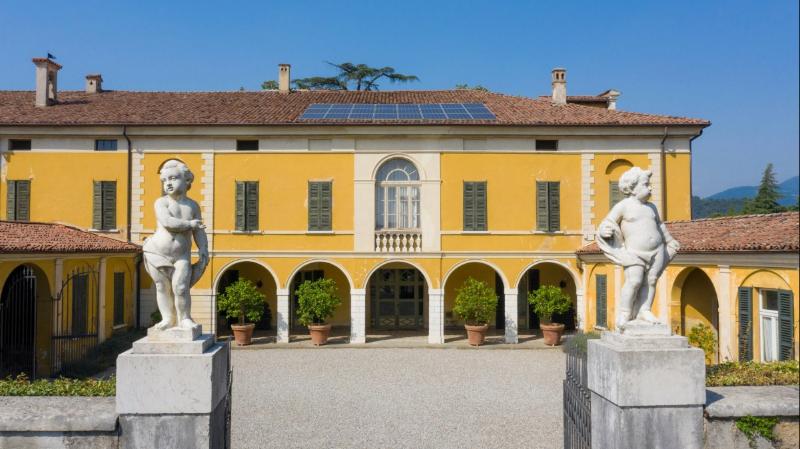
The brand is currently steered by fifth-generation siblings Lucia and Giulio Barzanò, who continue to produce still wines - marketed under the Curtefranca appellation - although Il Mosnel is now primarily associated with Franciacorta. Alongside the great-value Brut, there is a Rosé and Zero Dosage, reflecting the approach of many wineries in the region, where generally ripe fruit often makes the addition of sugar unnecessary. Satèn, meanwhile, is a Chardonnay-only Riserva, made in exceptional vintages. Its fine, creamy mousse and rich, refined palate combine ripe stone fruit and floral notes – my favourite of the range.
Yet the house's most intriguing expression is arguably QdE, an exceptionally rare Franciacorta aged on its lees for more than twenty years. The vineyards are farmed organically, with Chardonnay, Pinot Blanc, Pinot Noir and the indigenous Erbamat providing the raw materials for a collection of wines that display a recognisable house identity: clean, bright fruit, elegance and toasty complexity for the longer-aged cuvées.
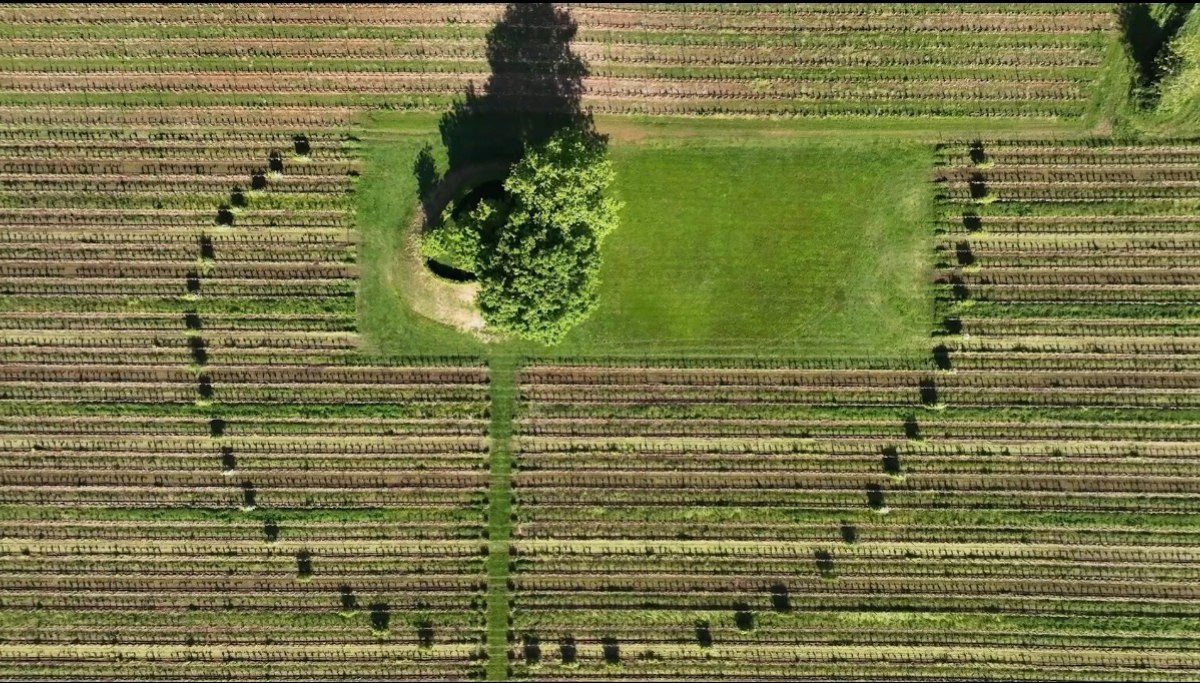
However, it is the estate's inspirational work in agroforestry and biodiversity that continues to earn Il Mosnel the most praise and attention from the trade. In collaboration with Sata Studio Agronomico, the owners began exploring agroforestry over a decade ago, introducing native hedgerows, trees and multifunctional green manure crops into their vineyards – a highly unconventional approach at the time. Today, biodiversity and soil fertility are monitored annually, while the presence of trees and other vegetation helps moderate climatic extremes and improve the resilience of the land, according to the family.
In 2026, Il Mosnel remains a standard-bearer for progressive winemaking in the region: its approach combines environmentally conscious agriculture with consistently high standards. There are many winemaking traditions in Lombardy that producers are keen to maintain. But in the cellars of Il Mosnel, the most important tradition has been a willingness to diverge from the past and start over.
Q&A: Giulio Barzanò, Co-Owner, Il Mosnel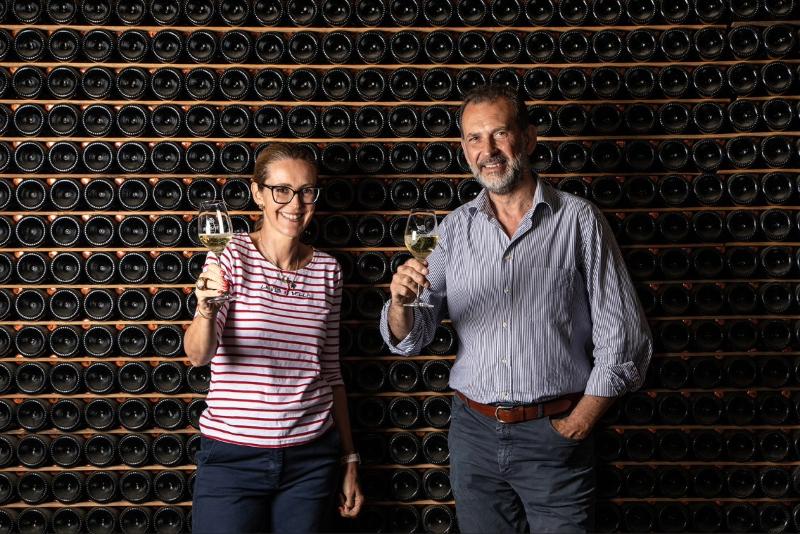
You have invested considerable time and energy in agroforestry and biodiversity. How has this changed your understanding of viticulture?
The biggest change is in how I see the vineyard. I used to think of it as a crop to manage. Now I see it as an ecosystem we belong to. When we started working with Sata Studio Agronomico more than ten years ago, bringing trees, hedgerows and wooded margins back among the vines seemed almost eccentric in Franciacorta. Today it shapes nearly every decision we make.
The first lesson is about time. A hedge or a row of trees doesn't pay you back in one season. It takes years, and you have to accept that. But since we started measuring biodiversity and soil fertility every year, we have seen the vineyard become more alive and more stable: more insects and birds, healthier soils, and less extreme conditions in the rows during the hottest summers. As our seasons get more unpredictable, that stability matters more than anything else.
The second lesson is humility. I don't have all the answers, and nobody does yet. That's why we joined VitiSilvA with other estates and two universities: we want to turn instinct into data that any grower can use.
As for intensive, specialised planting, I don't think it has a future in its pure form. A monoculture is fragile. It depends on outside inputs to make up for everything the landscape no longer provides, and climate change exposes that fragility every year. Vineyards won't disappear, but the vineyards of tomorrow will have to be more diverse and more connected to the land around them. In a way, that means going back to the mixed landscapes our grandparents knew, with much better knowledge behind us.
Franciacorta has established itself as one of Italy's leading sparkling wine regions. What do you think its next chapter should look like?
Franciacorta has done something remarkable in a few decades. It proved that Italy can make traditional-method wines of real elegance. The next step is to tell the world what only Franciacorta can say: our morainic soils, the influence of Lake Iseo, our particular light and climate, and a landscape where vineyards still sit alongside woods and hills.
Identity comes from expressing a place with honesty and precision. That means talking more about sites and terroir, about longer ageing, about Pas Dosé wines that let the place show without makeup. It also means placing sustainability at the heart of the denomination, not treating it as a marketing line.
Mosnel has been part of Franciacorta's history from the very beginning. My mother, Emanuela Barzanò Barboglio, helped build this denomination when few believed in it. I think we lead best by example rather than by chasing trends: farming organically, investing in biodiversity when it wasn't fashionable, sharing what we learn with other producers, and making wines that are faithful to Camignone, our village, even when the market asks for something easier. Leading also means being willing to be early, and sometimes to be wrong, so that others can follow with more confidence.
You have spoken about the importance of preserving certain traditions while challenging others. How do you distinguish between the two, particularly after almost 190 years of family history?
For me, the test is simple. I ask whether a tradition holds real knowledge, or whether it's just a habit we stopped questioning. The traditions worth protecting carry the wisdom of the place and its people. Patience in the cellar, long lees ageing, respect for each vintage, care for the land, and the idea that a family estate is held in trust for the next generation. After 190 years, these feel less like rules and more like our identity.
Other traditions are really only a few decades old. The idea that a vineyard should be as clean, uniform and productive as possible, or that nature is something to control rather than work with. Those deserve to be challenged, and climate change is forcing us to do it.
In the end, the deepest tradition at Mosnel is the willingness to change. Every generation before us adapted to its own time. Protecting that spirit sometimes means letting go of the form so you can keep the meaning.

Get expert insights, weekly highlights, and exclusive stories from the world's most trusted wine competition.