
 final.jpg)
In 2026, sommeliers seeking an esoteric sparkler are spoilt for choice. But how easy is it to sell the unfamiliar? James Lawrence investigates.
"The sparkling wine conversation", says sommelier Julio Sierra, "is increasingly moving beyond Champagne." And so it should: you can make traditional method in a wide range of climates – you just need some expensive kit, and the right amount of manipulation to make wine worth drinking. From South America to Tasmania, the geographical spread of traditional method sparkling production has grown out of all recognition over the past 30 years. Tasmania is a particularly striking example. In 2025, sparkling wine accounted for 43% of its wine production, while the island's average recorded purchase price for sparkling-wine grapes rose 8% to A$4,095 per tonne.
"Cap Classique from South Africa and Corpinnat, relative to their quality and potential, are still underrepresented on wine lists and in retail," notes Sierra. "To unlock the potential in retail", he adds, "requires three key changes: better shelf positioning, accessible storytelling and comparative tasting opportunities - consumers need to understand not just how these wines are made, but why they are worth choosing over a familiar bottle of Champagne."
Of course, not every terroir can produce exceptional - or even reliably decent - wine. But the broadening of the sparkling offer is one of the most exciting developments of recent times: more choice, greater variety of styles, and price-beating competition. The key for the trade is to make the esoteric feel like discovery rather than a gamble. And they've been working on it for a while.
A voyage of discovery
In 2014, Moët Hennessy launched its Argentine Chandon brand in the UK, a prospect unthinkable, or at least unlikely, in the 20th century. But even then, it was a bold move: the company had spent four years researching and planning the launch, with its Brut and Rosé priced at £14.99 and £15.99 respectively. However, with the scale to support wider global distribution and the company's considerable financial resources, Chandon managed to secure retail listings, including Majestic and Sainsbury's.
At the time, its brand management team spoke of unlocking the potential of a market "sweet spot" between Prosecco and entry-level Champagne - a segment of the market that is expanding as Prosecco's UK growth has stalled. Meanwhile, the diversification of hospitality venues, not least restaurants increasingly specialising in one country or region's cuisine, offers opportunities for alternative styles that lack the renown of Champagne, Prosecco or Cava.  final.jpg)
Indeed, many sommeliers in both the US and UK have told me in 2026 that awareness of a world beyond Champagne has never been greater. Market data points to a shift in the same direction. According to the IWSR, English sparkling wine and Crémant are among the UK market's more dynamic categories, while younger adult drinkers are increasingly enjoying sparkling wine outside traditional celebrations.
Kent Barker, founder of Eight Stony Street in Somerset, is among a growing band of restaurateurs promoting less familiar fizz, including Franciacorta. "There are an increasing number of wine-list slots for sparkling wine 'alternatives' at the moment, with Champagne and English sparkling now essential 'must list' categories. Franciacorta can and does sell at the restaurant. This is a niche we can expand," he notes.
Jesse Penwarden, wine director at Marea in Beverly Hills, reports that "the presence of Jura on wine lists is increasing."
He continues: "I have had the pleasure of speaking with a few young winemakers coming out of Burgundy who believe we will be seeing an increasing number of producers looking to Arbois and utilising the terroir of Jura in the near future." Specialist wine bars and more casual venues also remain valuable settings in which to introduce unfamiliar styles, in addition to the posher end of dining out.
Within these businesses, I have often found that owners and managers favour diversity for personal reasons, preferring risk over certainty. I remember Restaurateur Neleen Strauss, who runs High Timber in London, telling me that while she listed plenty of Champagne, she preferred "to go off-piste" whenever possible.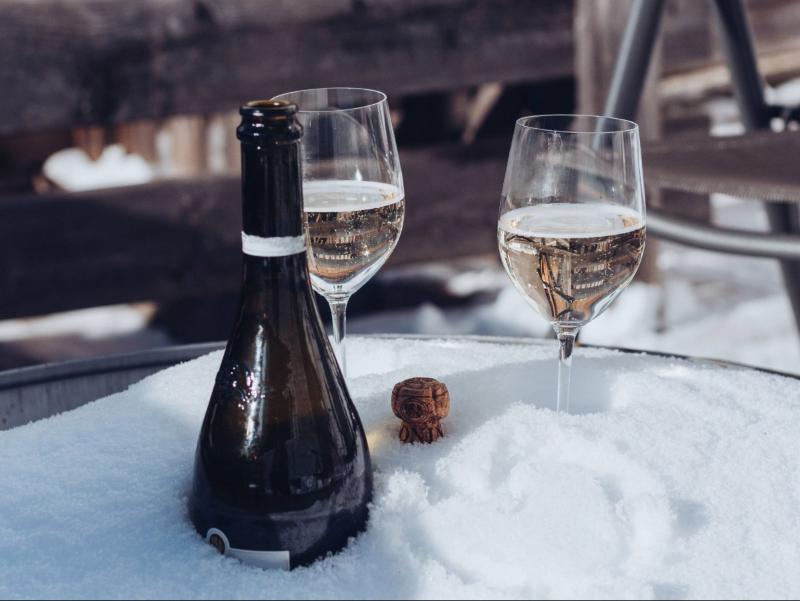
"Of course, it's easier to sell what the market knows, but it's boring as hell," she said. "We really champion Cap Classique because its producers lack the marketing budgets of the big Champagne houses, but the quality can be superlative – and the price is far more competitive." The category has been doing quite well over the past few years, with exports rising 19% to 2.4m litres in 2024.
It's also encouraging to see more mainstream and luxury destinations giving the peripheries a go. At The Savoy, sommelier Romain Audrerie champions the spirit of discovery through "Étienne Fort's Crémant de Limoux and Izar-Leku, Artadi's sparkling project in the Basque Country", describing them as "wines with history, craftsmanship and talented people behind them - exactly the stories a sommelier should be bringing to the table."
Audrerie also identifies Greece as the next big thing in sparkling production. "Domaine Karanika, from Amyndeon in north-western Greece, has been one of my most exciting sparkling-wine discoveries - its work with Xinomavro demonstrates how much potential lies beyond the familiar," he says.
"For me, a luxury wine bar should give guests access to both celebrated names and tomorrow's discoveries. Our role is to give an unfamiliar producer the attention and confidence we would give an established house. But we need to make that discovery easy, through by-the-glass opportunities, retail tastings and recommendations that communicate pleasure before technical detail."
Trial and error
Inevitably, not every venue has the time – or inclination – to list lesser-known categories and put the effort in to explain them, train staff and persuade customers to try them.
Harder still, but not impossible, is to promote categories that shadow or even exceed the average price of an NV Champagne from a grand marque. In many restaurants, Champagne still occupies a category of its own, with other sparkling wines having to justify their place alongside it. But that hierarchy is not immutable.
Consider, for example, Daphne's in London, where Nyetimber Classic Cuvée is listed at £114, above Henriot Brut Souverain NV at £98. Granted, we're a long way off critical mass, but it demonstrates that alternatives to Champagne need not automatically be positioned as the cheaper option.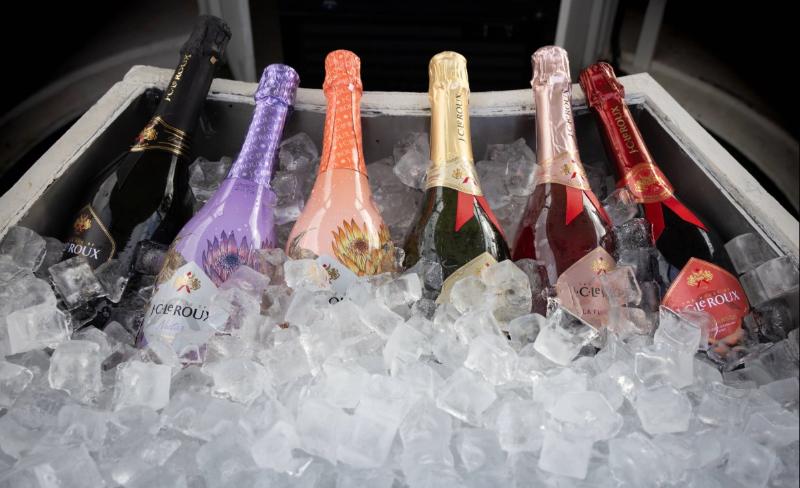
There is no foolproof panacea for marketing sparkling wine that, while delicious, languishes in relative obscurity. But among specialist retailers and restaurants, a significant investment in consumer education and staff training, alongside by-the-glass listings to encourage a first purchase and food pairings that make regional character tangible, can help turn curiosity into demand. Like many in the trade, I recognise the distinction between styles that have a potential market to expand, and wines that still need to prove one exists. But compared to the 20th century, the world of sparkling wine has become a much more interesting and diverse place. That's worth a glass or two.

Get expert insights, weekly highlights, and exclusive stories from the world's most trusted wine competition.