Head to Paso Robles for "affordable luxury", says Christy Canterbury MW
A few weeks ago, I sat down in a Midtown Manhattan restaurant with Cynthia Lohr, second-generation co-owner and Chief Brand Officer of J. Lohr, one of the pioneering wineries that helped shape modern-day Paso Robles on California's Central Coast.
Our conversation began with Cynthia following in her mother's footsteps when she visits the city (Carol grew up on Long Island and married Cynthia's father just down the street, at St Patrick's Cathedral). We then turned to the wine Cynthia likes to enjoy in the evening when travelling alone: J. Lohr Hilltop Cabernet Sauvignon, made from several Paso Robles vineyards. "The tannins are always smooth," she told me.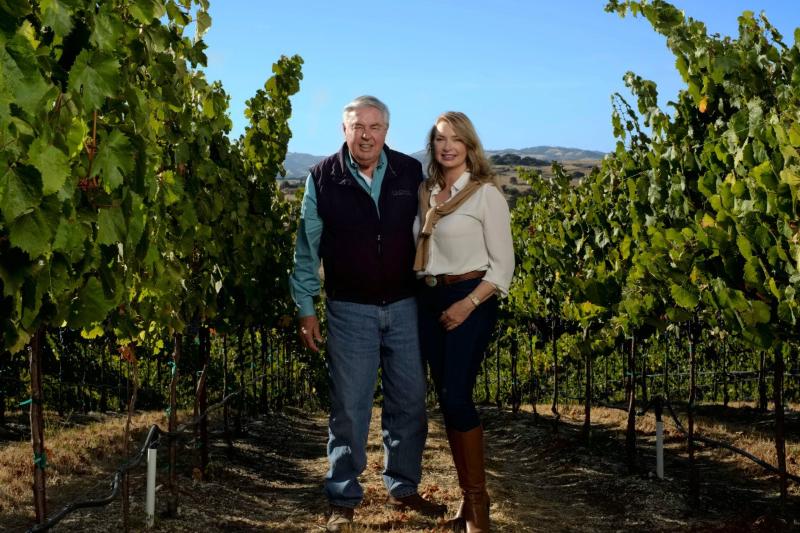
Eventually, though, we moved on to Paso Robles itself: its history, J. Lohr's role in shaping its modern identity and what the future holds. Paso, as it is affectionately known, transported us out West.
California's Wild West Wine Country Comes of Age
Today, Paso Robles is one of California's largest and fastest-growing wine regions. Remarkably, while much of the wine world - and seemingly the rest of California - is contracting, Paso continues to forge ahead.
According to NielsenIQ, Paso Robles is currently the leading AVA (American Viticultural Area) for Cabernet Sauvignon sales in the US. For the 52 weeks ending 21 March 2026, Paso Robles accounted for 13.83% of the US dollar sales of domestic Cabernet Sauvignon, with value growing by 0.61% and volume by 0.5%. Napa Valley trailed by four percentage points, with a 9.81% share of domestic Cabernet Sauvignon sales.
J. Lohr plays a significant part in that story, particularly through its Seven Oaks Cabernet Sauvignon, the best-selling Paso Robles Cabernet Sauvignon, with a share of more than 20% of the region's Cabernet Sauvignon sales by value. J. Lohr is, after all, the area's largest wine producer and vineyard owner.
These figures are impressive, but the region's beginnings in the 1970s were far from straightforward. Cynthia's father, Jerry Lohr, has farming in his blood. Born and raised in South Dakota, he grew up among fields of wheat, barley and rye. In the 1960s, drawn by the pioneering spirit of Paso's farmers, who were planting Zinfandel, Alicante Bouschet and Carignan, and by growing interest in wine, Jerry headed west. He founded J. Lohr in 1974. Gary Eberle arrived around the same time, followed not long afterwards by Justin Baldwin of Justin Vineyards.
Jerry initially planted Cabernet Sauvignon in Arroyo Seco, a much smaller and cooler region than Paso Robles. Today, Arroyo Seco is known for its cool-climate wines, particularly Chardonnay among the whites and Pinot Noir among the reds. Experimentation and trial and error were all part of the process. It took time, but the lessons learnt eventually paid off.
While Napa Valley was making international headlines following the 1976 Judgment of Paris, Paso's farmers - further removed from major metropolitan centres such as San Francisco, which helped put Napa on the map - kept their heads down and concentrated on farming. It turns out they were doing something right. Today, Paso Robles is home to more than 200 wineries, most of them family-owned.
People and Terroir, Too
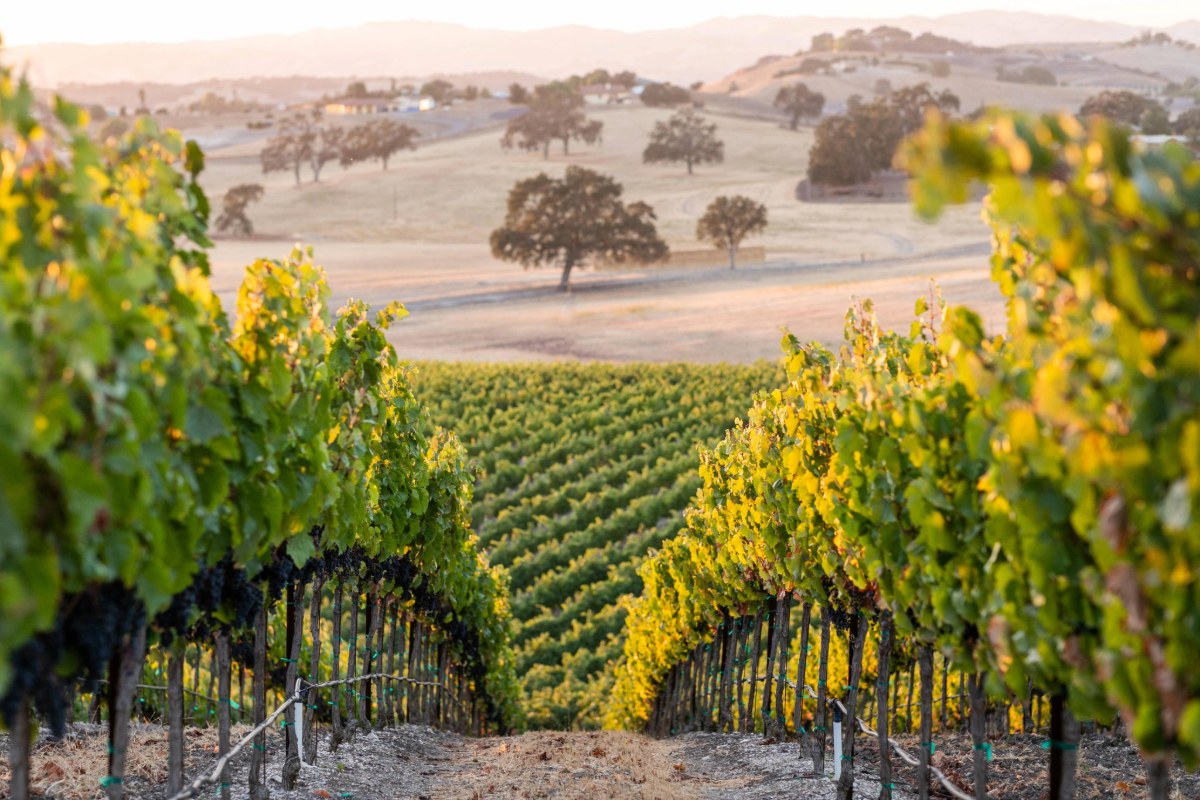
It was not just the people who made Paso Robles what it is, of course. The land and topography played their part, too.
Cynthia explained that winds funnelled through the Templeton Gap can cause summer night-time temperatures to plunge by as much as 50°F (28°C). At the northern end of the AVA, breezes also sweep down through the Salinas Valley. Few grape-growing regions on the US West Coast experience such dramatic temperature swings.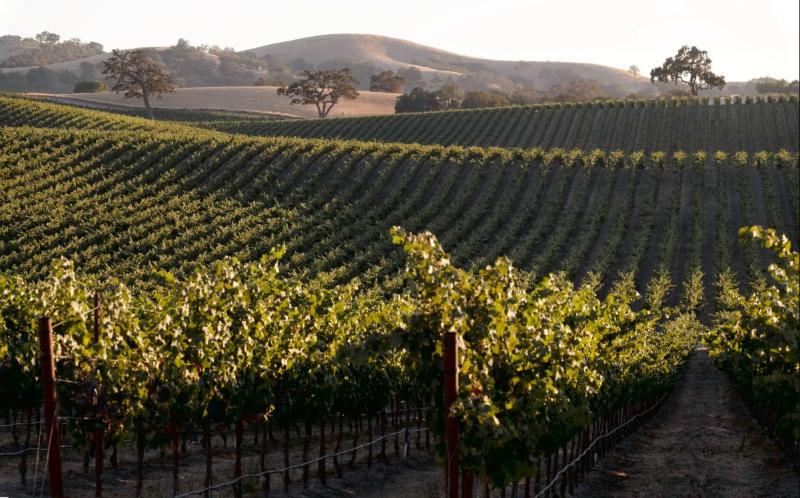
During the day, however, Paso is warm and sunny. The Santa Lucia Range, rising to around 1,800 feet (550 metres), separates the vineyards from the Pacific Ocean - something of a natural refrigerator - and shields the region's western flank.
Paso Robles is difficult to define, though, because the AVA is so vast: approximately 35 miles wide by 25 miles long (56 by 40 kilometres). To put its size into perspective, its area is roughly equivalent to twice that of the city of Los Angeles. Within its boundaries are 11 nested AVAs, more than 30 soil types, including plenty of limestone, and over 60 grape varieties.
Amid this remarkable diversity, Cabernet Sauvignon reigns supreme, accounting for around 40% of planted vineyard area. Yet it is only over the past 15 years or so that the region has placed Cabernet on its current pedestal.
Daniel Daou of DAOU Vineyards once pointed out to a small group of producers that, although Rhône varieties had traditionally attracted the media spotlight, Cabernet Sauvignon was clearly the region's bread and butter. The distinguishing feature, he argued, was the velvety texture of Paso Robles Cabernet's tannins.
The group went on to establish the CAB Collective, now numbering almost 30 wineries, to champion Cabernet Sauvignon and other Bordeaux varieties through events held in spring and around harvest.
Everyone's Coming to the Party
Paso Robles has become a destination in its own right, usually warranting at least an overnight stay. As Cynthia put it: "From most places, Paso isn't a day trip. But you'll be richly rewarded for your stay."
The 2025 Paso Robles Wine Industry Economic, Fiscal, and Social Impact Study found that 79.2% of visitors stayed overnight. Visitor numbers rose by 5.2% in 2025 compared with 2024, generating an impressive US$469.7 million in direct spending.
According to Cynthia, one reason Paso Robles Wine Country is thriving is its youthful energy. Fresno State University and California's polytechnic universities are within reach, and graduates who have studied wine and agriculture often choose to stay in the area. Compared with other parts of California, the cost of living is lower, making it easier to live, work and establish a business.
And there is plenty to enjoy beyond wine - not least the generally modest tasting-room fees. Approachable luxury is very much the Paso way.
The great outdoors is on the doorstep, while Sensorio's Field of Light experience combines art and technology in an open-air setting. Local farms and orchards abound, attracting a new generation of aspiring chefs. Spend the morning picking your own produce, then soothe tired limbs in one of the area's mineral hot springs.
For music, there is the Vina Robles Amphitheatre or the Libretto Jazz Club; for an evening of food, wine and exploration, head to Tin City. Visit during Paso Robles Harvest Wine Month, then stay on for Pioneer Day celebrations in October.
Paso has come a long way since 1797, when Spanish missionaries established the region's first vineyards. Its quiet expanses of native oak trees and rolling Estrella Prairie might not have appealed to everyone back then. Today, however, there is something for everyone - preferably with a glass of Cabernet Sauvignon in hand.

Get expert insights, weekly highlights, and exclusive stories from the world's most trusted wine competition.