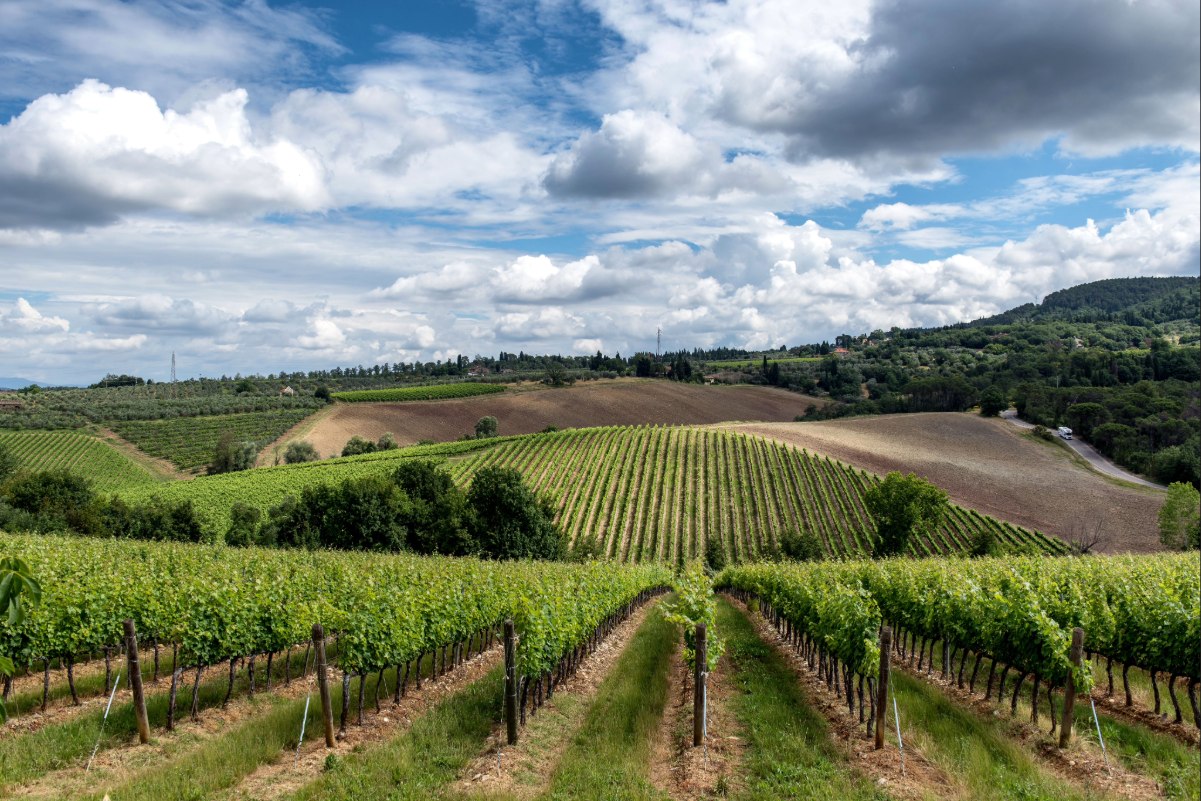
Storied, beautiful and world-renowned, Tuscany is entering a new era defined by experimentation, climate adaptation and territorial definition. But how much change is too much, wonders James Lawrence?
Tuscany's viticultural journey over the past 50 years would make a rollickingly good Christopher Nolan film: disagreements and rule-breaking aplenty, followed by renewal and a rediscovery of what made the region authentic in the first place. In the 20th century, producers decided to make great wine outside the rules, until the rules caught up and started to accommodate great wine. Today, Tuscany is entering a third phase of realignment, one partially forced by circumstances beyond anybody's control.
For many stakeholders, however, Tuscany's most pressing task remains the rebuilding of Chianti Classico's identity as a quality-led designation defined by the synergy between Sangiovese and place. Unfortunately, the market, it could be argued, still attaches too little value to these often exceptional red wines, made with panache by some of Italy's finest winemakers. The use of UGAs (Unità Geografiche Aggiuntive, or Additional Geographical Units: 11 smaller, officially defined areas within the Chianti Classico appellation) has given producers a much more granular vocabulary for expressing origin – promoting them has become a major priority in the region. But are consumers genuinely beginning to understand and value those distinctions?
Andrea Aparicio Castiglioni, owner of Querciabella in Greve in Chianti, is both optimistic and realistic. "After a shaky start with Gran Selezione, we now have a fantastic framework to offer wine lovers an incredible opportunity to explore central Tuscany like never before," he says.
"The scheme is still in the formative stages, but interest is already starting to show. A more diversified offer creates interest, which in turn generates knowledge and demand. But other regions have a 150-year head start!"
Simone Francois, owner of Castello di Querceto, agrees, noting that "the creation of the UGAs has made it possible to provide a more detailed description of the wines, increasing interest in the many distinctive characteristics of the Chianti Classico production area."
He adds: "Although it is difficult to make consumers fully aware of these small territories, more engaged wine consumers, in particular, show a strong interest in them."
Yet others regard this assessment as premature. Emanuele Reolon, technical director at Isole e Olena, is more guarded about the extent of the framework's current reach. "We are still explaining the differences between Chianti and Chianti Classico," he says.
"The UGAs are newly born and we need time, studies, vintages in order to 'earn the right' to speak about differences, personalities and styles."
The innovation game
Many of the wines that once challenged the system in 1970s and 1980s have since been absorbed into DOC/DOCG frameworks – a victory for dialogue and regulatory reform. Others, such as the legendary Tignanello and Solaia, remain part of the IGT designation created in 1995. So where, therefore, will the innovation of tomorrow emanate from, and what form will it take? Will it be centred around appellation reform or through wines deliberately sitting outside them?
Indeed, the trailblazers of old increasingly look very prosaic: there is nothing radical about growing Cabernet Franc or even Chardonnay in Chianti Classico territory in 2026.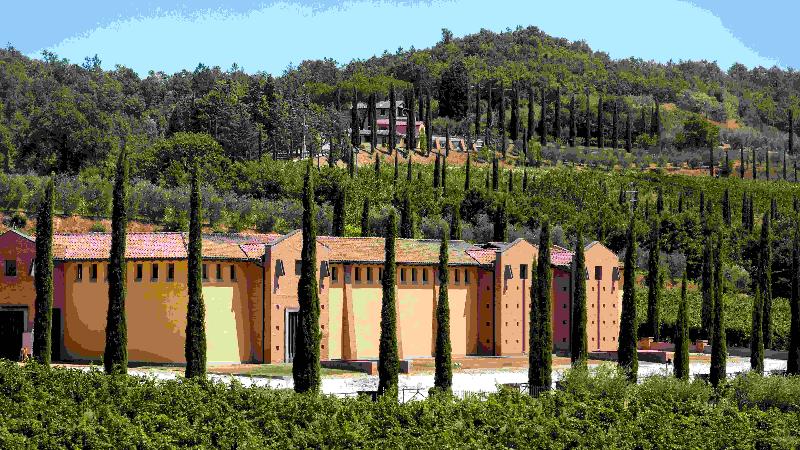
"The production of alternative styles and planting of grapes is no longer seen as taboo, or a reaction against bureaucracy. It is a choice, and behind this choice there is clear intent," agrees Castiglioni. Nevertheless, the perception of Super Tuscans among the trade continues to vary significantly. For every acolyte, there is a dissenting voice.
"I think as well as losing faith with their traditions, the decision to import Bordeaux varieties represents a fundamental lack of confidence or perhaps an inferiority complex, certainly a lack of vision," opines sommelier Stuart Skea.
"I just don't see the point of these wines. Increasingly people are obsessed with provenance and sense of place - a uniqueness of character - why dispose of what defines you and makes you different and produce something that tastes like it comes from Napa? Sangiovese is undoubtedly a noble grape variety that, like Pinot Noir, transmits the soil and site it was grown on into the finished wine."
According to Emanuele Reolon: "Innovation for its own sake is of little value, just as remaining stubbornly anchored to the past is no longer the right approach. I believe [Tuscany's future] is not about rules or appellations, it is about an idea, a vision and a philosophy."
However, Reolon accepts that some of the changes have been unavoidable. Common to many European regions, producers in Tuscany are altering how they make wine, partially due to global warming and partly because of changing fashions.
"In the 1990s and early 2000s, consumers generally expected fuller-bodied wines, which often required greater extraction during fermentation. Today, the focus has shifted towards freshness and elegance," he says. Meanwhile, Reolon emphasises that "every estate in Tuscany, Isole e Olena included, is harvesting riper grapes and producing higher-alcohol wines compared to 30 years ago."
As a result, he has "reduced the amount of new oak; alcohol is a solvent, and higher alcohol levels mean greater extraction of oak tannins – potentially to undesirable levels."
Future shock
Tuscany in 2026 represents a striking contradiction: a region doubling down on its heritage and the promotion of its most famous – although not its most prestigious – wine export, Chianti Classico. Yet at the same time, forces reshaping the region, both climatic and commercial, are pushing some producers towards greater experimentation, flexibility and adaptation.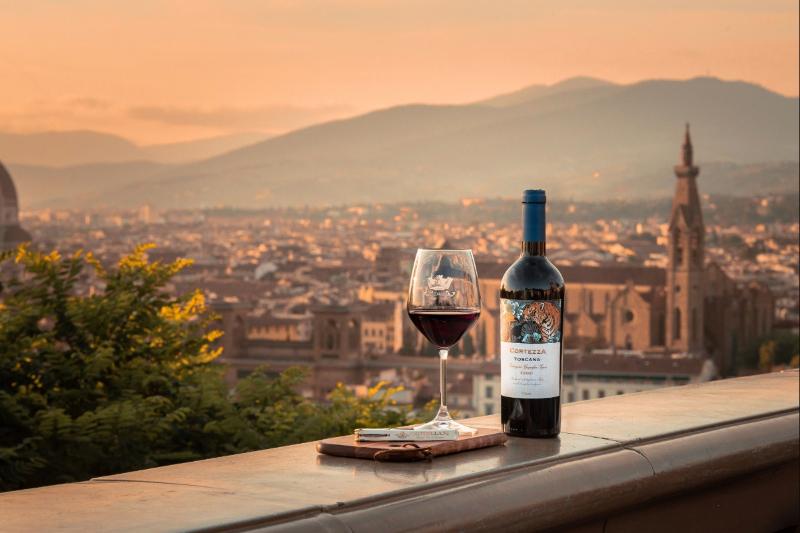
The first Tuscan revolution was about regaining face on the world stage – achieved, ironically, by demonstrating it could make internationalised styles of wine that are increasingly seen as passé by certain gatekeepers. The second was about rebuilding the rules. But the form and structure the third might well take remain highly divisive, with some advocating a broadening of Tuscany's offer, and others regarding this as a dilution of the very identity that gave the region its value.
"The regulations governing the various appellations must adapt to climate change and respond to evolving consumer preferences," says Francois.
"The challenge for the Chianti Classico appellation is to better interpret the shift in international preferences and styles," he adds, strongly hinting at a move towards non-traditional, but perhaps commercially necessary, styles.
"What I would like to see in 20 years is a greater focus on vineyard management, fewer vineyards overall - perhaps 30% less - but with much greater attention paid to the quality of the grapes," counters Reolon.
"What will we actually see? Most likely, a broader use of different grape varieties and an increase in the production of white and sparkling wines. Personally, however, I believe that sparkling wine in Tuscany is an aberration, as it does not reflect the true identity of the region."
To thrive in a capricious world, Tuscany doesn't need to reinvent itself. It just needs to decide what deserves to survive, what needs to evolve, and which new ideas are better left in the cesso.

Get expert insights, weekly highlights, and exclusive stories from the world's most trusted wine competition.